 TechOffice
Google's New Smart Speaker Design Bears Striking Similarity to Rival Product
Google Unveils New Smart Speaker with Gemini AI Integration, Draws Design Parallels to Apple's HomePod Mini
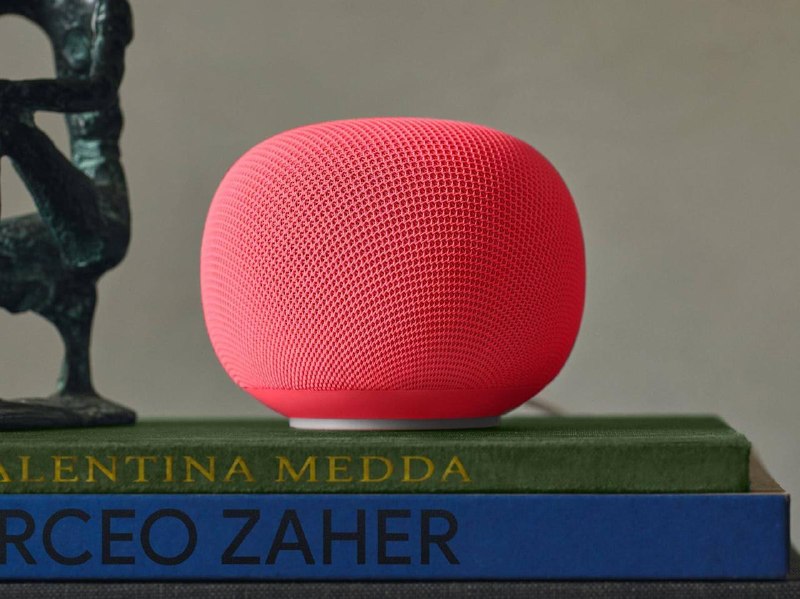
In a move that signals both technological advancement and design convergence in the smart speaker market, Google has officially announced its latest Home smart speaker featuring integrated Gemini AI support. The new device, which bears an uncanny resemblance to Apple's HomePod mini with a slightly flatter profile, represents Google's latest effort to solidify its position in the competitive smart home ecosystem.
Design Evolution and Aesthetic Considerations
The new Google Home speaker maintains the spherical form factor that has become characteristic of many smart speakers on the market, positioning itself within the same visual language as Apple's HomePod mini. However, Google has introduced subtle design refinements, most notably a slightly flattened top that differentiates it from its Apple counterpart while maintaining a familiar aesthetic.
The color options and material composition remain unspecified in the initial announcement, though industry analysts speculate that Google will likely continue its tradition of offering multiple color choices to match various home decors. The device is expected to feature fabric exteriors similar to previous generations of Google Home speakers, which have generally prioritized acoustic performance with their breathable mesh designs.
Gemini AI Integration: The Brains Behind the Beauty
The most significant upgrade in Google's new smart speaker is the integration of its Gemini AI technology. Gemini represents Google's next-generation artificial intelligence model, designed to enhance natural language processing, contextual understanding, and on-device computational capabilities.
With Gemini AI, the new Home speaker promises more sophisticated voice interactions, improved response accuracy, and enhanced contextual awareness. Users can expect more natural conversations with the assistant, better understanding of complex queries, and potentially more personalized responses based on usage patterns and preferences.
The integration of Gemini also likely brings improved on-device processing capabilities, potentially reducing reliance on cloud-based computations for certain tasks. This could result in faster response times and enhanced privacy for users concerned about data transmission.
Pricing Strategy and Market Positioning
Google has set the retail price for its new smart speaker at $99.99, positioning it competitively against established players in the market. This pricing point aligns closely with Amazon's Echo devices and matches Apple's HomePod mini, suggesting Google's intention to compete directly in the mid-range smart speaker segment.
In an effort to drive adoption, Google is offering an attractive promotional bundle with new purchases: six months of Google Home Premium at no additional cost. This subscription service typically provides enhanced features such as advanced audio customization, multi-room audio capabilities, and potentially exclusive content partnerships. The value proposition of this promotion could significantly influence purchasing decisions, especially for consumers already invested in Google's ecosystem.
Google's Smart Speaker Strategy in Context
The launch of this new device represents Google's ongoing commitment to the smart home market, which has become increasingly competitive with major tech companies vying for dominance in consumers' living spaces. Google's Home product line has evolved significantly since the original Google Home was introduced in 2016, with each iteration bringing improved audio quality, enhanced AI capabilities, and deeper integration with Google's services.
By incorporating its flagship Gemini AI into a consumer device, Google is demonstrating its confidence in the technology's readiness for mainstream applications. This move also positions Google to better compete with Amazon's Alexa and Apple's Siri, which have traditionally led in smart assistant adoption and market penetration.
Competitive Landscape: Smart Speaker Market Analysis
The smart speaker market has matured significantly since the first devices were introduced, with competition now focused on audio quality, AI capabilities, ecosystem integration, and privacy features. Below is a comparison of key players in the current market:
| Brand | Flagship Product | Price Point | Key Differentiator | AI Assistant |
|---|---|---|---|---|
| New Home with Gemini | $99.99 | Gemini AI integration | Google Assistant | |
| Amazon | Echo (4th gen) | $99.99 | Ecosystem maturity | Alexa |
| Apple | HomePod mini | $99.00 | Privacy features | Siri |
| Meta | Portal+ | $199.99 | Video calling | Meta Assistant |
Market Implications and Future Outlook
The introduction of Google's new smart speaker with Gemini AI support comes at a pivotal moment for the industry. As smart speakers become increasingly commoditized, differentiation through AI capabilities and ecosystem integration becomes paramount. Google's emphasis on its proprietary AI technology suggests a strategy to leverage its research strengths in machine learning and natural language processing to gain competitive advantage.
The design similarities to Apple's HomePod mini may indicate a convergence in consumer expectations for smart speaker aesthetics, with spherical shapes becoming the industry standard. However, Google's slightly flattened design could represent an attempt to establish its own visual identity while remaining familiar to consumers.
Industry analysts suggest that the success of this new device will depend not only on its technical specifications but also on Google's ability to demonstrate tangible benefits of Gemini AI in everyday use. As consumers become more discerning about smart home investments, the ability to deliver genuinely improved experiences through AI will be critical.
Conclusion: A Strategic Move in the Smart Home Race
Google's new Home smart speaker with Gemini AI integration represents a significant step forward in the company's smart home ambitions. By combining competitive pricing with advanced AI capabilities and an attractive promotional offer, Google has positioned itself to compete effectively in the crowded smart speaker market.
The device's design, while reminiscent of Apple's HomePod mini, demonstrates the industry's trend toward familiar form factors while allowing for subtle differentiation. As consumers continue to integrate smart speakers into their daily lives, the quality of AI interactions and ecosystem integration will increasingly become deciding factors in purchasing decisions.
With pre-orders now live and shipping expected to commence shortly, Google's latest offering will soon face real-world testing in consumer homes. The device's success will likely influence the direction of smart speaker development for years to come, potentially accelerating the integration of more sophisticated AI technologies into consumer audio products.
🙂 Google unveiled its new smart speaker and it looks very familiar 📰 Google's latest Home speaker with built-in Gemini AI support bears a striking resemblance to Apple's HomePod mini, just with a slightly flatter design. ℹ️ Pre-orders are now live for $99.99, and buyers get 6 months of Google Home Premium included for free. @DailyApple 🙂 Google unveiled its new smart speaker and it looks very familiar 📰 Google's latest Home speaker with built-in Gemini AI support bears a striking resemblance to Apple's HomePod mini, just with a slightly flatter design. ℹ️ Pre-orders are now live for $99.99, and buyers get 6 months of Google Home Premium included for free. @DailyApple


