 TechOffice
Apple Sues OpenAI for Alleged Theft of Proprietary Technology and Trade Secrets
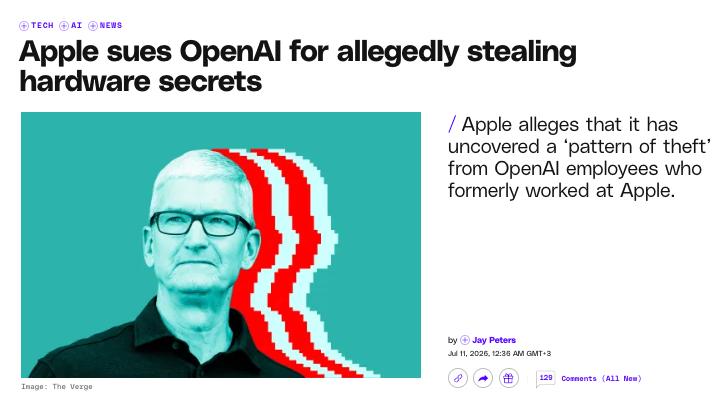
Apple Files Lawsuit Against OpenAI, Alleging Systematic Theft of Trade Secrets
In a dramatic escalation of tensions between two of technology's most prominent players, Apple has initiated legal action against OpenAI, accusing the artificial intelligence company of orchestrating a coordinated scheme to steal confidential trade secrets. The lawsuit specifically targets OpenAI and two former Apple employees who recently joined the AI firm, designer Tang Tan and engineer Chang Liu.
The complaint, filed in a federal court, alleges that what Apple describes as isolated incidents of data theft were actually part of a systemic practice. The tech giant claims that proprietary information regarding its hardware development, particularly related to its upcoming AI initiatives, was improperly accessed and used by OpenAI to accelerate its own hardware development efforts.
Key Allegations in Apple's Lawsuit
Apple's lawsuit paints a detailed picture of alleged misconduct, citing several specific instances of data theft:
- A former iPhone engineer allegedly refused to return his work laptop upon leaving Apple and continued to access the company's internal databases while already employed at OpenAI.
- The engineer reportedly made comments to former colleagues such as "lol, I still have access, this'll be fun," according to court documents.
- He allegedly created guides detailing how to quietly copy work files without triggering security alerts.
- Tang Tan, who spent nearly 25 years working on the iPhone before becoming OpenAI's head of hardware, is accused of actively poaching employees from Apple and specifically instructing them to bring mockups and schematics to job interviews.
Background on the Individuals Involved
The lawsuit centers on two key figures who recently transitioned from Apple to OpenAI:
| Name | Role at Apple | Role at OpenAI | Duration at Apple |
|---|---|---|---|
| Tang Tan | Senior Designer, iPhone team | Head of Hardware | Nearly 25 years |
| Chang Liu | iPhone Engineer | Engineering position (specific role not disclosed) | Duration not specified |
Apple's Claims and Legal Objectives
According to the complaint, Apple believes that the stolen trade secrets provided OpenAI with an unfair advantage in developing its own AI hardware. The company is seeking both injunctive relief to prevent the further use of its proprietary information and monetary damages for the alleged theft.
"The scale and sophistication of this alleged theft goes far beyond ordinary employee misconduct," stated Apple's legal counsel in a press release accompanying the lawsuit. "We have invested decades and billions of dollars in developing our hardware technologies, and we will vigorously protect our intellectual property from those who would seek to appropriate it through illegal means."
OpenAI's Response
OpenAI has firmly denied the allegations, characterizing Apple's lawsuit as an attempt to exaggerate what was essentially a standard hiring dispute. In an official statement, the company emphasized its commitment to ethical business practices:
"OpenAI has no interest in other companies' trade secrets and has developed its technology through legitimate means," the company stated. "This appears to be an attempt by Apple to spin a routine hiring dispute into a systematic scheme. We will vigorously defend against these baseless claims."
OpenAI further noted that it has robust internal policies regarding the handling of confidential information from previous employers and that all employees are required to comply with these standards.
Industry Implications
This lawsuit comes at a critical time in the development of AI hardware, with both Apple and OpenAI investing heavily in the next generation of AI-powered devices. The case raises important questions about employee mobility, intellectual property protection, and the increasingly competitive landscape in AI technology.
"This lawsuit highlights the growing tension between tech companies as they compete for top talent in the AI space," said technology analyst Sarah Jenkins. "While employees do have the right to change jobs, they also have clear obligations regarding confidential information from their former employers. The courts will need to carefully balance these competing interests."
Previous Similar Cases
This is not the first time major tech companies have faced legal battles over alleged trade secret theft. Similar cases have involved:
- Google's lawsuit against Uber over alleged self-driving car technology theft
- Apple's ongoing legal dispute with former employees who joined startups
- Meta's (formerly Facebook) case against a former employee who joined a competitor
These cases have established precedents regarding what constitutes legitimate employee knowledge versus stolen trade secrets, with courts generally requiring companies to demonstrate that specific, identifiable confidential information was misappropriated.
What's at Stake
The outcome of this lawsuit could have significant implications for both companies:
| Potential Impact on Apple | Potential Impact on OpenAI |
|---|---|
| Protection of valuable IP related to AI hardware | Disruption of hardware development timeline |
| Setting precedent for protecting trade secrets | Reputational damage in tech community |
| Legal costs and potential distraction from innovation | Financial penalties if found liable |
| Employee morale concerns regarding mobility | Challenges in recruiting from Apple |
Legal Experts Weigh In
Legal experts specializing in intellectual property and tech industry employment law suggest that Apple faces several challenges in proving its case:
"To succeed, Apple will need to demonstrate that specific, confidential information was taken and used by OpenAI," explained Professor Michael Roberts, a law professor specializing in intellectual property. "General knowledge or skills gained during employment typically cannot be protected as trade secrets. The line between what is and isn't confidential can be quite blurry."
However, Roberts noted that if Apple can provide evidence of specific documents, code, or designs that were accessed improperly and subsequently used by OpenAI, the company's case would be significantly strengthened.
Broader Context in the AI Race
The lawsuit occurs against the backdrop of intensifying competition in the AI hardware space. Both Apple and OpenAI are racing to develop next-generation AI-powered devices, with substantial investments at stake:
- Apple has reportedly invested over $1 billion annually in AI research and development
- OpenAI, backed by Microsoft, has secured significant funding for its hardware initiatives
- The global AI hardware market is projected to reach $100 billion by 2027
"In such a competitive environment, the temptation to cut corners or acquire shortcuts can be significant," noted tech industry analyst James Wilson. "This lawsuit serves as a reminder that while competition drives innovation, it must occur within legal and ethical boundaries."
Conclusion
As Apple and OpenAI prepare for what promises to be a closely watched legal battle, the tech industry will be watching carefully for precedents that could shape how companies protect their intellectual property in an era of rapid employee mobility and technological advancement.
The case raises fundamental questions about the balance between an employee's right to use their skills and knowledge at a new employer and a company's right to protect its trade secrets. Whatever the outcome, this lawsuit is likely to influence practices and policies across the tech industry for years to come.
Both companies have indicated their intention to vigorously pursue their respective positions, suggesting that this legal dispute may extend well into the future as the facts are examined and precedents are established.
🧑⚖️ Apple sues OpenAI over alleged theft of trade secrets 📰 Apple is accusing OpenAI and two former employees – designer Tang Tan and engineer Chang Liu – of running a coordinated scheme to leak confidential data. According to Apple, this wasn't an isolated incident but a systemic practice. What came out: • One former iPhone engineer refused to hand back his work laptop when he left – and kept using it to pull data from Apple's internal databases while already working at OpenAI. • He reportedly told former colleagues things like "lol, I still have access, this'll be fun," and even wrote guides on how to quietly copy work files without tripping security. • Tang Tan, who spent nearly 25 years working on the iPhone before becoming OpenAI's head of hardware, allegedly poached people from Apple and asked them to bring mockups and schematics to interviews. 😤 Apple claims the stolen data helped OpenAI in developing its own AI hardware, and is seeking an injunction against its use plus damages. OpenAI has responded by saying it has "no interest in other companies' trade secrets" and that Apple's lawsuit is an attempt to spin an ordinary hiring dispute into a "systematic scheme." @DailyApple 🧑⚖️ Apple sues OpenAI over alleged theft of trade secrets 📰 Apple is accusing OpenAI and two former employees – designer Tang Tan and engineer Chang Liu – of running a coordinated scheme to leak confidential data. According to Apple, this wasn't an isolated incident but a systemic practice. What came out: • One former iPhone engineer refused to hand back his work laptop when he left – and kept using it to pull data from Apple's internal databases while already working at OpenAI. • He reportedly told former colleagues things like "lol, I still have access, this'll be fun," and even wrote guides on how to quietly copy work files without tripping security. • Tang Tan, who spent nearly 25 years working on the iPhone before becoming OpenAI's head of hardware, allegedly poached people from Apple and asked them to bring mockups and schematics to interviews. 😤 Apple claims the stolen data helped OpenAI in developing its own AI hardware, and is seeking an injunction against its use plus damages. OpenAI has responded by saying it has "no interest in other companies' trade secrets" and that Apple's lawsuit is an attempt to spin an ordinary hiring dispute into a "systematic scheme." @DailyApple


