 TechOffice
iPhone 18 Pro Storage Speeds Disappoint Despite Premium Price Tag
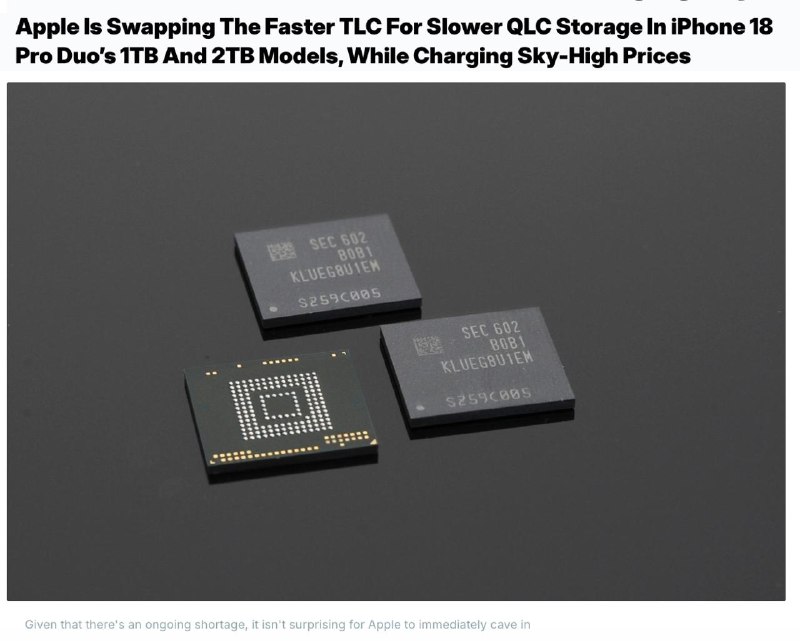
iPhone 18 Pro Storage Downgrade: Premium Price, Compromised Performance
In a move that has raised eyebrows among tech enthusiasts and industry analysts, Apple is reportedly planning to downgrade the flash storage technology in its upcoming iPhone 18 Pro and Pro Max models, particularly for the high-capacity variants. According to technology news outlet Wccftech citing leaker Reptalicant, the company appears to be substituting faster, more durable TLC (Triple-Level Cell) storage with slower QLC (Quad-Level Cell) chips in its premium 1TB and 2TB models, despite increasing the base price of these flagship devices.
The Technology Behind iPhone Storage: TLC vs QLC
To understand the significance of this reported change, it's essential to grasp the fundamental differences between TLC and QLC flash memory technologies:
| Feature | TLC (Triple-Level Cell) | QLC (Quad-Level Cell) |
|---|---|---|
| Bits per Cell | 3 bits per cell | 4 bits per cell |
| Storage Density | Standard | Higher (33% more than TLC) |
| Performance | Faster read/write speeds | Slower read/write speeds |
| Durability | Higher (1,000-3,000 program/erase cycles) | Lower (500-1,000 program/erase cycles) |
| Lifespan | Longer | Shorter |
| Power Consumption | Lower | Higher |
TLC technology has been the standard in Apple's premium iPhone models, offering a balance between performance, durability, and cost. QLC technology, while capable of storing more data per cell (making it cheaper per gigabyte), suffers from slower speeds, reduced durability, and higher power consumption—characteristics that are typically avoided in flagship devices where performance is paramount.
iPhone 18 Pro Storage Configuration Changes
According to the leaked information, Apple's storage strategy for the iPhone 18 Pro series will vary significantly by capacity:
256GB and 512GB Models
The base and mid-range storage configurations will maintain the current standard, utilizing TLC flash memory from established suppliers including SK hynix, Kioxia, and SanDisk. These models will continue to benefit from the faster performance and greater durability that TLC technology provides, ensuring a consistent user experience across the lineup.
1TB Model
The 1TB capacity, which has previously utilized TLC storage in iPhone Pro models, will reportedly transition primarily to QLC technology. Specifically, the 1TB iPhone 18 Pro will mostly use SK hynix's BC8Q-1T QLC chip, which packs four bits per cell but offers slower performance and reduced durability compared to TLC alternatives. Samsung's TLC chip may reportedly appear only as a rare alternative in this capacity.
2TB Model
The highest capacity 2TB model will face the most significant downgrade, utilizing SK hynix's BC8Q-2T QLC chip—a component originally designed for server workloads rather than consumer devices. The leaker indicates that this particular chip suffers notably in random 4K performance, which could impact everyday tasks such as app loading, file transfers, and multitasking.
For comparison, the current iPhone 17 Pro Max's 2TB configuration continues to use proper TLC storage, maintaining the performance expectations associated with Apple's flagship devices.
| Storage Capacity | iPhone 17 Pro Max | iPhone 18 Pro (Reported) |
|---|---|---|
| 256GB | TLC (SK hynix/Kioxia/SanDisk) | TLC (SK hynix/Kioxia/SanDisk) |
| 512GB | TLC (SK hynix/Kioxia/SanDisk) | TLC (SK hynix/Kioxia/SanDisk) |
| 1TB | TLC (SK hynix/Kioxia/SanDisk) | Primarily QLC (SK hynix BC8Q-1T), rare Samsung TLC alternative |
| 2TB | TLC (SK hynix/Kioxia/SanDisk) | QLC (SK hynix BC8Q-2T, server-grade) |
Performance Implications for Users
The shift to QLC storage in high-capacity iPhone 18 Pro models could have several noticeable effects on user experience:
- Slower App Loading: Random read performance directly impacts how quickly applications launch and become responsive. QLC technology's slower random access times could result in longer loading times, particularly for large apps and games.
- Reduced File Transfer Speeds: Sequential write speeds are typically lower with QLC storage, affecting the speed of transferring large files, recording 4K/8K video, and backing up data to cloud services or computers.
- Diminished Multitasking Performance: The iPhone's ability to quickly switch between applications and maintain background processes could be impacted by slower storage performance.
- Potential Longevity Concerns: With fewer program/erase cycles, QLC storage may degrade faster than TLC, potentially affecting the device's performance over its lifespan, especially for users who frequently install/uninstall apps or capture large amounts of media.
- Increased Power Consumption: QLC technology requires more power for read/write operations, which could marginally impact battery life, particularly during storage-intensive tasks.
The Economics Behind the Decision
Several factors appear to be driving Apple's reported decision to downgrade storage technology in its premium models:
Rising Memory Costs
While memory costs have fluctuated in the semiconductor industry, recent reports indicate that Apple is facing increased expenses for flash memory modules. According to Wccftech, a 256GB flash module now costs Apple approximately $51 per unit, a significant increase from around $13 for the iPhone 17 Pro. This represents nearly a 300% increase in component cost for the base storage option.
Increased Retail Prices
Simultaneously, Apple is expected to raise the base prices for the iPhone 18 Pro and Pro Max models to $1,399 and $1,499 respectively, continuing the trend of premium pricing for its flagship devices. These higher prices, combined with the reported storage downgrades, have led many analysts to question whether Apple is prioritizing profit margins over user experience.
| Model | iPhone 17 Pro Price | iPhone 18 Pro (Reported) | Price Change |
|---|---|---|---|
| Pro (Base) | $999 | $1,399 | +$400 (+40%) |
| Pro Max (Base) | $1,099 | $1,499 | +$400 (+36.4%) |
| 256GB Module Cost | ~$13 | ~$51 | +$38 (+292%) |
Profit Margin Considerations
The mathematics of this situation raises questions about Apple's priorities. With base prices increasing by approximately 36-40% while component costs for storage have risen significantly, the reported shift to QLC storage in premium models appears less like a necessary cost-cutting measure and more like a strategic decision to protect profit margins at the expense of top-tier buyers who pay premium prices for premium performance.
Industry Context and Apple's Practices
This potential storage downgrade would represent a departure from Apple's typical approach to its Pro lineup, which has traditionally prioritized performance and quality components. Previous iPhone Pro models, regardless of storage capacity, have consistently utilized TLC or even faster MLC (Multi-Level Cell) storage in some configurations.
The move also comes amid increasing competition in the premium smartphone market, where companies like Samsung and Google have been emphasizing performance and user experience in their flagship devices. For Apple, known for its premium positioning and user experience focus, such a compromise could potentially impact its reputation among professional users and power consumers who rely on their iPhones for intensive tasks.
Market Reaction and Consumer Implications
Should these reports prove accurate, the iPhone 18 Pro's storage downgrade could have several implications:
- Professional User Impact: Photographers, videographers, and creative professionals who rely on fast storage for capturing and editing high-resolution content may find the QLC technology insufficient for their workflow needs.
- Value Perception: The perception of value in Apple's premium models could be affected if customers discover they're receiving inferior storage technology despite paying higher prices.
- Market Differentiation: This move could create a more pronounced gap between standard and Pro models, potentially pushing power users toward alternatives that maintain TLC or better storage technology across all capacity tiers.
- Long-term Reliability Concerns: The reduced durability of QLC storage could lead to earlier performance degradation, potentially affecting device longevity and resale value.
Conclusion: A Troubling Precedent?
The reported storage downgrade in Apple's upcoming iPhone 18 Pro models raises significant questions about the company's direction and priorities. While component cost pressures are real in the current economic climate, the combination of rising retail prices and potential quality reductions in premium models represents a troubling precedent for consumers who have come to expect uncompromising performance from Apple's Pro lineup.
As the smartphone market matures and competition intensifies, Apple's decisions regarding component quality and pricing will likely face increased scrutiny. The iPhone 18 Pro's storage situation, if accurate, could mark a significant shift in Apple's approach to its premium devices—one that prioritizes profit margins over the user experience that has long been central to the brand's identity.
Industry observers and potential buyers will be watching closely when Apple officially unveils the iPhone 18 series later this year, particularly to verify these storage claims and assess the actual performance impact of any reported technology changes.
😰 iPhone 18 Pro: paying more, getting slower storage 📰 Apple is reportedly downgrading the flash storage in the high-capacity iPhone 18 Pro and Pro Max, according to Wccftech, citing leaker Reptalicant. 1️⃣ The 256GB and 512GB models will keep fast TLC (Triple-Level Cell) storage from SK hynix, Kioxia, and SanDisk – same tech as before, three bits per cell, quick and durable. But the 1TB model will mostly switch to a QLC (Quad-Level Cell) chip – SK hynix's BC8Q-1T – which packs four bits per cell but is slower and less durable. A Samsung TLC chip will only appear as a rare alternative. 2️⃣ The 2TB version gets it worse: it'll use SK hynix's BC8Q-2T, a QLC chip originally built for server workloads. The leaker claims this chip suffers noticeably in random 4K performance. For comparison, the 2TB iPhone 17 Pro Max still uses proper TLC storage, as you'd expect from a flagship. 💸 Why the downgrade? Wccftech points to rising memory costs — earlier reports suggested a 256GB flash module now costs Apple around $51 per unit, up from $13 for the iPhone 17 Pro. Meanwhile, base prices for the 18 Pro and Pro Max are expected to hit $1399 and $1499. The math doesn't add up in customers' favor – this looks less like a cost-driven necessity and more like Apple protecting its margins at the expense of top-tier buyers. @DailyApple 😰 iPhone 18 Pro: paying more, getting slower storage 📰 Apple is reportedly downgrading the flash storage in the high-capacity iPhone 18 Pro and Pro Max, according to Wccftech, citing leaker Reptalicant. 1️⃣ The 256GB and 512GB models will keep fast TLC (Triple-Level Cell) storage from SK hynix, Kioxia, and SanDisk – same tech as before, three bits per cell, quick and durable. But the 1TB model will mostly switch to a QLC (Quad-Level Cell) chip – SK hynix's BC8Q-1T – which packs four bits per cell but is slower and less durable. A Samsung TLC chip will only appear as a rare alternative. 2️⃣ The 2TB version gets it worse: it'll use SK hynix's BC8Q-2T, a QLC chip originally built for server workloads. The leaker claims this chip suffers noticeably in random 4K performance. For comparison, the 2TB iPhone 17 Pro Max still uses proper TLC storage, as you'd expect from a flagship. 💸 Why the downgrade? Wccftech points to rising memory costs — earlier reports suggested a 256GB flash module now costs Apple around $51 per unit, up from $13 for the iPhone 17 Pro. Meanwhile, base prices for the 18 Pro and Pro Max are expected to hit $1399 and $1499. The math doesn't add up in customers' favor – this looks less like a cost-driven necessity and more like Apple protecting its margins at the expense of top-tier buyers. @DailyApple


