 TechOffice
Apple vs. OpenAI: Tech Giant Sues Rival Company Over Alleged IP Infringement
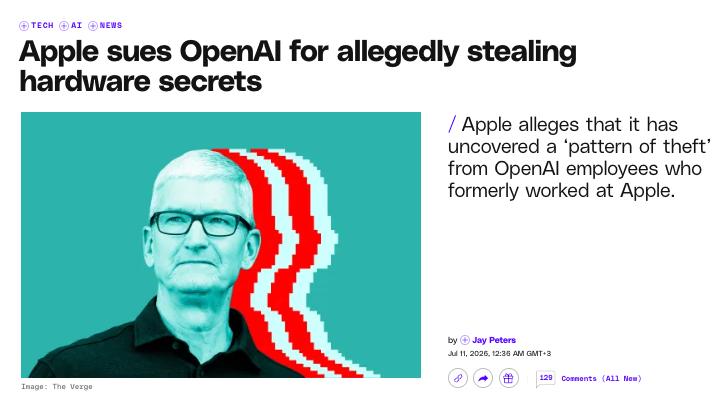
Apple Sues OpenAI Over Alleged Theft of Trade Secrets in High-Profile Tech Dispute
Technology giant Apple has filed a lawsuit against artificial intelligence company OpenAI, accusing the organization and two former employees of engaging in a coordinated scheme to steal confidential trade secrets. The legal battle represents a significant escalation in tensions between these two prominent tech firms and raises important questions about intellectual property protection in the competitive AI hardware space.
Overview of the Legal Action
Apple's lawsuit targets OpenAI along with two former employees: designer Tang Tan and engineer Chang Liu. According to court documents filed by Apple, the alleged theft was not an isolated incident but rather a systematic practice designed to transfer confidential information from Apple to OpenAI for competitive advantage.
The complaint alleges that these former employees participated in a coordinated effort to misappropriate Apple's proprietary information, particularly related to the company's AI hardware development initiatives. Apple contends that this information has directly benefited OpenAI's own hardware development efforts.
Key Allegations Against Former Employees
The lawsuit details several specific instances of alleged misconduct by former Apple employees now working at OpenAI:
- Unauthorized Access to Systems: One former iPhone engineer reportedly refused to return his work laptop after leaving Apple and continued using it to access internal databases while already employed at OpenAI.
- Reckless Statements: The same engineer allegedly made statements to former colleagues such as "lol, I still have access, this'll be fun," demonstrating awareness of improper access to Apple's systems.
- Circumvention of Security Measures: The engineer reportedly created guides on how to quietly copy work files without triggering security alerts.
- Poaching with Conditions: Tang Tan, who spent nearly 25 years working on the iPhone before becoming OpenAI's head of hardware, allegedly encouraged Apple employees to bring mockups and schematics to job interviews at OpenAI.
Apple's Legal Claims and Requested Relief
In its lawsuit, Apple asserts that the stolen trade secrets have been instrumental in helping OpenAI develop its own AI hardware products. The company is seeking both injunctive relief to prevent further use of the alleged stolen information and monetary damages.
"This represents a clear violation of our intellectual property rights and the trust placed in our employees," stated Apple in court documents. "The systematic nature of these actions demonstrates a deliberate attempt to undermine our competitive advantage in the AI hardware space."
OpenAI's Response
OpenAI has vehemently denied the allegations, characterizing Apple's lawsuit as an attempt to transform a standard employment dispute into something more sinister. In a public statement, the company emphasized:
"OpenAI has no interest in other companies' trade secrets. This lawsuit appears to be an attempt by Apple to spin an ordinary hiring dispute into a systematic scheme of corporate espionage."
The AI company maintains that it has robust policies in place to ensure all employees comply with intellectual property laws and that any hiring practices follow industry-standard protocols.
Industry Context and Potential Implications
This legal dispute emerges amid intensifying competition in the AI hardware sector, where Apple and OpenAI represent two significant players with overlapping interests. The case highlights several important trends and concerns within the technology industry:
- The increasing value of proprietary AI hardware designs and architectures
- Challenges in preventing intellectual property theft in highly competitive tech environments
- The legal boundaries between legitimate employee mobility and improper trade secret misappropriation
- The growing importance of AI hardware development as a competitive differentiator
Precedents in Tech Industry Disputes
While this case is notable for the prominence of the companies involved, it reflects broader patterns in the tech industry where former employees are frequently accused of taking proprietary information to new employers. Table 1 compares this case with other significant tech industry trade secret disputes:
| Case | Year | Allegations | Outcome |
|---|---|---|---|
| Apple v. Samsung | 2011-2018 | Patent infringement related to smartphone design | Mixed rulings, billions in damages awarded at various stages |
| Waymo v. Uber | 2017 | Self-driving car trade secret theft | Settlement for approximately $245 million |
| Google v. Uber | 2017 | Self-driving car technology theft | Dismissed after Waymo settlement |
| Apple v. OpenAI | 2024 | AI hardware trade secret theft | Ongoing |
Analysis of the Alleged Misconduct
The specific allegations in this case paint a picture of intentional misconduct that goes beyond typical employee turnover concerns. Table 2 breaks down the key allegations and their potential implications:
| Allegation | Potential Legal Violation | Impact on Apple |
|---|---|---|
| Retaining work laptop post-employment | Computer Fraud and Abuse Act, trade secret misappropriation | Unauthorized access to sensitive systems and data |
| Circumventing security measures | Trade secret misappropriation, potential fraud | Breach of confidentiality protocols |
| Poaching with conditions for proprietary information | Trade secret misappropriation, inducement to breach duty | Loss of competitive advantage in AI hardware |
| Systematic information transfer | Conspiracy to misappropriate trade secrets | Long-term strategic disadvantage |
Broader Implications for the Tech Industry
This case serves as a reminder of the increasingly valuable nature of trade secrets in the technology sector, particularly in emerging fields like AI hardware development. The outcome could have significant implications for:
- Employee Mobility: How restrictions on departing employees are structured and enforced
- Hiring Practices: The extent to which companies can require candidates to demonstrate knowledge of proprietary information from previous employers
- Security Protocols: How companies protect their most sensitive information from departing employees
- AI Development: The competitive dynamics in the rapidly evolving AI hardware market
Expert Perspectives
Legal experts specializing in intellectual property note that this case presents several interesting challenges:
- Distinguishing between general knowledge and specific trade secrets
- Determining the extent to which OpenAI should be held responsible for the actions of its employees
- Assessing the actual damage to Apple's competitive position
"The key will be demonstrating that the information taken was truly confidential and that its use by OpenAI has caused measurable harm," commented one IP attorney who requested anonymity. "Apple will need to show more than just similarity in products; they'll need to connect the alleged theft directly to OpenAI's development process."
Conclusion
The lawsuit between Apple and OpenAI represents a significant development in the ongoing battle to protect intellectual property in the competitive technology landscape. As AI hardware becomes increasingly important to both companies, the stakes are particularly high.
Regardless of the outcome, this case is likely to influence how tech companies approach employee transitions, information security, and competitive intelligence gathering. The legal battle will also serve as an important test of how courts balance the legitimate interests of companies protecting their trade secrets against the rights of employees to pursue career opportunities.
As both companies continue to develop their AI hardware capabilities, this dispute may ultimately reshape the competitive dynamics in one of technology's most exciting and rapidly evolving sectors.
🧑⚖️ Apple sues OpenAI over alleged theft of trade secrets 📰 Apple is accusing OpenAI and two former employees – designer Tang Tan and engineer Chang Liu – of running a coordinated scheme to leak confidential data. According to Apple, this wasn't an isolated incident but a systemic practice. What came out: • One former iPhone engineer refused to hand back his work laptop when he left – and kept using it to pull data from Apple's internal databases while already working at OpenAI. • He reportedly told former colleagues things like "lol, I still have access, this'll be fun," and even wrote guides on how to quietly copy work files without tripping security. • Tang Tan, who spent nearly 25 years working on the iPhone before becoming OpenAI's head of hardware, allegedly poached people from Apple and asked them to bring mockups and schematics to interviews. 😤 Apple claims the stolen data helped OpenAI in developing its own AI hardware, and is seeking an injunction against its use plus damages. OpenAI has responded by saying it has "no interest in other companies' trade secrets" and that Apple's lawsuit is an attempt to spin an ordinary hiring dispute into a "systematic scheme." @DailyApple 🧑⚖️ Apple sues OpenAI over alleged theft of trade secrets 📰 Apple is accusing OpenAI and two former employees – designer Tang Tan and engineer Chang Liu – of running a coordinated scheme to leak confidential data. According to Apple, this wasn't an isolated incident but a systemic practice. What came out: • One former iPhone engineer refused to hand back his work laptop when he left – and kept using it to pull data from Apple's internal databases while already working at OpenAI. • He reportedly told former colleagues things like "lol, I still have access, this'll be fun," and even wrote guides on how to quietly copy work files without tripping security. • Tang Tan, who spent nearly 25 years working on the iPhone before becoming OpenAI's head of hardware, allegedly poached people from Apple and asked them to bring mockups and schematics to interviews. 😤 Apple claims the stolen data helped OpenAI in developing its own AI hardware, and is seeking an injunction against its use plus damages. OpenAI has responded by saying it has "no interest in other companies' trade secrets" and that Apple's lawsuit is an attempt to spin an ordinary hiring dispute into a "systematic scheme." @DailyApple


