 TechOffice
iPhone 18 Pro: Higher Price, Lower Storage Speeds Disappoint Consumers
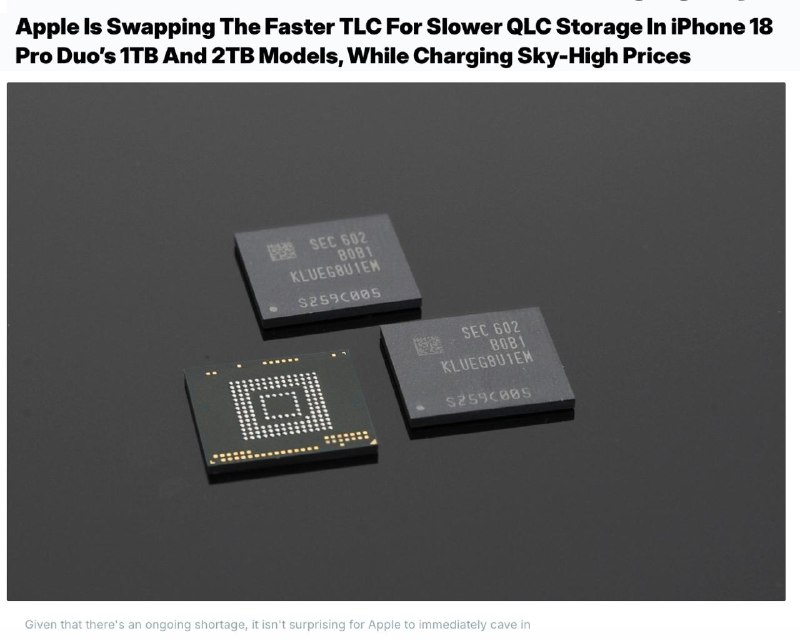
iPhone 18 Pro: Premium Price, Compromised Storage - Apple Reportedly Downgrades High-Capacity Models
In a move that has raised eyebrows among tech enthusiasts and industry analysts, Apple is reportedly planning to downgrade the flash storage technology in its upcoming iPhone 18 Pro and Pro Max models, particularly for the high-capacity variants. According to information shared by technology news outlet Wccftech, citing leaker Reptalicant, the company may be substituting faster, more durable storage with slower, less expensive alternatives in its premium flagship devices.
The Storage Technology Shift: TLC to QLC
The heart of this potential controversy lies in the fundamental difference between TLC (Triple-Level Cell) and QLC (Quad-Level Cell) flash memory technologies. While both are types of NAND flash storage, they differ significantly in performance, durability, and cost structure:
- TLC (Triple-Level Cell): Stores three bits per cell, offering a balance between speed, endurance, and capacity. Generally considered the standard for high-performance consumer devices.
- QLC (Quad-Level Cell): Stores four bits per cell, increasing storage density but at the expense of speed and endurance. Typically found in budget devices or applications where performance isn't critical.
Model-by-Model Storage Breakdown
According to the leaked information, Apple's storage strategy for the iPhone 18 Pro series will vary significantly by capacity:
| Storage Capacity | Technology | Manufacturer | Performance Impact |
|---|---|---|---|
| 256GB | TLC | SK hynix, Kioxia, SanDisk | No change (maintains current performance) |
| 512GB | TLC | SK hynix, Kioxia, SanDisk | No change (maintains current performance) |
| 1TB | QLC (primary) | SK hynix BC8Q-1T | Slower random read/write speeds, reduced endurance |
| 2TB | QLC | SK hynix BC8Q-2T | Poor random 4K performance, significantly reduced endurance |
The Performance Implications
The shift to QLC storage, particularly in the 1TB and 2TB models, could have noticeable performance implications for users:
- Random 4K Performance: The leaker specifically notes that the BC8Q-2T chip used in the 2TB model "suffers noticeably in random 4K performance," which affects tasks like app loading, file transfers, and system responsiveness.
- Endurance Concerns: QLC flash typically has a lower program/erase cycle count compared to TLC, potentially reducing the long-term durability of the storage.
- Consistency Issues: QLC storage often exhibits more variable performance, especially as the drive fills up, which could lead to inconsistent user experiences.
Notably, this represents a step backward from the current iPhone 17 Pro Max, which uses proper TLC storage even in its 2TB configuration—a standard that users expect from a premium flagship device.
The Economics Behind the Decision
The reported shift in storage technology appears to be driven primarily by cost considerations, though the exact economics remain complex:
| Cost Factor | iPhone 17 Pro | iPhone 18 Pro (Reported) | Change |
|---|---|---|---|
| 256GB Flash Module Cost | $13 | $51 | 292% increase |
| Base Model Price | Not specified | $1,399 (Pro) $1,499 (Pro Max) |
Significant increase |
While the cost of flash memory components has reportedly increased substantially, the math doesn't fully explain the shift to QLC technology in the highest-priced models. With base prices expected to reach $1,399 for the Pro and $1,499 for the Pro Max, consumers might reasonably expect premium components throughout the lineup, especially in the most expensive configurations.
Industry Context and Precedents
This potential move by Apple comes amid broader industry trends in storage technology:
- Many manufacturers have been adopting QLC technology to increase storage capacities while keeping prices competitive.
- However, premium brands have typically maintained TLC or even higher-performance technologies (like MLC) in their flagship products.
- Apple has previously faced criticism for storage configurations in some products, though this would represent one of the most significant compromises in recent memory.
Consumer Implications
If these reports prove accurate, iPhone 18 Pro buyers opting for the 1TB or 2TB configurations may face several considerations:
- Value Proposition: The premium pricing combined with downgraded storage technology could significantly impact the value proposition of the high-end models.
- Performance Expectations: Users paying top dollar for the most expensive iPhone models may experience performance that doesn't align with their expectations.
- Long-Term Reliability: The reduced endurance of QLC storage could potentially lead to earlier failure or performance degradation over time.
- Professional Workflows: Video editors, photographers, and other creative professionals who rely on consistent storage performance may need to reassess their storage strategies.
Conclusion: A Troubling Trend for Premium Buyers?
The reported storage downgrade in the iPhone 18 Pro series raises important questions about Apple's commitment to maintaining premium quality across its product lineup. While cost pressures are real, the shift from TLC to QLC storage in the most expensive models appears to prioritize profit margins over user experience.
As consumers prepare to potentially pay more for the iPhone 18 Pro and Pro Max, they deserve transparency about the storage technologies being used and how these decisions might impact performance and longevity. This situation bears watching as additional details emerge about Apple's final storage configurations for its upcoming flagship devices.
For now, potential buyers of the high-capacity iPhone 18 Pro models may want to carefully consider whether the premium price justifies what appears to be a compromise in storage technology—one that could affect both immediate performance and long-term reliability.
😰 iPhone 18 Pro: paying more, getting slower storage 📰 Apple is reportedly downgrading the flash storage in the high-capacity iPhone 18 Pro and Pro Max, according to Wccftech, citing leaker Reptalicant. 1️⃣ The 256GB and 512GB models will keep fast TLC (Triple-Level Cell) storage from SK hynix, Kioxia, and SanDisk – same tech as before, three bits per cell, quick and durable. But the 1TB model will mostly switch to a QLC (Quad-Level Cell) chip – SK hynix's BC8Q-1T – which packs four bits per cell but is slower and less durable. A Samsung TLC chip will only appear as a rare alternative. 2️⃣ The 2TB version gets it worse: it'll use SK hynix's BC8Q-2T, a QLC chip originally built for server workloads. The leaker claims this chip suffers noticeably in random 4K performance. For comparison, the 2TB iPhone 17 Pro Max still uses proper TLC storage, as you'd expect from a flagship. 💸 Why the downgrade? Wccftech points to rising memory costs — earlier reports suggested a 256GB flash module now costs Apple around $51 per unit, up from $13 for the iPhone 17 Pro. Meanwhile, base prices for the 18 Pro and Pro Max are expected to hit $1399 and $1499. The math doesn't add up in customers' favor – this looks less like a cost-driven necessity and more like Apple protecting its margins at the expense of top-tier buyers. @DailyApple 😰 iPhone 18 Pro: paying more, getting slower storage 📰 Apple is reportedly downgrading the flash storage in the high-capacity iPhone 18 Pro and Pro Max, according to Wccftech, citing leaker Reptalicant. 1️⃣ The 256GB and 512GB models will keep fast TLC (Triple-Level Cell) storage from SK hynix, Kioxia, and SanDisk – same tech as before, three bits per cell, quick and durable. But the 1TB model will mostly switch to a QLC (Quad-Level Cell) chip – SK hynix's BC8Q-1T – which packs four bits per cell but is slower and less durable. A Samsung TLC chip will only appear as a rare alternative. 2️⃣ The 2TB version gets it worse: it'll use SK hynix's BC8Q-2T, a QLC chip originally built for server workloads. The leaker claims this chip suffers noticeably in random 4K performance. For comparison, the 2TB iPhone 17 Pro Max still uses proper TLC storage, as you'd expect from a flagship. 💸 Why the downgrade? Wccftech points to rising memory costs — earlier reports suggested a 256GB flash module now costs Apple around $51 per unit, up from $13 for the iPhone 17 Pro. Meanwhile, base prices for the 18 Pro and Pro Max are expected to hit $1399 and $1499. The math doesn't add up in customers' favor – this looks less like a cost-driven necessity and more like Apple protecting its margins at the expense of top-tier buyers. @DailyApple


