 TechOffice
Telegram Returns to Google Play Store After Brief Absence
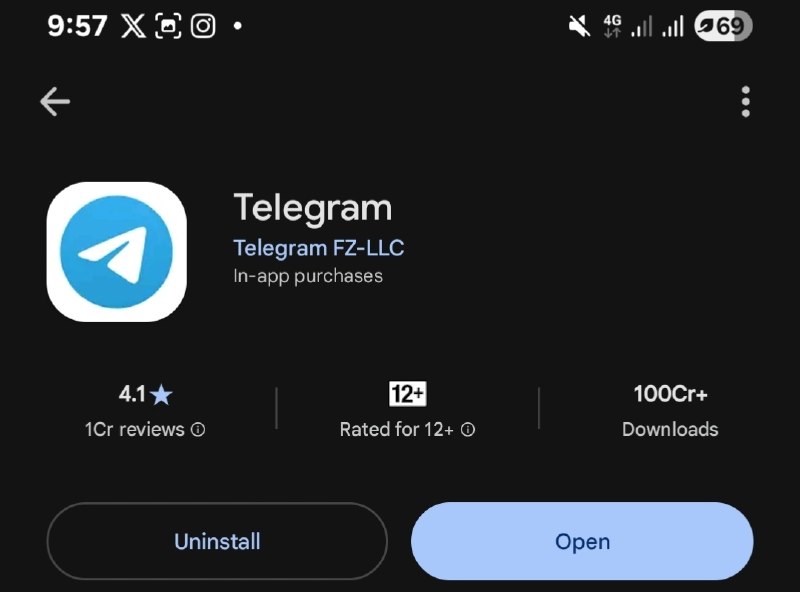
Telegram Returns to Google Play Store Amidst Persistent Connectivity Challenges
After a period of absence, the popular messaging application Telegram has once again become available on the Google Play Store, marking a significant development for its global user base. However, the return comes with notable limitations, as many users continue to experience connectivity issues when attempting to use the service without employing a virtual private network (VPN) or proxy server.
Background: The Removal and Return
Telegram's removal from the Play Store earlier this year created significant disruption for Android users worldwide. The messaging platform, known for its emphasis on privacy and end-to-end encryption options, disappeared from Google's official application marketplace without extensive explanation from either party.
Following weeks of speculation and user frustration, Google has reinstated the Telegram application in its Play Store, allowing new users to download the app and existing users to update to the latest version. This development comes as a relief to the millions who rely on Telegram for both personal and professional communication.
Technical Details of the Return
The reappearance of Telegram on the Play Store coincides with version 8.4.3 of the application, which includes several bug fixes and performance improvements. According to the update notes, the developers have implemented enhanced connection protocols designed to improve stability across different network environments.
Despite these improvements, user reports indicate that the core connectivity issues persist, particularly in regions where internet access is heavily restricted or monitored. This has led to a situation where while the app is once again officially available, its functionality remains limited for many without additional tools to bypass network restrictions.
Understanding the Connectivity Challenges
The persistent connection issues without VPN or proxy access point to a complex technical problem that extends beyond simple server availability. Several factors appear to be contributing to this situation:
- Regional network restrictions implemented by internet service providers
- Domain name system (DNS) blocking of Telegram's servers
- Internet protocol (IP) address filtering that prevents direct connections
- Deep packet inspection (DPI) systems that can identify and block Telegram traffic
Technical Analysis of the Problem
From a technical standpoint, the connectivity issues likely stem from Telegram's architecture and how it handles connections. Unlike some messaging services that operate primarily through centralized servers, Telegram utilizes a distributed network of servers that can be dynamically reconfigured to maintain availability.
When these servers are blocked or identified by network monitoring systems, users experience connection failures. While Telegram's developers can attempt to circumvent these blocks by changing server configurations and implementing obfuscation techniques, this becomes an ongoing cat-and-mouse game with network administrators.
User Experiences and Workarounds
User reports from around the world indicate a varied experience with Telegram's connectivity. In regions with fewer internet restrictions, users report relatively stable connections without the need for additional tools. However, in areas with more controlled internet environments, the situation remains challenging.
Common workarounds that users have employed include:
- Using VPN services to mask their network traffic
- Employing proxy servers to route connections through different locations
- Utilizing alternative app stores that may host different versions of Telegram
- Switching to Telegram's desktop or web versions when mobile connectivity fails
Regional Variations in Connectivity
The connectivity issues with Telegram are not uniform across all regions. The following table illustrates the varying levels of accessibility reported by users in different geographic areas:
| Region | Connectivity Status | Primary Workarounds |
|---|---|---|
| North America | Generally stable | Minimal intervention required |
| Europe | Mixed, varies by country | VPN occasionally needed |
| Asia Pacific | Highly variable | VPN or proxy often necessary |
| Middle East | Frequently blocked | VPN, proxy, or alternative apps |
| Latin America | Generally accessible | Occasional VPN use |
Expert Perspectives on the Situation
Cybersecurity experts and telecommunications analysts offer varying perspectives on Telegram's connectivity challenges. Some view the situation as a natural consequence of operating a global service in an increasingly fragmented internet landscape.
"What we're seeing is the balkanization of the internet," noted Dr. Elena Rodriguez, a telecommunications specialist at the Global Digital Policy Institute. "Services like Telegram must constantly adapt to different regulatory environments, which inevitably leads to these kinds of accessibility issues."
On the technical side, network engineers point out that the solutions being employed by Telegram represent a cat-and-mouse game with network administrators. "The fundamental challenge is that Telegram needs to maintain both accessibility and security while operating in increasingly restrictive environments," explains James Chen, a network infrastructure expert.
Industry Implications
The situation with Telegram highlights broader challenges facing digital communication platforms in an era of increasing internet fragmentation and regional restrictions. This case serves as a precedent for how messaging services might navigate similar challenges in the future.
Industry analysts suggest that this development may accelerate the adoption of more sophisticated obfuscation techniques and distributed network architectures. Companies may need to invest more heavily in technologies that can bypass restrictions while maintaining user privacy and security.
Comparison with Other Messaging Platforms
The challenges faced by Telegram are not unique, but the approach to addressing them differs from other messaging platforms. The following table compares Telegram's situation with other major messaging services:
| Messaging Platform | Play Store Availability | Connectivity Challenges | Primary Mitigation Strategy |
|---|---|---|---|
| Telegram | Recently returned | Significant in restricted regions | Distributed server network with obfuscation |
| Consistently available | Minimal connectivity issues | Meta's global infrastructure | |
| Signal | Consistently available | Moderate in some regions | Simple protocol, less detectable |
| Available with regional variations | Designed for specific markets | Regional server deployment |
Future Outlook for Telegram
Looking ahead, Telegram's developers face the ongoing challenge of maintaining accessibility while preserving the platform's security and privacy features. The recent return to the Play Store suggests that the company is committed to finding solutions that balance these competing priorities.
Industry observers predict that we may see further innovations in how messaging platforms handle connectivity challenges, including more sophisticated obfuscation techniques, decentralized network architectures, and potentially blockchain-based solutions that can operate independently of traditional internet infrastructure.
Potential Developments
Several potential developments could shape Telegram's future approach to connectivity challenges:
- Enhanced obfuscation techniques to make traffic more difficult to identify and block
- Integration with alternative network protocols that can operate alongside traditional internet infrastructure
- Decentralized server networks that are more resistant to coordinated blocking efforts
- Partnerships with VPN and proxy services to provide integrated solutions for users in restricted regions
Conclusion
The return of Telegram to the Google Play Store represents a significant victory for user choice and accessibility, but the persistent connectivity issues highlight the complex challenges facing global communication platforms in an increasingly fragmented digital landscape.
For users in regions with restricted internet access, the situation remains challenging, requiring additional tools and workarounds to maintain connectivity. Meanwhile, the broader implications for internet freedom and the future of global communication continue to evolve as services like Telegram navigate an increasingly complex regulatory and technical environment.
As digital communication continues to play an essential role in both personal and professional spheres, the ability of platforms like Telegram to maintain accessibility while preserving security and privacy will remain a critical factor in their success and influence on the future of global connectivity.
Telegram back in playstore ( but still stuck on connecting without vpn or proxy ) Telegram back in playstore ( but still stuck on connecting without vpn or proxy )


