
Apple Under Fire for Privacy Concerns Amid New Personalized App Store Recommendations
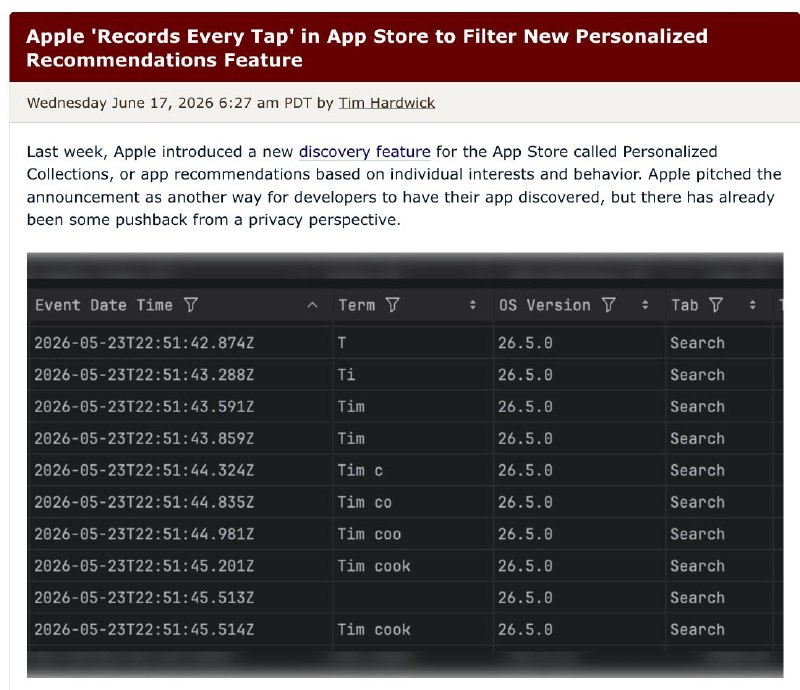
Apple's App Store Recommendations: A New Privacy Controversy
In a landscape where personal privacy has become a cornerstone of consumer technology, Apple Inc. finds itself at the center of a fresh controversy regarding its latest feature: personalized App Store recommendations. This feature is designed to suggest applications based on individual user behavior, yet new revelations about the extent of data collection required to support these recommendations have raised significant privacy concerns.
Understanding the Feature
The personalized App Store recommendations are intended to enhance the user experience by suggesting apps that align with the preferences and behaviors exhibited by the user. However, behind this seemingly innocuous feature lies a robust data collection mechanism that tracks an array of user activities.
- Data Tracked: Apple reportedly collects detailed information about user interactions within the App Store. This includes:
- Every screen tap
- Typing speed
- Browsing habits
This wealth of information can effectively profile user behavior, allowing Apple to tailor its recommendations with high precision. What makes this data gathering particularly controversial is that it is enabled by default — meaning users are not given the option to turn it off.
A Breach of Trust?
Apple has long positioned itself as a champion of user privacy, often touting its commitment to safeguarding user data against misuse and exploitation by third parties. The company has implemented various features aimed at providing users with control over their personal information and transparency regarding data usage.
However, the recent findings spark concerns about whether Apple is adhering to its own standards of privacy protection. According to privacy researchers, this data collection process does not require explicit user consent before tapping into sensitive behavioral data.
User Consent and Transparency
The crux of the criticism lies in the issue of user consent. Given that users are not actively asked to opt into this level of behavioral monitoring, many feel that this is a fundamental breach of trust. Critics argue that effective consent should be clear, informed, and voluntary — criteria that may not be met given the current implementation of default settings.
Summary of Privacy Concerns
| Aspect | Details |
|---|---|
| Feature Purpose | Suggest apps based on user behavior |
| Data Collected | Screen taps, typing speed, browsing habits |
| Opt-In Status | Enabled by default and cannot be turned off |
| User Criticism | Lack of explicit consent and potential breach of trust |
Conclusion
As conversations around digital privacy continue to evolve, Apple faces a pivotal moment in addressing the concerns raised by this new controversy. While personalized features can significantly improve user experience, companies must ensure that user privacy remains a fundamental priority. The juxtaposition of innovation and privacy presents a challenge that Apple must navigate carefully, lest it undermines the very values that have distinguished its brand.


