 TechOffice
Google's Latest Smart Speaker Design Sparks Familiarity Debate
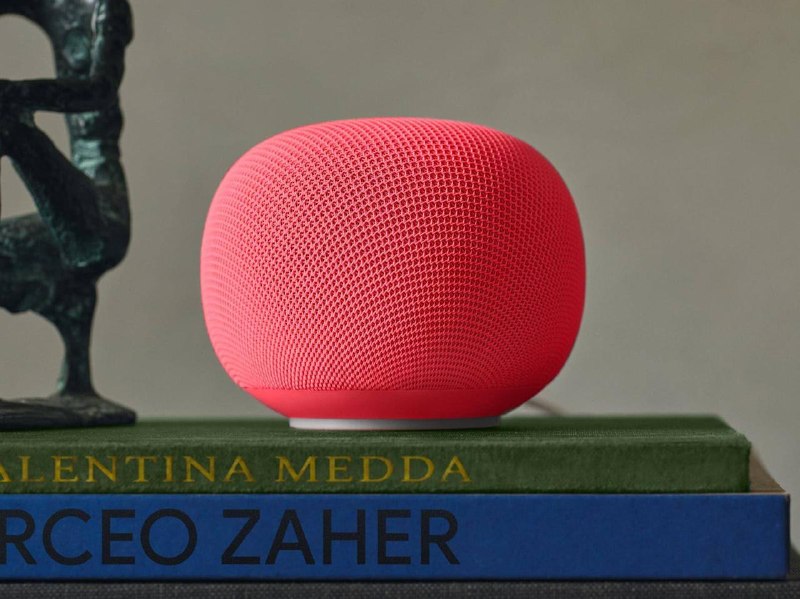
Google Unveils New Smart Speaker with Gemini AI, Raises Design Similarities Concerns
In a move that has sparked immediate comparisons to Apple's HomePod mini, Google has officially launched its latest smart speaker featuring integrated Gemini AI capabilities. The new device marks Google's continued push into the competitive smart home audio market while raising questions about design originality in an increasingly saturated industry.
Design and Aesthetics
The newly unveiled Google Home speaker presents a cylindrical form factor that bears an uncanny resemblance to Apple's HomePod mini. However, Google has differentiated its product with a slightly flatter profile, measuring approximately 4.8 inches in height compared to the HomePod mini's 3.3-inch height. The device features a seamless fabric mesh exterior available in multiple color options, including Charcoal, Chalk, and Sand, mirroring Apple's color palette strategy.
Google has maintained its signature touch-sensitive top panel for volume control and playback management, though the company has refined the interface with more responsive haptic feedback compared to previous generations. The base houses the upward-firing driver array, while the bottom of the unit features a silicone ring that provides stability and prevents surface scratching.
Key Design Specifications
| Feature | Google Home (New) | Apple HomePod mini |
|---|---|---|
| Dimensions | 4.8" H × 3.9" D | 3.3" H × 3.3" D |
| Weight | 10.6 oz (300g) | 5.16 oz (146g) |
| Colors | Charcoal, Chalk, Sand | White, Space Gray |
| Materials | Recycled fabric mesh | Custom mesh fabric |
Technical Specifications and Audio Performance
Under its familiar exterior, the new Google Home speaker incorporates upgraded audio hardware and processing capabilities. The device features a custom 40mm full-range driver and a passive radiator for bass extension, delivering a claimed frequency response of 50Hz - 20kHz. While these specifications fall short of some premium competitors, Google's focus has been on optimizing sound quality for its primary use case: voice assistant functionality and background music playback.
The device supports both Wi-Fi 802.11a/b/g/n/ac (2.4GHz/5GHz) and Bluetooth 5.2 for connectivity, allowing seamless integration with existing smart home ecosystems. Audio codecs supported include AAC, SBC, and Google's proprietary low-latency codec for improved Bluetooth streaming quality.
Audio Features
- 360-degree omnidirectional sound
- Adaptive sound technology that adjusts to room acoustics
- Multi-room audio support via Google Home app
- Stereo pairing capability with identical units
- Integrated far-field voice recognition with three far-field microphones
Gemini AI Integration
The most significant upgrade in Google's new smart speaker is the integration of its Gemini AI assistant, representing a substantial evolution from the previous Google Assistant implementation. This transition brings enhanced natural language processing capabilities, contextual understanding, and a broader range of supported tasks.
Gemini AI enables more conversational interactions, allowing users to ask follow-up questions without repeating the wake word. The assistant can now handle complex multi-step requests, maintain context across multiple queries, and provide more nuanced responses. The integration also brings improved voice recognition accuracy, particularly in noisy environments and for users with diverse accents.
Google has emphasized that Gemini on the new Home speaker is optimized for audio-specific tasks, including sophisticated music discovery, playlist creation based on mood or activity, and voice-controlled home automation routines. The AI can now distinguish between different voices and provide personalized responses for each household member.
Gemini AI Capabilities
| Feature | Previous Google Assistant | Gemini AI Integration |
|---|---|---|
| Natural Language Processing | Basic command recognition | Conversational context awareness |
| Multi-step Requests | Limited to single commands | Complex multi-task handling |
| Voice Recognition | Standard voice profiles | |
| Music Discovery | Basic recommendations |
Pricing and Market Positioning
Google has priced the new Home speaker at $99.99, positioning it competitively against Apple's HomePod mini ($99) and Amazon's Echo Studio ($199.99). The pricing strategy reflects Google's ambition to capture a larger share of the premium smart speaker market while remaining accessible to mainstream consumers.
In an effort to accelerate adoption, Google is offering a compelling incentive for early buyers: six months of Google Home Premium service included with the purchase. This subscription typically costs $9.99 per month and includes enhanced features such as high-resolution audio streaming, advanced voice recognition, and exclusive content partnerships.
The device will be available for pre-order immediately through Google's online store, major retailers, and select mobile carriers. Official shipping is scheduled to begin on November 15, just in time for the holiday shopping season.
Competitive Landscape and Market Analysis
The smart speaker market has become increasingly crowded with major tech companies vying for dominance in the connected home space. Google's new entry arrives at a critical juncture for the industry, as consumer demand shifts from simple voice assistants to more sophisticated AI-powered home hubs.
Industry analysts note that while Google's new Home speaker offers compelling features, its design similarity to Apple's HomePod mini may raise questions about innovation in the category. The resemblance is particularly striking given the history of design inspiration between the two companies' product lines.
Despite these concerns, Google holds several advantages in the smart home ecosystem, including deeper integration with Android devices, a more comprehensive suite of smart home services through Google Home, and the powerful Gemini AI platform that continues to evolve rapidly.
Smart Speaker Market Share Comparison (Q3 2023)
| Brand | Market Share | Key Products |
|---|---|---|
| Amazon | 68.2% | Echo Dot, Echo Studio |
| 23.9% | Home, Nest Audio | |
| Apple | 4.6% | HomePod, HomePod mini |
| Others | 3.3% | Various brands |
Future Prospects and Industry Implications
The introduction of the new Google Home speaker with Gemini AI signals the company's commitment to advancing voice-controlled AI technology in the home environment. Industry experts predict that future iterations will likely incorporate more sophisticated audio processing, expanded AI capabilities, and potentially health monitoring features.
Google's focus on AI integration may also influence competitors to accelerate their own AI development efforts, potentially leading to a new phase of innovation in the smart speaker category. The competition between tech giants in this space is expected to drive advancements in natural language processing, contextual understanding, and seamless device integration.
As consumers become more accustomed to AI-powered assistants in their homes, the distinction between speakers and intelligent hubs is likely to blur further. Google's new Home speaker represents a step in this direction, positioning the device not merely as a speaker but as a central component of the modern smart home ecosystem.
Only time will tell whether Google's design choices and AI advancements will be enough to challenge Amazon's dominance in the smart speaker market, but the company's latest offering certainly raises the stakes in this increasingly competitive arena.


