 TechOffice
Upcoming iPhone 18 to Boast 9GB Custom RAM Powering Advanced On-Device AI Models
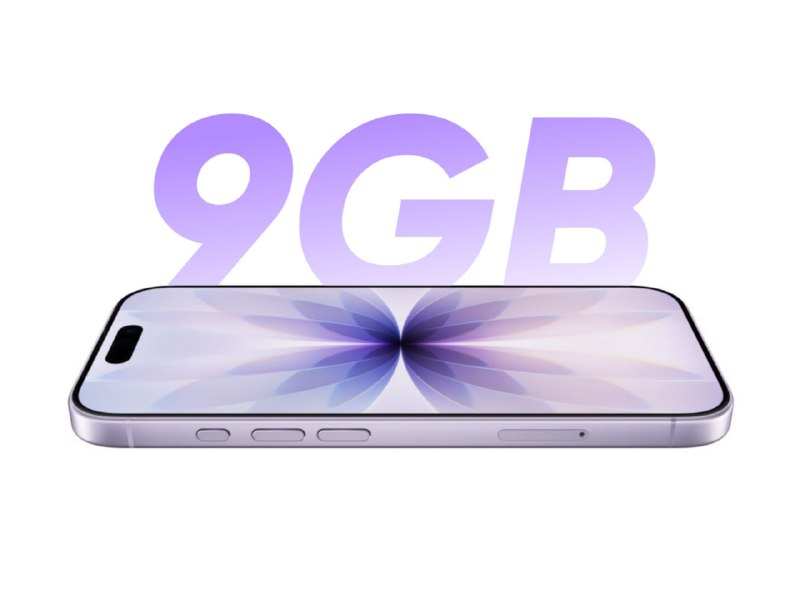
iPhone 18 Rumored to Feature Custom RAM Optimized for Advanced On-Device AI Capabilities
Recent leaks and industry analyst reports suggest that Apple's upcoming iPhone 18 will mark a significant advancement in mobile AI processing with specialized RAM designed to support sophisticated on-device artificial intelligence models. According to tech insider @techroma, the standard iPhone 18 models are expected to be equipped with 9GB of custom RAM, while the Pro variants will continue with 12GB, reflecting Apple's continued commitment to differentiating its premium lineup.
The Evolution of RAM in iPhones: A Focus on AI
RAM specifications in iPhones have traditionally been conservative compared to some Android competitors, but Apple's approach has always emphasized efficiency and optimization over raw numbers. The rumored 9GB allocation for standard iPhone 18 models represents a notable increase from the 6GB found in iPhone 15 and iPhone 15 standard models, while the Pro models maintain their 12GB capacity from iPhone 15 Pro and Pro Max.
| iPhone Model | RAM (GB) | Notable AI Improvements |
|---|---|---|
| iPhone 15 / 15 Plus | 6 | Enhanced Neural Engine, improved photography AI |
| iPhone 15 Pro / Pro Max | 12 | Advanced computational photography, on-device ML |
| iPhone 16 (Expected) | 8 | Improved Siri capabilities, better contextual awareness |
| iPhone 18 (Rumored) | 9 (Standard) 12 (Pro) |
Advanced on-device LLMs, real-time AI processing |
Custom RAM: Engineered for AI Workloads
What makes these specifications particularly noteworthy is that the RAM is reportedly custom-designed specifically to handle AI workloads more efficiently. Unlike standard RAM, custom memory solutions can be optimized for the specific access patterns and computational requirements of machine learning models, potentially offering significant performance benefits for AI tasks.
Apple has been investing heavily in silicon design, and this custom RAM appears to be part of a broader strategy to integrate AI capabilities directly into hardware. This approach aligns with Apple's emphasis on privacy and performance, as on-device processing eliminates the need to send sensitive data to cloud servers for AI computation.
Implications for On-Device AI Capabilities
The increased RAM allocation signals Apple's intention to deliver more sophisticated AI experiences directly on the device. With larger language models, more complex image processing, and advanced contextual understanding becoming standard expectations in smartphones, the hardware must evolve to support these demanding applications.
On-Device vs. Cloud-Based AI: A Paradigm Shift
| Approach | Advantages | Challenges |
|---|---|---|
| On-Device AI | Enhanced privacy, faster response times, offline functionality, reduced bandwidth usage | Limited computational resources, potential thermal constraints, model size limitations |
| Cloud-Based AI | Virtually unlimited computational resources, access to larger models, easier updates | Privacy concerns, latency issues, dependency on internet connection, bandwidth costs |
Apple has consistently favored on-device processing for AI tasks, and the iPhone 18's RAM specifications suggest this trend will continue with enhanced capabilities. The custom RAM is likely engineered to handle the specific memory access patterns of neural networks more efficiently than generic memory solutions.
Potential AI Features Enabled by Increased RAM
The enhanced RAM allocation could enable several advanced AI features in the iPhone 18:
- More Sophisticated Language Models: Larger language models capable of more natural conversations, better contextual understanding, and potentially reduced reliance on cloud processing for complex queries.
- Enhanced Computational Photography: Real-time image processing with multiple AI models working simultaneously for improved night mode, portrait photography, and video stabilization.
- Advanced AR Experiences: More complex augmented reality applications that require real-time object recognition, spatial mapping, and environmental understanding.
- Personalized On-Device Intelligence: AI that learns from user behavior patterns to provide more contextual suggestions and automations without compromising privacy.
- Improved Accessibility Features: More advanced real-time captioning, object identification, and navigation assistance for users with disabilities.
Industry Context and Competitive Landscape
Apple's focus on on-device AI places it in contrast to competitors like Google and Samsung, which have traditionally relied more heavily on cloud processing for their advanced AI features. However, as privacy concerns grow and network infrastructure becomes more strained, the industry is shifting toward more on-device solutions.
Qualcomm's latest Snapdragon chips emphasize on-device AI capabilities, and Apple's custom RAM approach appears to be a direct response to this trend. By optimizing hardware specifically for AI workloads, Apple may achieve better performance efficiency than competitors using more generic solutions.
The Privacy Advantage
One of Apple's key selling points has always been user privacy, and the emphasis on on-device AI reinforces this commitment. By processing sensitive data like voice commands, images, and personal information directly on the device rather than sending it to cloud servers, Apple can offer powerful AI features while minimizing privacy risks.
The custom RAM in iPhone 18 appears designed to maximize the efficiency of these on-device processes, potentially enabling AI capabilities that would previously have required cloud processing while maintaining Apple's privacy standards.
Conclusion: Setting the Stage for the Future of Mobile AI
The rumored RAM specifications for iPhone 18 suggest that Apple is positioning itself at the forefront of on-device AI development. By investing in custom memory solutions optimized for machine learning workloads, Apple appears committed to delivering increasingly sophisticated AI experiences directly to users' devices without compromising privacy or performance.
As the smartphone industry continues to evolve, the balance between on-device and cloud processing will likely remain a critical differentiator. Apple's approach with iPhone 18, combining custom hardware with advanced software, may set new standards for what users can expect from mobile AI in the coming years.
Industry analysts expect Apple to officially unveil the iPhone 18 in September 2024, with the custom RAM and enhanced AI capabilities likely to be highlighted as key differentiators in the highly competitive smartphone market.
iPhone 18 is expected to feature 9GB of custom RAM to run advanced on-device AI models, while the Pro models are likely to continue with 12GB of RAM ❤️ @techroma iPhone 18 is expected to feature 9GB of custom RAM to run advanced on-device AI models, while the Pro models are likely to continue with 12GB of RAM ❤️ @techroma


