 TechOffice
Apple Under Scrutiny: New Personalized App Store Recommendations Spark Privacy Controversy
Apple Faces Privacy Scrutiny Over New Personalized App Store Recommendations
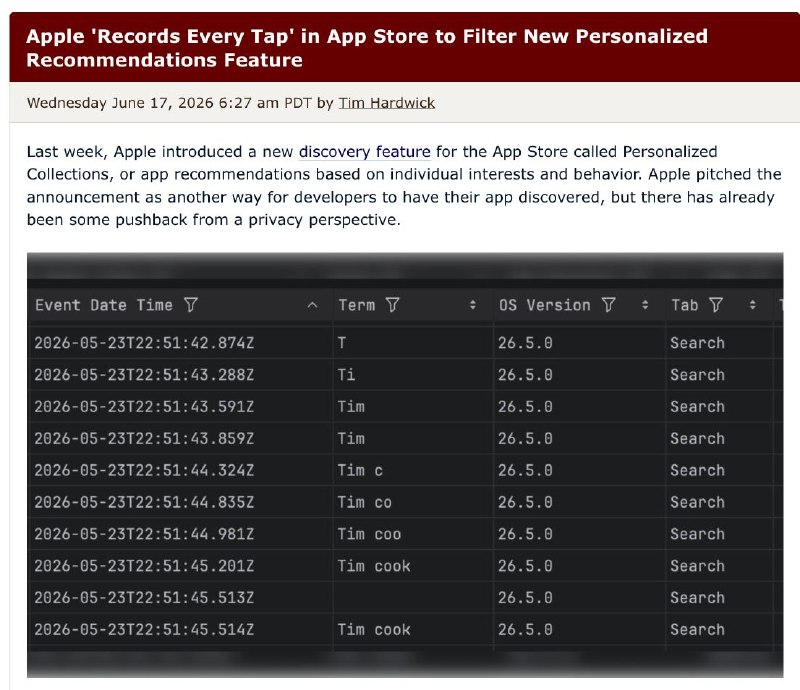
In recent developments, Apple Inc. is encountering fresh criticism regarding privacy concerns linked to its newly launched personalized App Store recommendation feature. This innovative product aims to enhance user experience by suggesting applications tailored to individual preferences and behaviors. However, recent revelations indicate that this feature employs extensive data collection methods that have raised alarms among privacy advocates and consumers alike.
Understanding the Data Collection Practices
The personalized recommendations are powered by detailed interaction data collected from users as they navigate the App Store. According to various reports, this data includes:
- Every screen tap made by the user
- Typing speed and patterns
- General usage behavior within the App Store
These findings have emerged from information users can access via Apple’s privacy portal, which allows individuals to request a report on the data that is being collected about them.
Default Settings and Transparency Concerns
Concern arises from the fact that the data collection feature is enabled by default, and users have no option to turn it off. Researchers have highlighted several issues surrounding this practice:
- Lack of transparent communication regarding data collection
- Limited opportunity for users to actively consent to the collection of their behavioral data
This has sparked a debate on whether such practices align with Apple's longstanding commitment to user privacy, a core component of its brand identity.
The Dichotomy of Brand Image and Practice
Apple has marketed itself as a staunch advocate for privacy, frequently promoting its efforts to protect user information. The situation raises an intriguing contradiction; while the company espouses values of user consent and data security, the current default settings for personalized recommendations contradict these principles. Critics argue that users deserve a more explicit opt-in process prior to the collection of sensitive behavioral data.
Summary of Key Issues
| Issue | Details |
|---|---|
| Data Collection | Collecting screen taps, typing speed, and other behaviors |
| Default Settings | Enabled by default with no option for users to turn off |
| Transparency | Lack of communication concerning data practices |
| User Consent | No explicit opt-in for data collection |
Looking Ahead
As Apple navigates these emerging concerns, it faces the challenge of aligning its practices with the privacy expectations of its user base. The current response from privacy advocates and consumers may compel Apple to re-evaluate its data collection strategies, ensuring that they not only comply with legal standards but also reflect its commitment to transparency and user empowerment.
In the technology landscape, where data privacy has become paramount, Apple's next steps will be crucial in defining the future of user trust and brand integrity in an increasingly data-driven world.
🅰️ Apple is facing fresh privacy criticism over its new personalized App Store recommendations 🤔 The feature suggests apps based on user behavior, but reports reveal that Apple collects detailed App Store interaction data to power these recommendations — including every screen tap and even typing speed. The findings come from data users can request through Apple's privacy portal. 📰 According to researchers, this data collection is enabled by default and cannot be turned off, raising concerns about transparency and user consent. 🤨 The biggest criticism? Apple has built its brand around protecting user privacy, yet users aren't explicitly asked to opt in before this level of behavioral data is collected. @DailyApple 🅰️ Apple is facing fresh privacy criticism over its new personalized App Store recommendations 🤔 The feature suggests apps based on user behavior, but reports reveal that Apple collects detailed App Store interaction data to power these recommendations — including every screen tap and even typing speed. The findings come from data users can request through Apple's privacy portal. 📰 According to researchers, this data collection is enabled by default and cannot be turned off, raising concerns about transparency and user consent. 🤨 The biggest criticism? Apple has built its brand around protecting user privacy, yet users aren't explicitly asked to opt in before this level of behavioral data is collected. @DailyApple


