 TechOffice
Microsoft to Implement Xbox Price Hike Beginning August 1, 2026
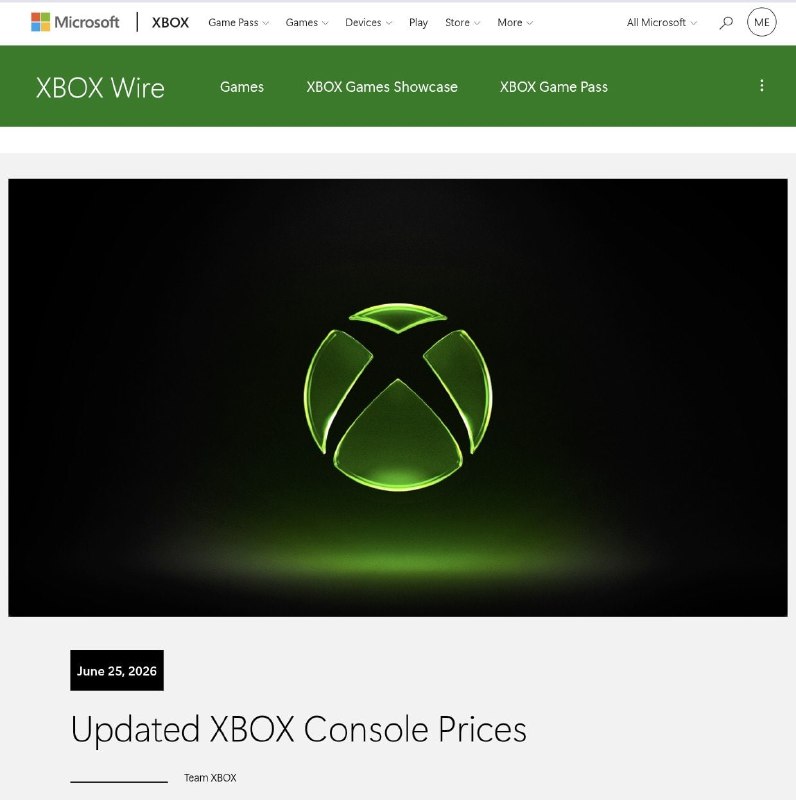
Microsoft Announces Significant Xbox Console Price Increases Starting August 2026
In a move that signals continued inflationary pressures in the gaming hardware market, Microsoft has confirmed plans to increase prices across its Xbox console lineup effective August 1, 2026. The announcement marks the second major price adjustment for Xbox consoles in three years, reflecting broader industry challenges exacerbated by surging component costs driven by artificial intelligence demand.
Price Breakdown Across Xbox Models
Microsoft unveiled the new pricing structure for its current-generation Xbox consoles, with increases ranging from $100 to $150 depending on the model. The price adjustments affect all variants of the Xbox Series S and Series X families.
| Console Model | Previous Price (USD) | New Price (USD) | Price Increase (USD) |
|---|---|---|---|
| Xbox Series S (512GB) | $399.99 | $499.99 | +$100.00 |
| Xbox Series S (1TB) | $449.99 | $549.99 | +$100.00 |
| Xbox Series X Digital | $599.99 | $749.99 | +$150.00 |
| Xbox Series X (with disc drive) | $649.99 | $799.99 | +$150.00 |
Component Cost Pressures and the AI Factor
In a statement explaining the price increases, Microsoft cited "soaring storage and memory costs" as the primary driver. The company highlighted that global demand for advanced memory and storage components has intensified significantly due to the rapid expansion of artificial intelligence development and deployment across multiple industries.
"The same high-performance NAND flash memory and GDDR6 memory that power our Xbox consoles are increasingly in demand for AI accelerators and data centers," explained a Microsoft hardware executive. "This unprecedented demand has created supply chain pressures that have directly impacted our production costs."
The Intersection of Gaming and AI Hardware
The gaming industry's reliance on advanced memory and storage technologies has created an unusual competitive dynamic with the AI sector. Modern gaming consoles require substantial memory bandwidth and fast storage to deliver high-fidelity graphics and seamless loading experiences.
As companies invest billions in AI infrastructure, the semiconductor industry has prioritized high-margin AI applications, potentially diverting production capacity from consumer electronics. This shift has reportedly led to extended lead times and increased costs for components previously considered commodity items in the gaming hardware space.
Industry Context and Historical Pricing Trends
The Xbox price increase follows a pattern of escalating hardware costs across the gaming industry. In 2024, Sony implemented similar price adjustments for PlayStation 5 consoles, citing comparable component cost pressures. Nintendo has maintained stable pricing for the Switch but has faced criticism for not increasing storage capacity in line with market demands.
Console pricing has historically followed a different trajectory than other consumer electronics. While most technology products experience price reductions over time, consoles have maintained relatively stable price points throughout their lifecycle, with manufacturers often selling hardware at a loss and recouping costs through software and services.
| Manufacturer | Last Major Price Increase | Increase Amount | Primary Stated Reason |
|---|---|---|---|
| Microsoft | August 2026 | $100-$150 | Memory/storage costs |
| Sony | November 2024 | $50-$100 | Component costs |
| Nintendo | None (2021-2026) | N/A | N/A |
Consumer Impact and Market Response
The price increases come at a challenging time for consumers, who are already grappling with economic pressures and rising costs of living across multiple sectors. Gaming, once considered a relatively affordable form of entertainment, is becoming increasingly expensive, with console hardware, games, and additional accessories all experiencing price increases.
"Console gaming is becoming a premium proposition," noted gaming industry analyst Sarah Jenkins. "While the value proposition remains strong compared to other entertainment options, the upfront cost barrier is rising, which could impact adoption among casual gamers and price-sensitive consumers."
Subscription Services as a Counterbalance
Microsoft appears to be positioning its Xbox Game Pass service as a value proposition to offset the hardware price increases. The subscription service, which offers access to hundreds of games for a monthly fee, has become a cornerstone of Microsoft's gaming strategy and may help mitigate consumer resistance to higher console prices.
"Game Pass represents an incredible value that becomes even more important as console hardware costs rise," said Phil Spencer, Head of Xbox. "For the price of two new games, players can access hundreds of titles across console, PC, and cloud, making gaming more accessible despite higher hardware costs."
Competitive Landscape and Future Outlook
The Xbox price increase puts Microsoft in a more competitive pricing position relative to Sony's PlayStation 5, which currently retails at $499.99 for the digital edition and $599.99 for the standard model. However, Microsoft's ecosystem approach, combining hardware, Game Pass, and xCloud cloud gaming, creates a differentiated value proposition.
Industry observers suggest that the price increases may signal a fundamental shift in console economics, with manufacturers potentially moving toward a more premium positioning for hardware while emphasizing services and content. This could accelerate the industry's transition toward a service-oriented model, similar to trends observed in other entertainment sectors.
Conclusion
Microsoft's decision to increase Xbox console prices reflects the complex intersection of gaming hardware demands, AI-driven component shortages, and broader economic pressures. While the move will likely face consumer scrutiny, it also demonstrates the company's commitment to maintaining hardware quality and performance in an increasingly challenging supply environment.
As the gaming industry continues to evolve, the balance between hardware investment, software services, and subscription offerings will become increasingly important. For consumers, the coming months will present new considerations in their gaming purchasing decisions, with value becoming a more nuanced calculation beyond just the initial console price tag.
Microsoft is increasing Xbox console prices again starting August 1, 2026. New US pricing: 🎮 Xbox Series S (512GB): $499.99 (+$100) 🎮 Xbox Series S (1TB): $549.99 (+$100) 🎮 Xbox Series X Digital: $749.99 (+$150) 🎮 Xbox Series X: $799.99 (+$150) Microsoft says the decision was driven by soaring storage and memory costs, which have surged due to AI demand. Gaming is getting more expensive ❤️ @techroma Microsoft is increasing Xbox console prices again starting August 1, 2026. New US pricing: 🎮 Xbox Series S (512GB): $499.99 (+$100) 🎮 Xbox Series S (1TB): $549.99 (+$100) 🎮 Xbox Series X Digital: $749.99 (+$150) 🎮 Xbox Series X: $799.99 (+$150) Microsoft says the decision was driven by soaring storage and memory costs, which have surged due to AI demand. Gaming is getting more expensive ❤️ @techroma


