 TechOffice
iOS 27 Finally Delivers Intuitive Volume Controls and Redesigned Lock Screen
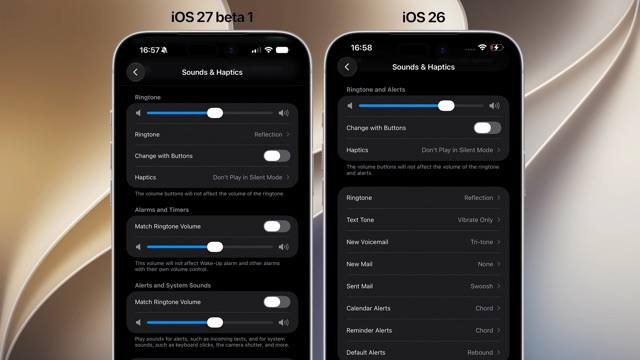
Apple's iOS 27 Finally Addresses 19-Year-Old Audio Limitation with Independent Volume Controls
In a significant update that addresses one of the longest-standing user requests in its mobile operating system's history, Apple has introduced iOS 27 with a redesigned audio control system that finally allows users to adjust alarm volume independently from other system sounds. The change, coming 19 years after the original iPhone's release, represents Apple's acknowledgment of a long-standing limitation in its user interface design.
The 19-Year Wait for Independent Volume Control
For nearly two decades, iOS users have been constrained by a single volume slider that controlled all audio output from their devices. This meant that adjusting the volume for alarms would simultaneously affect ringtones, notifications, and system sounds—a design choice that frustrated many users who wanted to customize their device's audio behavior more precisely.
The new update introduces a more granular approach to audio control, providing separate sliders for different categories of sounds:
| Old iOS Volume System | New iOS 27 Volume System |
|---|---|
| Single volume slider controlling all sounds | Separate sliders for different sound categories |
| Adjusting alarm volume affected all system sounds | Dedicated control for ringtones, alarms, and timers |
| No differentiation between alert types | Independent controls for notifications and system sounds |
This enhancement represents more than just a technical improvement—it addresses a fundamental user experience issue that has been a point of contention among iOS users since the platform's inception. The ability to set a louder alarm without affecting notification volumes or having a quiet ringtone but loud system sounds provides the customization that users have been requesting for years.
Enhanced Lock Screen Customization
Beyond the volume control overhaul, iOS 27 introduces several new customization options for the lock screen, further enhancing user personalization capabilities:
- Oversized Widgets: Users can now place larger widgets on their lock screen, making information more immediately accessible without needing to unlock their device.
- Compact Clock Options: For those who prefer a more minimalist lock screen or need to maximize space for other elements, iOS 27 offers very small clock options that can be positioned strategically.
These additions build upon Apple's ongoing efforts to transform the lock screen from a simple security checkpoint into a dynamic information hub that users can tailor to their specific needs and preferences.
Table: New iOS 27 Lock Screen Features
| Feature | Description | Benefit |
|---|---|---|
| Oversized Widgets | Expanded widget options that occupy more lock screen real estate | Greater visibility of important information at a glance |
| Compact Clock | Very small clock display options | Increased flexibility for lock screen layout |
macOS 27 Enhancements
Alongside iOS 27, Apple is also updating its desktop operating system with improvements to iPhone Mirroring. The new macOS 27 will feature a wider window for iPhone Mirroring, providing users with a more expansive view of their iPhone screen when mirrored to their Mac.
This enhancement is particularly valuable for users who frequently switch between their iPhone and Mac, as it makes the transition between devices more seamless and allows for more productive workflows when using both devices simultaneously.
Table: iPhone Mirroring Enhancements in macOS 27
| Previous Version | macOS 27 |
|---|---|
| Standard-sized iPhone mirroring window | Wider window for iPhone mirroring |
| Limited view of iPhone content | Enhanced visibility and interaction capabilities |
Apple's Ongoing Commitment to User Experience
The introduction of these features in iOS 27 and macOS 27 demonstrates Apple's continued focus on refining its operating systems based on user feedback and evolving usage patterns. While some of these changes may seem long overdue to power users, their arrival represents Apple's willingness to revisit and improve fundamental aspects of its software.
The independent volume control system, in particular, highlights Apple's ability to recognize and address user needs even for features that have remained unchanged for nearly two decades. This balance between maintaining consistency and implementing meaningful improvements is a key aspect of Apple's software design philosophy.
As users begin to adopt iOS 27 and macOS 27, these enhancements are expected to improve daily interactions with Apple devices, making them more personalized and intuitive to use. The combination of granular audio controls, expanded lock screen customization, and improved cross-device functionality represents a significant step forward in Apple's quest to create a cohesive and user-friendly ecosystem.
Apple's software updates have always been about more than just new features—they're about refining the user experience and addressing the small frustrations that can accumulate over time. With iOS 27, the company has done just that, providing solutions to problems that users have been voicing for nearly two decades while also introducing fresh ways to interact with their devices.
Apple has finally introduced a significant update to its iOS operating system, bringing long-awaited features to users. One of the most notable changes is the ability to adjust alarm volume separately from notifications. This feature has been 19 years in the making, with iOS previously utilizing a single volume slider for all sounds. The new update now provides separate sliders for ringtones, alarms, and timers, as well as notifications and system sounds. This change aims to provide users with more control over their device's audio settings. Additionally, iOS 27 introduces oversized widgets and very small clock options on the lock screen. On the other hand, macOS 27 users can expect a wider window for iPhone Mirroring. These enhancements demonstrate Apple's ongoing commitment to improving the user experience and addressing long-standing issues with its operating systems. ⏱️ It took 19 years to be able to adjust alarm volume separately from notifications iOS 🍎 finally lets you control alarm volume independently from other sounds. Until now, iOS used a single volume slider for everything. Now there are separate sliders: one for ringtones, one for alarms and timers, and one for notifications and system sounds. iOS 🍎 also brings oversized widgets and very small clock options on the lock screen, while macOS 27 gets a wider window for iPhone Mirroring. #iOS @DailyApple


