 TechOffice
Apple's Personalized App Store Sparks Privacy Debate Among Critics and Users
Apple Faces Privacy Backlash Over New Personalized App Store Recommendations
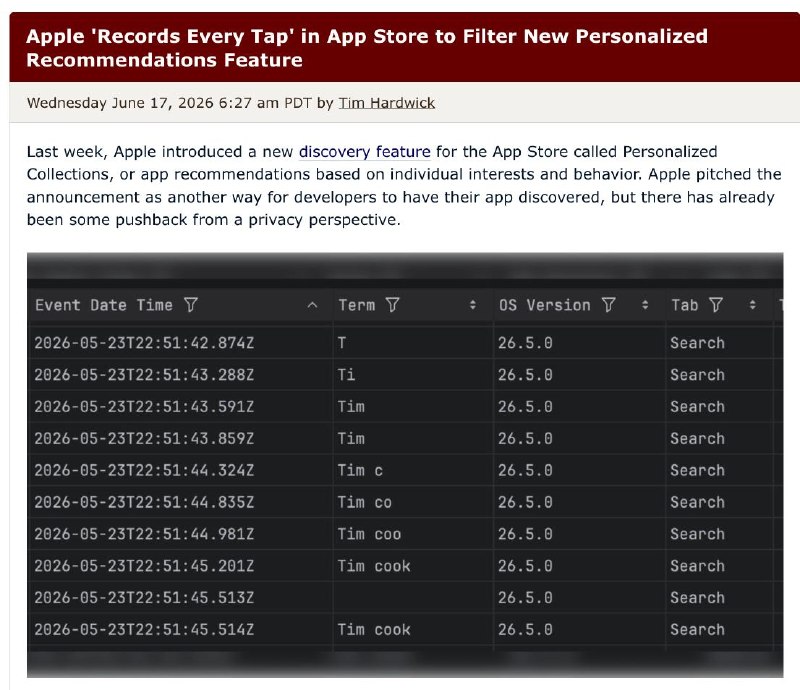
Apple, the tech giant renowned for its strong stance on user privacy, is facing renewed criticism following revelations about the extent of data collection powering its new personalized App Store recommendations. The controversy centers on the detailed user behavior information being gathered to suggest apps, including granular details like every screen tap and typing speed.
The New Personalization Feature
Apple recently introduced enhanced personalized recommendations in the App Store, designed to help users discover applications more relevant to their interests and usage patterns. The feature analyzes user interactions to suggest apps that align with individual preferences and behaviors.
While personalization is common in today's digital ecosystem, Apple's implementation has raised eyebrows due to the specificity of data being collected. According to researchers examining data accessible through Apple's privacy portal, the company is gathering detailed information about how users interact with the App Store, including:
- Every screen tap within the App Store
- Typing speed and patterns
- Time spent on different app pages
- Search queries and refinement behavior
- Scrolling patterns and navigation habits
Default Collection and Lack of Opt-in
Perhaps the most contentious aspect of this practice is that the data collection is enabled by default and cannot be turned off by users. This stands in contrast to Apple's long-standing marketing of itself as a privacy-first company that gives users control over their personal information.
"This level of behavioral data collection goes beyond what most users would expect when simply browsing the App Store," noted privacy researchers who examined the data. "The fact that it's happening without an explicit opt-in is particularly concerning given Apple's privacy branding."
Apple's Privacy Portal Reveals Extensive Data
The information comes from Apple's privacy portal, where users can request a copy of their data. Upon examining these files, researchers discovered detailed logs of App Store interactions that power the personalized recommendations. This includes timestamped records of nearly every interaction a user has with the App Store interface.
The data collection appears to be comprehensive, capturing not just what apps users download, but how they behave within the App Store ecosystem itself. This granular level of detail provides insights into user behavior that extends beyond simple preference analysis.
Contradicting Apple's Privacy Messaging
Apple has historically positioned itself as a differentiator from competitors like Google and Facebook by emphasizing its commitment to user privacy. The company's marketing frequently highlights features like on-device processing and transparent data practices as key advantages of its ecosystem.
However, this latest revelation appears to contradict that messaging. Privacy advocates argue that collecting detailed behavioral data without explicit consent represents a significant departure from Apple's stated principles.
Industry Comparison: How Others Handle Personalization
When compared to industry practices, Apple's approach to personalization appears more aggressive than some competitors. Many platforms offer users granular controls over what data is used for personalization, with clear opt-in options for sensitive data collection.
| Company | Personalization Data Collection | User Control Options |
|---|---|---|
| Apple | Detailed behavioral data including taps and typing speed | Cannot be disabled; enabled by default |
| Search history, app usage, location | Can be adjusted in account settings | |
| Meta | Interests, demographics, engagement metrics | Detailed ad preferences controls |
| Amazon | Purchase history, browsing behavior | Can opt out of personalization |
Expert Perspectives on the Privacy Implications
Privacy experts have expressed concern about the breadth of data being collected. "While personalization can enhance user experience, the collection of fine-grained behavioral data like typing speed and screen taps crosses into territory that many users would consider intrusive," said Dr. Elena Rodriguez, a privacy researcher at the International Digital Privacy Institute.
Legal scholars have also weighed in, noting that such data collection could potentially fall under various privacy regulations depending on jurisdiction. "In regions with strong privacy laws like the GDPR, this level of behavioral data collection without explicit consent could raise significant compliance issues," explained legal tech analyst Michael Chen.
User Reactions and Concerns
The revelation has sparked concern among privacy-conscious Apple users. Many expressed surprise that such detailed data was being collected without their explicit knowledge or consent. "I chose Apple specifically because of their privacy promises," said one user in an online forum. "To find out they're collecting my typing speed without asking is disappointing."
Others have questioned the necessity of such granular data for app recommendations. "I understand collecting what apps I download and maybe my search terms, but tracking every tap and how fast I type seems excessive for suggesting new apps," commented another user.
Regulatory Landscape and Potential Consequences
The controversy comes at a time when privacy regulations are becoming increasingly stringent worldwide. With laws like the GDPR in Europe, CCPA in California, and similar legislation emerging in other regions, tech companies face growing scrutiny over data collection practices.
Should regulatory bodies determine that Apple's practices violate privacy laws, the company could face significant financial penalties and be required to modify its data collection policies. More broadly, the incident could impact Apple's carefully cultivated reputation as a privacy leader.
What Users Can Do
While users cannot currently opt out of this data collection, Apple does provide transparency through its privacy portal. Users can request their data to see exactly what information is being collected about their App Store interactions. This can be done through:
- Accessing the privacy portal via Apple ID settings
- Requesting a copy of personal data
- Reviewing the detailed logs of App Store interactions
Privacy advocates recommend that users regularly review the data collected about them and provide feedback to Apple about their privacy concerns.
Broader Implications for the Tech Industry
The controversy surrounding Apple's App Store personalization highlights a growing tension in the tech industry between personalization and privacy. As companies seek to improve user experience through tailored content, they must navigate increasingly complex privacy expectations and regulations.
This incident may prompt other tech companies to reevaluate their own data collection practices, particularly when it comes to behavioral data that users might consider sensitive. It also underscores the importance of transparency and meaningful user consent in personalization features.
Conclusion
Apple's personalized App Store recommendations have brought the company's privacy practices under renewed scrutiny. While personalization can enhance user experience, the extent of data collection—coupled with the inability to opt out—raises significant questions about transparency and user consent.
As users become increasingly aware of how their data is used, tech companies like Apple will need to balance innovation with privacy protection to maintain trust. This incident serves as a reminder that even companies with strong privacy reputations must continuously evaluate their practices against evolving user expectations and regulatory requirements.
For now, the controversy highlights the importance of user education and transparency in data collection practices. As the digital landscape continues to evolve, finding the right balance between personalization and privacy will remain a critical challenge for the entire tech industry.
🅰️ Apple is facing fresh privacy criticism over its new personalized App Store recommendations 🤔 The feature suggests apps based on user behavior, but reports reveal that Apple collects detailed App Store interaction data to power these recommendations — including every screen tap and even typing speed. The findings come from data users can request through Apple's privacy portal. 📰 According to researchers, this data collection is enabled by default and cannot be turned off, raising concerns about transparency and user consent. 🤨 The biggest criticism? Apple has built its brand around protecting user privacy, yet users aren't explicitly asked to opt in before this level of behavioral data is collected. @DailyApple 🅰️ Apple is facing fresh privacy criticism over its new personalized App Store recommendations 🤔 The feature suggests apps based on user behavior, but reports reveal that Apple collects detailed App Store interaction data to power these recommendations — including every screen tap and even typing speed. The findings come from data users can request through Apple's privacy portal. 📰 According to researchers, this data collection is enabled by default and cannot be turned off, raising concerns about transparency and user consent. 🤨 The biggest criticism? Apple has built its brand around protecting user privacy, yet users aren't explicitly asked to opt in before this level of behavioral data is collected. @DailyApple


