 TechOffice
Samsung Display Breakthrough: RGB OLEDoS Technology Poised to Revolutionize XR Headsets
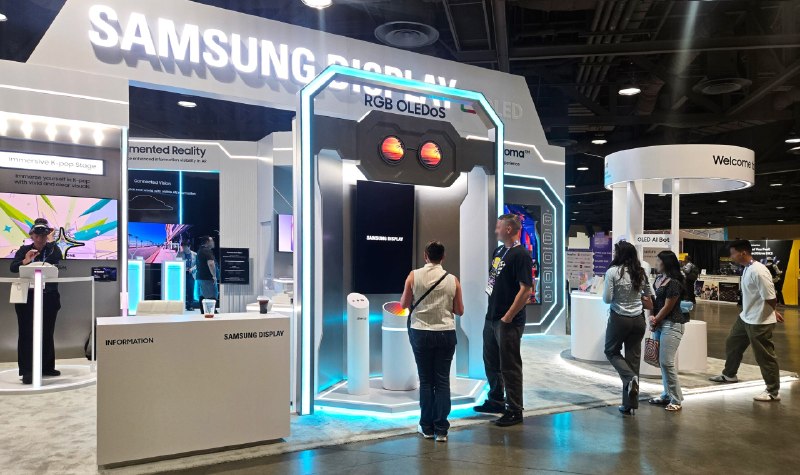
Samsung Display's Revolutionary RGB OLEDoS Technology Poised to Transform Future XR Headsets
In a significant development for the extended reality (XR) industry, Samsung Display has unveiled its latest innovation in display technology: RGB OLEDoS (OLED on Silicon). This breakthrough promises to address critical limitations in current XR headsets, potentially paving the way for more immersive, comfortable, and visually stunning virtual and augmented reality experiences.
Understanding OLEDoS Technology
OLEDoS represents a fusion of OLED (Organic Light-Emitting Diode) display technology with silicon backplanes, creating microdisplays that offer superior brightness, contrast, and pixel density compared to traditional alternatives. Samsung's implementation specifically utilizes an RGB pixel arrangement, which eliminates the need for color filters that can reduce overall brightness and efficiency.
The technology integrates thin-film transistor (TFT) circuitry directly onto a silicon chip, with OLED materials deposited on top. This architecture enables extremely high pixel densities in compact form factors, making it ideal for the near-eye displays required in XR headsets.
Key Technical Advantages
- Superior Brightness: RGB OLEDoS can achieve brightness levels exceeding 3,000 nits, crucial for maintaining visibility in various lighting conditions
- High Contrast Ratio: OLED technology delivers true blacks and infinite contrast ratios, enhancing depth perception and realism
- Reduced Power Consumption: More efficient light production leads to lower power requirements, extending battery life
- Fast Response Times: Microsecond-level response times eliminate motion blur, crucial for dynamic XR content
- Compact Form Factor: Enables smaller, lighter headset designs without compromising display quality
Current Challenges in XR Display Technology
The XR industry has long grappled with display limitations that have hindered mainstream adoption. Current solutions face several significant challenges:
| Challenge | Impact on User Experience | Current Solutions |
|---|---|---|
| Pixel density limitations | Screen door effect, reduced immersion | Higher resolution displays, optics improvements |
| Brightness constraints | Poor visibility in well-lit environments | External filters, brighter backlights |
| Power consumption | Short battery life, bulky designs | |
| Form factor limitations | Bulky headsets, user discomfort |
How RGB OLEDoS Addresses These Challenges
Samsung's RGB OLEDoS technology directly tackles the core limitations of current XR displays:
Unprecedented Pixel Density
With pixel densities exceeding 3,000 PPI (pixels per inch), RGB OLEDoS virtually eliminates the screen door effect that has plagued previous generations of XR displays. This high pixel density, combined with advanced optics, allows for more natural-looking virtual environments with crisp text and detailed graphics.
Enhanced Brightness and Color Performance
The elimination of color filters in Samsung's RGB approach allows for significantly higher brightness levels while maintaining accurate color reproduction. This is particularly important for AR applications where virtual content must blend seamlessly with real-world environments under varying lighting conditions.
Improved Power Efficiency
OLEDoS technology's emissive nature means it only consumes power when displaying active content, with no backlight required. This efficiency, combined with Samsung's advanced manufacturing processes, results in displays that can deliver high performance while minimizing power consumption.
Technical Specifications and Innovations
While Samsung has not released complete specifications for its commercial RGB OLEDoS displays, industry insiders and leaked information suggest several key innovations:
| Parameter | RGB OLEDoS | Current Micro-LED | Traditional LCD |
|---|---|---|---|
| Brightness | 3,000+ nits | 1,500-2,000 nits | 800-1,200 nits |
| Contrast Ratio | ∞:1 (infinite) | td>1,000,000:11,500:1 | |
| Response Time | 0.1-1ms | 5-10ms | |
| Power Efficiency | High | Very High | Moderate |
| Manufacturing Cost | High (decreasing) | Very High | Low |
Advanced Pixel Structure
Samsung's implementation reportedly features a unique pixel structure that maximizes light output while minimizing power consumption. The company has developed proprietary materials and manufacturing processes that enhance the longevity and efficiency of the organic materials used in the displays.
Integration with Eye-Tracking Technology
The high refresh rates and low latency of RGB OLEDoS make it an ideal companion for advanced eye-tracking systems. This integration enables foveated rendering, where only the area of the display corresponding to the user's point of focus renders at full resolution, while peripheral content is rendered at lower resolution. This technique can dramatically reduce the computational load while maintaining visual fidelity.
Impact on XR Headset Development
The introduction of RGB OLEDoS technology is expected to accelerate the development of next-generation XR headsets across multiple categories:
Virtual Reality (VR) Headsets
For VR applications, RGB OLEDoS promises to deliver the high-resolution, high-brightness displays needed for truly immersive experiences. The technology's compact nature allows for lighter headset designs, reducing user fatigue during extended sessions. Additionally, the improved power efficiency could enable wireless VR headsets with competitive battery life.
Augmented Reality (AR) Glasses
The form factor advantages of RGB OLEDoS are particularly significant for AR glasses, where size and weight are critical constraints. The technology's brightness and outdoor visibility could finally make consumer AR glasses practical for everyday use, moving beyond novelty devices to functional accessories.
Mixed Reality (MR) Applications
For mixed reality applications that blend virtual content with real-world environments, RGB OLEDoS offers the color accuracy and brightness needed for convincing integration. The technology's high dynamic range capabilities can ensure that virtual objects appear properly lit within real-world scenes.
Industry Implications and Competitive Landscape
Samsung's advancement in RGB OLEDoS technology intensifies an already competitive display landscape for XR applications. The company joins other major players including Sony, which has been developing MicroOLED technology for its PlayStation VR2 headset, and Apple, which is reportedly investing heavily in microdisplay technology for its upcoming AR/VR headset.
Manufacturing Advantages
Samsung brings significant manufacturing expertise to the OLEDoS space, having produced OLED displays for smartphones and televisions for over a decade. The company's existing production infrastructure and yield improvements could potentially give it a cost advantage in scaling RGB OLEDoS production compared to competitors.
Patent Landscape
p>The RGB OLEDoS space involves numerous patents, with companies like eMagin, Kopin, and Sony holding significant intellectual property. Samsung's entry into this market suggests either substantial proprietary technology or strategic licensing arrangements to navigate the complex patent landscape.Future Outlook for OLEDoS Technology
The development of RGB OLEDoS represents just one step in the evolution of microdisplay technology. Industry experts predict several advancements in the coming years:
Resolution and Refresh Rate Increases
Future iterations of RGB OLEDoS are expected to push resolution beyond 4K per eye while maintaining or increasing refresh rates beyond 120Hz. These improvements will be crucial for reducing motion sickness and increasing the realism of virtual environments.
Reduced Power Consumption
As materials science advances and manufacturing processes mature, power consumption is expected to decrease further. This could enable always-on AR experiences with battery life measured in days rather than hours.
Improved Longevity and Durability
Current OLED technology faces challenges with organic material degradation over time. Research into new materials and encapsulation techniques aims to extend the operational lifespan of OLEDoS displays to match or exceed traditional display technologies.
Conclusion
Samsung Display's RGB OLEDoS technology marks a significant milestone in the evolution of extended reality displays. By addressing critical limitations in brightness, resolution, power efficiency, and form factor, this breakthrough has the potential to accelerate the adoption of XR technologies across consumer, enterprise, and industrial applications.
As display technology continues to advance, we can expect XR headsets to become increasingly indistinguishable from regular eyewear in terms of size and weight, while offering increasingly immersive and realistic experiences. Samsung's contribution to this evolution through RGB OLEDoS technology positions the company at the forefront of what many consider to be the next major computing platform.
The coming years will likely see RGB OLEDoS displays become a standard feature in high-end XR devices, with potential trickle-down effects to more affordable products as manufacturing scales and costs decrease. For consumers and enterprises alike, this technological advancement promises to bring us closer to the seamless integration of digital and physical realities that has long been the promise of extended computing.
Samsung Display's New RGB OLEDoS Tech Could Make Future XR Headsets Even Better https://ift.tt/JvS0WAK Samsung Display's New RGB OLEDoS Tech Could Make Future XR Headsets Even Better https://ift.tt/JvS0WAK


