 TechOffice
Xiaomi India Undergoing Major Strategic Transformation
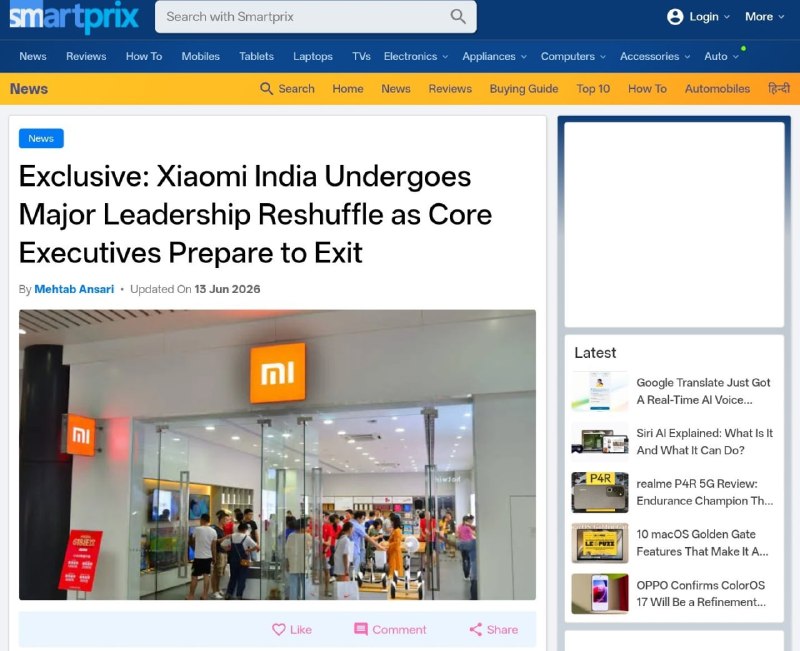
Xiaomi India Undergoes Major Management Restructuring as Market Dynamics Shift
The Indian subsidiary of Chinese tech giant Xiaomi is reportedly preparing for significant leadership changes as part of a strategic shift toward a leaner management structure. According to industry intelligence from Smartprix, several core executives at Xiaomi India are expected to exit the company in what appears to be a restructuring effort aimed at optimizing operations amid evolving market conditions.
Historical Market Dominance and Recent Challenges
Once the undisputed market leader in India's fiercely competitive smartphone sector, Xiaomi has faced mounting challenges that have eroded its dominant position. The company, which entered the Indian market in 2014, quickly established itself as a favorite among consumers with its value-for-money proposition and aggressive pricing strategy.
Xiaomi's rise in India was meteoric. By 2017, the company had captured the top position in the country's smartphone market, a position it maintained for several years. The brand's success was built on a combination of innovative product offerings, effective e-first distribution strategy, and community engagement through its Mi Home stores and online forums.
However, the competitive landscape has transformed dramatically in recent years. New entrants and established players alike have intensified their focus on the Indian market, leading to increased pressure on Xiaomi's market share.
Table 1: Xiaomi's Market Position in India (2018-2023)
| Year | Market Share (%) | Market Position | Key Challenges |
|---|---|---|---|
| 2018 | 28.9 | 1st | Supply chain constraints |
| 2019 | 27.2 | 1st | Increased competition |
| 2020 | 26.0 | 1st | COVID-19 disruptions |
| 2021 | 23.5 | 2nd | Loss of top position |
| 2022 | 21.0 | 3rd | Intensified competition |
| 2023 | 18.5 | 3rd | Market share decline |
The Competitive Landscape in India's Smartphone Market
India represents one of the world's largest and most dynamic smartphone markets, with over 150 million units shipped annually. The competitive environment has become increasingly fragmented, with several global and domestic players vying for market dominance.
South Korean giant Samsung has consistently remained a strong competitor, while Chinese brands like Realme, Vivo, and Oppo have gained significant ground through aggressive pricing and localized marketing strategies. Additionally, homegrown brands such as Micromax and Lava have attempted to reclaim market share with budget-friendly offerings.
Table 2: Major Players in Indian Smartphone Market (2023)
| Rank | Brand | Market Share (%) | Key Strategy |
|---|---|---|---|
| 1 | Samsung | 22.3 | Portfolio diversification |
| 2 | Realme | 20.5 | Aggressive pricing |
| 3 | Xiaomi | 18.5 | Value proposition |
| 4 | Vivo | 17.8 | Strong retail presence |
| 5 | Oppo | 15.2 | Camera-focused marketing |
Management Restructuring: Details and Implications
The reported leadership changes at Xiaomi India come as the company seeks to restructure its management approach amid market challenges. While specific names of departing executives have not been officially confirmed, industry sources suggest that several key leaders from various departments, including sales, marketing, and operations, are preparing to exit.
The shift toward a "leaner management structure" indicates a potential consolidation of decision-making processes and a more streamlined organizational hierarchy. Such restructuring often aims to reduce operational costs, improve agility, and enable faster response to market changes.
Industry analysts suggest that these changes could reflect Xiaomi's global strategy to optimize operations across its international subsidiaries. The company has previously implemented similar restructuring measures in other markets where it faced competitive pressures.
Strategic Response to Market Challenges
The management restructuring appears to be part of a broader strategic response to market challenges. Xiaomi has been investing in several key areas to regain its competitive edge in India:
- Product Diversification: Expanding beyond smartphones into smart home devices, wearables, and lifestyle products to create a more comprehensive ecosystem.
- Channel Optimization: Strengthening both online and offline retail presence to improve product accessibility.
- Localization: Increasing local manufacturing through its partnership with Foxconn to reduce costs and improve supply chain resilience.
- Premium Segment Focus: Launching more premium devices under its Redmi and Mi brands to capture higher-value market segments.
Industry Context: Broader Trends in the Indian Tech Sector
Xiaomi's restructuring in India occurs against a backdrop of significant shifts in the country's technology sector. The Indian government's push for "Atmanirbhar Bharat" (self-reliant India) has encouraged greater local manufacturing and reduced dependence on Chinese imports, creating both challenges and opportunities for foreign tech companies.
Additionally, India's growing middle class and increasing digital adoption have created new opportunities for technology companies that can adapt to local preferences and price sensitivities. The country's 5G rollout and expanding digital infrastructure further present growth potential for device manufacturers.
Future Outlook for Xiaomi in India
The success of Xiaomi's management restructuring will likely depend on several factors:
- Whether the new leadership can effectively navigate the competitive landscape and restore market momentum.
- The company's ability to maintain its value proposition while addressing premium segment growth.
- How effectively Xiaomi can leverage its ecosystem of products beyond smartphones.
- The speed and effectiveness of its operational optimization under the new structure.
Industry observers will be watching closely to see how Xiaomi balances cost optimization with continued innovation and whether the management changes translate to improved market performance in the coming quarters.
Conclusion
The reported management restructuring at Xiaomi India represents a significant strategic pivot for the company as it seeks to address market challenges and optimize operations. While the leadership changes may signal short-term disruption, they could position Xiaomi for more agile and responsive operations in the long term.
As India's smartphone market continues to evolve, Xiaomi's ability to adapt its management structure and business strategy will be crucial to its future success. The company's journey from market leader to facing intensified competition underscores the dynamic nature of India's technology sector and the constant need for innovation and operational excellence.
Industry stakeholders will be closely monitoring Xiaomi's implementation of its leaner management structure and the subsequent impact on its market position, product strategy, and overall performance in one of the world's most important smartphone markets.
Big changes incoming at Xiaomi India! As per Smartprix report, several Xiaomi India's core executives are reportedly preparing to exit as the company shifts to a leaner management structure. Xiaomi was once the undisputed market leader in India. However, fierce competition has recently caused a notable dip in their overall market share. ❤️ @XiaomiHSU Big changes incoming at Xiaomi India! As per Smartprix report, several Xiaomi India's core executives are reportedly preparing to exit as the company shifts to a leaner management structure. Xiaomi was once the undisputed market leader in India. However, fierce competition has recently caused a notable dip in their overall market share. ❤️ @XiaomiHSU


