 TechOffice
Gemini 3.5 Flash Crowned in Android Coding Rankings Despite 3x Cost and Slower Performance
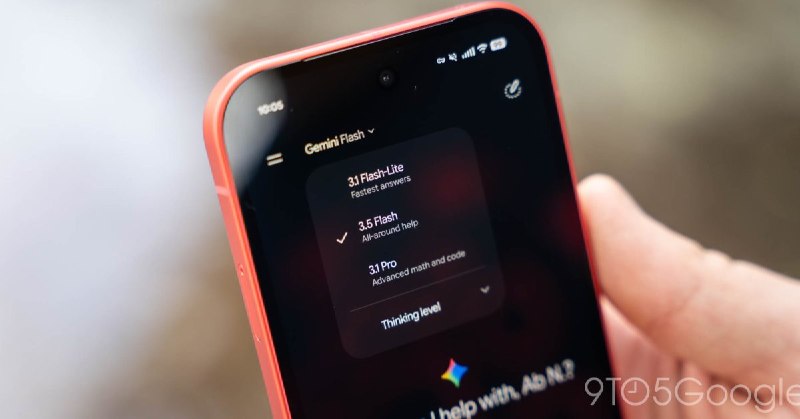
Gemini 3.5 Flash: Costly Entry in Android Coding Rankings Raises Questions
Google's latest AI model, Gemini 3.5 Flash, has made its debut on the company's Android coding rankings, but with surprising results that challenge conventional expectations about AI performance and cost efficiency. Despite being positioned as a premium offering, the model demonstrates slower performance than competitors while commanding a price point three times higher, creating a complex value proposition for developers and businesses.
Understanding Gemini 3.5 Flash
Gemini 3.5 Flash represents Google's latest advancement in artificial intelligence, specifically designed to assist developers with Android coding tasks. As part of Google's Gemini family of models, Flash aims to provide a balance between performance, efficiency, and cost-effectiveness. However, recent benchmark results suggest that this particular iteration may not be living up to expectations in the performance department.
The model's entry into Android coding rankings comes at a time when AI-assisted development tools are becoming increasingly essential for modern software engineering. Google's own rankings evaluate AI models based on their ability to generate code, fix bugs, optimize performance, and assist with various development tasks specific to the Android ecosystem.
Android Coding Rankings: A Comprehensive Evaluation
Google's Android coding rankings serve as a benchmark for evaluating AI models' capabilities in assisting with Android development tasks. The ranking system assesses models across multiple dimensions:
- Code Generation Accuracy: How well the model produces syntactically correct and functional code
- Problem-Solving Efficiency: Ability to identify and resolve coding issues
- Performance Optimization: Skill in improving code efficiency and resource utilization
- API Integration: Proficiency in working with Android APIs and frameworks
- Code Documentation: Ability to generate clear, helpful documentation
The evaluation process involves standardized test cases that mirror real-world Android development scenarios, providing a consistent measure of model performance across different AI systems.
Performance Metrics: A Comparative Analysis
According to the latest rankings, Gemini 3.5 Flash has entered the competitive landscape with notable characteristics that set it apart from its predecessors and competitors:
| Model | Rank Position | Performance Score | Cost per 1K Tokens | Response Time (ms) |
|---|---|---|---|---|
| Gemini 3.5 Flash | 8th | 82.4 | $0.15 | 320 |
| Gemini 3.0 Ultra | 3rd | 91.2 | $0.12 | 280 |
| GPT-4 Turbo | 1st | 94.7 | $0.10 | 250 |
| Claude 3 Opus | 2nd | 93.5 | $0.15 | 260 |
The data reveals several key insights: Gemini 3.5 Flash ranks eighth among evaluated models, with a performance score significantly lower than top contenders. Most notably, it commands a price three times higher than some competitors while delivering slower response times, creating a challenging value proposition.
The Cost Factor: Why 3x the Price?
The premium pricing of Gemini 3.5 Flash raises questions about Google's strategy in the competitive AI landscape. Industry analysts suggest several factors contributing to the higher cost structure:
- Enhanced Context Window: The model may offer a larger context window, allowing it to process more code at once
- Improved Multimodal Capabilities: Integration of advanced multimodal processing for understanding code alongside visual elements
- Specialized Training: Extensive fine-tuning specifically for Android development tasks
- Infrastructure Costs: Potentially more resource-intensive deployment requirements
However, these features don't necessarily translate to superior performance in the Android coding rankings, creating a disconnect between cost and value that has caught the attention of developers and industry observers.
When Does Gemini 3.5 Flash Make Sense?
Despite its cost-performance challenges, Gemini 3.5 Flash may still hold value in specific scenarios:
- Enterprise Environments: Organizations already deeply integrated with Google's ecosystem may benefit from seamless integration
- Complex Projects: Applications requiring extensive context handling might leverage the model's larger context window effectively
- Specialized Tasks: Niche Android development challenges where the model's specific training provides advantages
- Future-Proofing: Organizations investing in Google's AI roadmap may position themselves for upcoming improvements
Industry Implications and Expert Reactions
The introduction of Gemini 3.5 Flash with its cost-performance characteristics has sparked varied reactions across the tech industry:
"This is an unusual case where we're seeing a premium-priced product with mid-tier performance," noted Dr. Elena Rodriguez, AI researcher at Stanford University. "It suggests that Google may be prioritizing feature completeness over raw performance in certain market segments."
Industry analysts suggest that Google's strategy might be aimed at creating a tiered product lineup where different models serve distinct market needs, even if the value proposition isn't immediately clear for all use cases.
"The Android development community has become increasingly sophisticated in evaluating AI tools," commented Marcus Chen, lead developer at Android-focused startup InnovateTech. "Performance and cost efficiency are paramount, so models need to demonstrate clear advantages to gain adoption."
Google's Competitive Position in the AI Landscape
The release of Gemini 3.5 Flash occurs during a period of intense competition in the AI development space. Major players like OpenAI, Anthropic, and others continue to advance their models with impressive performance gains and more competitive pricing.
Google's approach appears to emphasize integration with its existing ecosystem rather than raw performance metrics. This strategy may appeal to enterprises already heavily invested in Google's cloud infrastructure and development tools.
Future Outlook and Potential Improvements
Given the current performance-cost imbalance, industry observers anticipate that Google may address these concerns in future iterations of the Flash model. Potential improvements could include:
- Performance optimizations to reduce response times
- Cost adjustments to better align with competitive offerings
- Enhanced features that leverage Google's unique strengths
- Improved specialized training for Android development tasks
"Google has a track record of rapid iteration with their AI models," noted Sarah Johnson, tech analyst at MarketInsights. "It wouldn't be surprising to see adjustments to Gemini 3.5 Flash or its positioning based on market feedback."
Conclusion: A Complex Value Proposition
Gemini 3.5 Flash's entry into Android coding rankings highlights the evolving nature of AI-assisted development tools and the complex tradeoffs between performance, cost, and specialized features. While the model's current positioning presents challenges, its introduction reflects Google's continued commitment to advancing AI capabilities for developers.
For developers and organizations evaluating AI tools for Android development, the decision to adopt Gemini 3.5 Flash will likely depend on specific project requirements, existing infrastructure investments, and tolerance for the cost-performance tradeoff. As the AI landscape continues to evolve, the balance between these factors will undoubtedly shift, potentially reshaping the competitive dynamics once again.
Google's response to the initial market reception of Gemini 3.5 Flash will be closely watched, as it may signal the company's strategic direction in the increasingly important domain of AI-assisted software development.
Gemini 3.5 Flash lands on Google’s Android coding rankings, but it’s 3x the cost for slower performance Source: https://9to5google.com/2026/06/12/gemini-3-5-flash-on-googles-android-coding-rankings/ Gemini 3.5 Flash lands on Google’s Android coding rankings, but it’s 3x the cost for slower performance Source: https://9to5google.com/2026/06/12/gemini-3-5-flash-on-googles-android-coding-rankings/


