 TechOffice
Apple Faces AI Chip Supply Crunch Amid Growing Competition
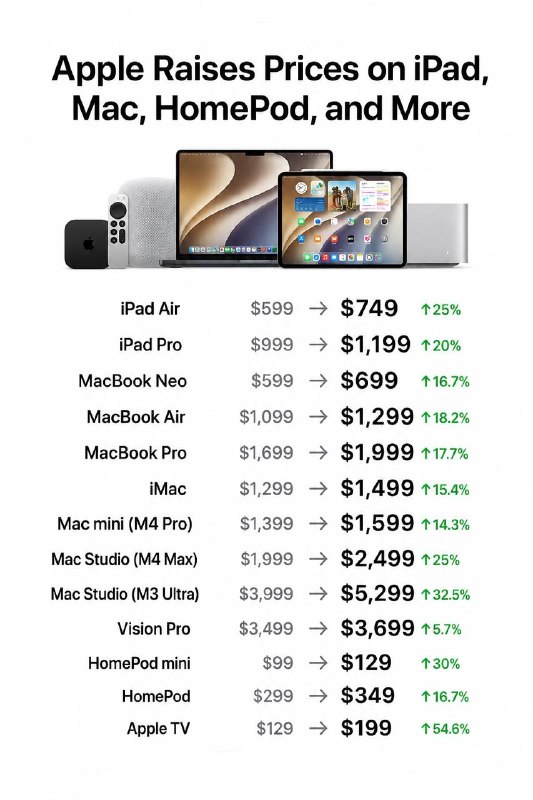
Apple Faces Inevitable Price Hikes as AI Boom Creates Global Chip Crunch
The technological landscape is undergoing a seismic shift as artificial intelligence drives unprecedented demand for semiconductor components, forcing Apple Inc. to implement widespread price increases across its product lineup. This move, while potentially unwelcome for consumers, underscores the mounting challenges facing the tech industry as AI development competes with consumer electronics for the same critical hardware resources.
The Unfolding Price Revolution
Apple has recently adjusted pricing on most of its product offerings, marking a significant departure from the company's historical reputation for maintaining relatively stable pricing structures. The increases come as a direct response to the skyrocketing costs of memory and storage chips, components essential to both consumer devices and the artificial intelligence infrastructure that is transforming industries worldwide.
The semiconductor industry, already reeling from supply chain disruptions during the pandemic, now faces a new challenge: the voracious appetite of AI development. As companies race to build more powerful AI models and data centers, they are increasingly competing with consumer electronics manufacturers for the same advanced memory and storage components.
The AI Chip Crunch Explained
The current chip shortage differs significantly from previous supply constraints. Rather than a production limitation, this crunch is driven by unprecedented demand from the AI sector. Modern AI systems, particularly large language models and neural networks, require massive amounts of high-performance memory and storage to function effectively.
Key factors contributing to the crunch include:
- Exponential growth in AI development and deployment
- Increased demand for high-bandwidth memory (HBM) used in AI accelerators
- Greater need for NAND flash storage in data centers
- Expansion of AI capabilities into consumer applications
As AI companies scale their operations, they are purchasing components in quantities that were once unimaginable, driving up prices and reducing availability for traditional consumer electronics manufacturers like Apple.
Industry-Wide Impact
Apple is not alone in facing these challenges. Across the tech industry, companies are grappling with the same component constraints. The competition for semiconductors has created a seller's market, with manufacturers able to command premium prices for their most advanced products.
The situation has prompted several industry-wide responses:
- Manufacturers investing in vertical integration to secure component supplies
- Companies diversifying their supplier base to reduce dependency on single sources
- Increased investment in semiconductor manufacturing capacity
- Development of alternative technologies that may be less dependent on constrained components
Tim Cook's Warnings and Apple's Strategy
Apple's CEO, Tim Cook, has been transparent about the challenges facing the company. In previous communications, Cook acknowledged that price hikes were becoming increasingly difficult to avoid, stating that the competition for components from AI data centers was creating unprecedented pressure on supply chains.
"We're seeing significant inflation in the semiconductor market, particularly in memory and storage components," Cook reportedly indicated during an investor briefing. "The AI revolution is creating demand patterns that are reshaping our entire industry, and we must adapt accordingly."
Despite the current price increases, Apple has notably avoided raising prices on some of its most popular consumer products:
- iPhone models
- AirPods wireless earbuds
- Apple Watch smartwatches
This selective approach suggests Apple is strategically protecting its most critical product categories while adjusting prices on less essential or more premium offerings. The company has indicated, however, that future pricing adjustments remain possible as the chip crunch continues to evolve.
Apple Product Pricing Impact Analysis
| Product Category | Price Impact | Market Position | Strategic Rationale |
|---|---|---|---|
| iPhones | No increase | Flagship product | Protect core revenue driver |
| AirPods | No increase | High-growth category | Maintain market momentum |
| Apple Watch | No increase | Key ecosystem product | Drive accessory ecosystem |
| Mac computers | Increased | Premium segment | Pass through component costs |
| iPad tablets | Increased | Mid-range segment | Maintain margins |
| Accessories | Increased | Complementary products | Offset core product costs |
Future Outlook and Consumer Implications
As the AI revolution continues to accelerate, the chip crunch shows no signs of abating in the near term. Industry analysts predict that component costs may remain elevated for at least the next 12-18 months, with potential for further price adjustments across the tech industry.
For consumers, this likely means:
- Potentially higher prices for future Apple product releases
- Increased emphasis on value and differentiation in Apple's marketing
- Greater focus on services and software to offset hardware pricing pressures
- More frequent product refresh cycles as components become available
Apple may also accelerate its investments in semiconductor research and development, potentially designing more of its own chips to reduce dependency on external suppliers. The company has already made significant strides in this direction with its custom silicon for Mac computers and mobile devices.
Conclusion
Apple's decision to implement price increases across most of its product lineup represents a significant moment in the evolution of the tech industry. The company, known for its premium positioning and brand loyalty, is being forced to adapt to market realities that challenge its traditional approach to pricing and product strategy.
The AI chip crunch is not merely a temporary supply issue but a fundamental reshaping of the semiconductor landscape. As artificial intelligence continues to transform industries and consumer applications, the competition for advanced components will only intensify.
While consumers may face higher prices for their favorite Apple products, this challenge also presents an opportunity for innovation. The pressure to optimize component usage, develop alternative technologies, and create more efficient systems may ultimately accelerate advancements that benefit everyone in the digital ecosystem.
As Tim Cook and Apple navigate these unprecedented waters, the company's response will likely influence the entire tech industry, setting precedents for how other companies balance consumer expectations with market realities in the age of artificial intelligence.
💸 Apple can’t escape the AI chip crunch We did warn you, though. 📈 Apple has raised prices on most of its product lineup as the AI boom fuels massive demand for memory and storage chips, pushing component costs higher across the industry. ℹ️ Tim Cook has previously warned that price hikes were becoming increasingly difficult to avoid, with AI data centers competing for the same hardware used in consumer devices. So far, iPhones, AirPods, and Apple Watches have avoided increases – but Apple says future pricing adjustments are still possible. @iPhone 💸 Apple can’t escape the AI chip crunch We did warn you, though. 📈 Apple has raised prices on most of its product lineup as the AI boom fuels massive demand for memory and storage chips, pushing component costs higher across the industry. ℹ️ Tim Cook has previously warned that price hikes were becoming increasingly difficult to avoid, with AI data centers competing for the same hardware used in consumer devices. So far, iPhones, AirPods, and Apple Watches have avoided increases – but Apple says future pricing adjustments are still possible. @iPhone


