 TechOffice
Android 17's AI Screen Reasoning: Revolutionary Feature or Vaporware?
Android 17's AI Screen Reasoning: Innovation or Vaporware?
In the rapidly evolving landscape of mobile technology, Google's latest announcement about Android 17's AI-powered screen reasoning feature has generated both excitement and skepticism. As the tech community eagerly anticipates the next major iteration of Android, questions arise about the feasibility and implementation of this ambitious AI feature. Is this the future of mobile interaction, or is it merely another example of overpromising and underdelivering in the tech industry?
The Promise of AI Screen Reasoning
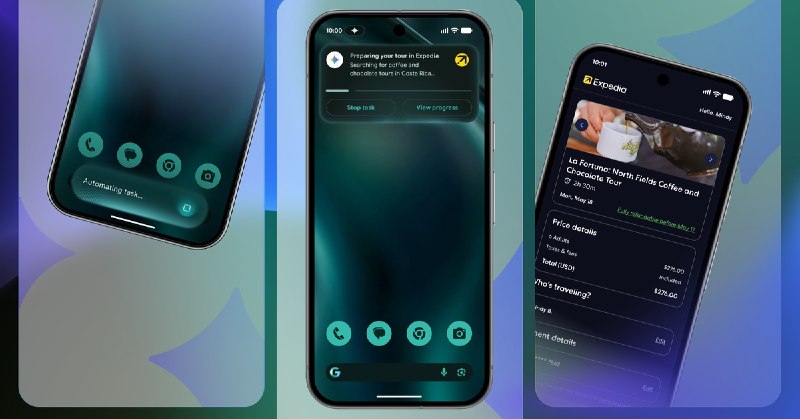
At its annual I/O conference, Google unveiled what it described as a revolutionary feature for Android 17: AI-powered screen reasoning using the Gemini model. This technology aims to understand what's happening on a user's screen and provide contextual assistance, potentially transforming how we interact with our devices.
The concept behind screen reasoning is simple yet powerful: an AI that can observe, understand, and interact with elements on the screen in real-time. This would theoretically allow users to perform complex tasks through natural language commands, with the AI understanding context across different apps and services.
Key Features Claimed for Android 17's AI Screen Reasoning
- Real-time screen content analysis
- Cross-app context understanding
- Natural language command interpretation
- Automated task completion across applications
- Personalized assistance based on user behavior patterns
The Skepticism Mounts
Despite the ambitious claims, many industry experts and tech journalists, including those at Android Police, have expressed significant doubts about the viability of this feature. The skepticism stems from several technical and practical challenges that Google would need to overcome.
Technical Challenges
| Challenge | Technical Complexity | Current Feasibility |
|---|---|---|
| Real-time screen analysis | High | Moderate |
| Cross-app context understanding | Very High | Low |
| Privacy concerns | High | Unresolved |
| Performance impact | High | Questionable |
The most significant challenge lies in the processing power required for real-time screen analysis. While modern smartphones are powerful, the computational demands of constantly analyzing screen content, understanding context across different applications, and providing relevant assistance would be substantial.
Historical Context: Google's AI Ambitions
Google has a history of announcing ambitious AI features that either never materialize or appear in significantly scaled-back forms. The company's track record with previous AI-powered features provides valuable context for evaluating the credibility of the Android 17 screen reasoning announcement.
| Announced Feature | Year Announced | Year Implemented | Final Form |
|---|---|---|---|
| Google Assistant Duplex | 2018 | 2019 (limited) | Significantly scaled back |
| Smart Compose in Gmail | 2018 | 2018 | Successfully implemented |
| Google Lens integration | 2017 | 2018 | Successfully implemented |
| Stadia cloud gaming | 2019 | 2019-2022 | Discontinued |
Competitive Landscape
Google isn't the only company pursuing AI-powered screen understanding. Apple has introduced similar features with its "Live Activities" and "On-Device Processing" capabilities, while Samsung has developed its own AI assistant features through Bixby and its partnership with Google.
| Company | Screen Understanding Feature | Implementation Status | Capabilities |
|---|---|---|---|
| AI Screen Reasoning | Announced, not implemented | Cross-app, real-time (claimed) | |
| Apple | Live Activities | Implemented (iOS 16) | App-specific, limited context |
| Samsung | Bixby Routines | Implemented | Context-aware, app-specific |
| Microsoft | Phone Link | Implemented | Cross-device, basic functionality |
The Privacy Implications
One of the most significant concerns surrounding AI screen reasoning is privacy. For such a system to work effectively, it would need access to all screen content, potentially including sensitive information like messages, financial data, and personal communications.
Google has attempted to address these concerns by emphasizing on-device processing and local-only analysis. However, the effectiveness of these privacy measures remains questionable, especially given the complexity of the task.
Privacy Concerns with Screen Reasoning AI
- Access to potentially sensitive screen content
- Data collection for improving AI models
- Storage of screen data for analysis
- Security vulnerabilities in AI systems
- User consent and transparency in data usage
Performance Considerations
Even if the technical challenges can be overcome, the performance implications of constantly analyzing screen content are substantial. Such a feature would likely:
- Significantly impact battery life
- Increase device heating
- Potentially slow down overall system performance
- Require substantial storage space for AI models
These considerations raise questions about whether users would be willing to trade performance for the convenience of AI-powered screen reasoning.
The Developer Perspective
For AI screen reasoning to work effectively, it would require unprecedented cooperation from app developers. The system would need to understand the UI elements, functionality, and data structures of every application on a user's device.
Such cooperation seems unlikely, given:
- The competitive nature of app development
- Concerns about Google gaining too much control over app ecosystems
- The additional development burden on third-party developers
- Fragmentation across different app design philosophies
Timeline Analysis
The timeline between Google's announcement and the expected release of Android 17 raises additional questions. With Android 17 anticipated in late 2024, the development timeline appears ambitious given the complexity of the feature.
| Milestone | Typical Timeline | Android 17 Timeline | Assessment |
|---|---|---|---|
| Initial Announcement | Usually 6-9 months before release | May 2024 (expected) | Standard |
| Beta Release | Usually 3-4 months after announcement | August 2024 (expected) | Standard |
| Feature Development | Usually 12-18 months for major features | Approximately 6 months | Ambitious |
| Final Release | Typically in Q3 or Q4 | October/November 2024 (expected) | Standard |
Expert Opinions
Industry analysts have offered mixed assessments of the likelihood of Android 17's AI screen reasoning becoming a reality. While some express optimism about Google's technical capabilities, others are more skeptical.
"The concept is revolutionary, but the execution faces monumental technical challenges," noted Dr. Elena Rodriguez, a mobile technology analyst at TechInsights. "Google has a history of pushing boundaries, but they also have a track record of scaling back ambitious features when faced with practical limitations."
Meanwhile, Mark Chen, lead developer at a major Android app development firm, expressed concerns about implementation: "From a developer perspective, the cross-app compatibility requirements would be unprecedented. We'd need to fundamentally rethink how we design applications to work with such a system."
The Alternative Interpretation
While skepticism is warranted, it's worth considering alternative interpretations of Google's announcement. Rather than vaporware, the AI screen reasoning feature might represent:
- A long-term vision with short-term placeholders
- A partially implemented feature with significant limitations
- A technology demonstration rather than a consumer-ready feature
- A strategic announcement aimed at countering competitor initiatives
Conclusion: Balanced Assessment
After examining the technical challenges, historical context, competitive landscape, and expert opinions, a balanced assessment suggests that Android 17's AI screen reasoning feature is unlikely to appear in its announced form at launch. While the concept is compelling and potentially transformative, the implementation challenges appear substantial.
More likely scenarios include:
- A limited implementation with basic screen understanding capabilities
- A feature that works only with Google's own applications
- A delayed release with a phased rollout over multiple Android versions
- A feature that requires significantly more powerful hardware than current devices
Regardless of its ultimate form, Android 17's AI screen reasoning announcement represents an important step in the ongoing evolution of mobile AI. Even if the initial implementation falls short of the ambitious claims, it sets the stage for future innovations that could eventually transform how we interact with our devices.
As with many technological breakthroughs, the path from announcement to implementation is often more complex and winding than initially presented. Only time will tell whether Android 17's AI screen reasoning will become a revolutionary feature or another example of overambitious tech announcements.
This article was written based on publicly available information and industry analysis. The actual implementation of Android 17's AI features may differ significantly from current expectations.
I'm worried Android 17's AI screen reasoning might be total vaporware https://www.androidpolice.com/im-worried-android-17-ai-gemini-screen-reasoning-total-vaporware/ I'm worried Android 17's AI screen reasoning might be total vaporware https://www.androidpolice.com/im-worried-android-17-ai-gemini-screen-reasoning-total-vaporware/


