 TechOffice
Despite Premium Pricing, iPhone 18 Pro Shows Declining Storage Performance
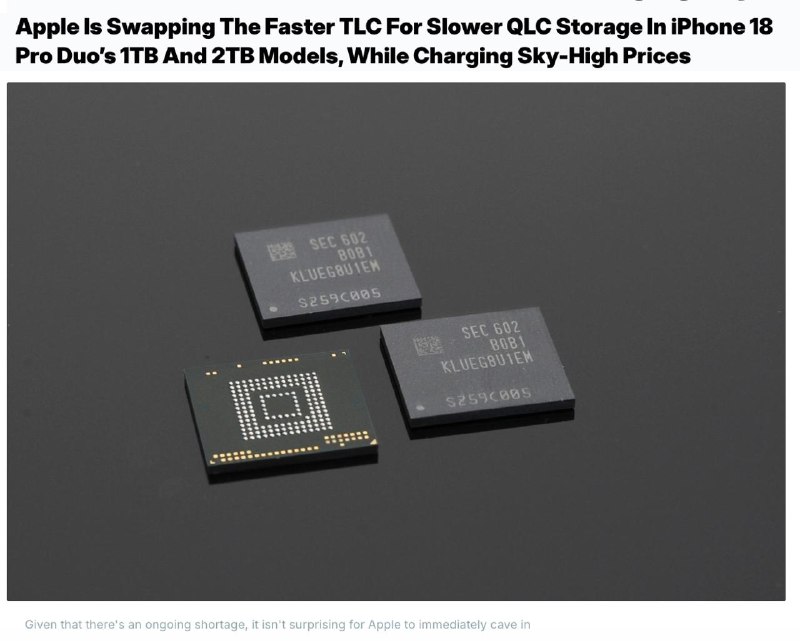
iPhone 18 Pro Reportedly Downgrades High-Capacity Storage Despite Price Hike
In a move that has raised eyebrows among tech enthusiasts and potential buyers, Apple is allegedly planning to downgrade the flash storage technology in its upcoming iPhone 18 Pro and Pro Max models, particularly in the high-capacity variants. According to industry sources cited by Wccftech and based on information from leaker Reptalicant, the shift to slower, less durable storage comes as base prices for these premium devices are expected to increase.
Understanding the Storage Technology Shift: TLC to QLC
The alleged downgrade involves moving from TLC (Triple-Level Cell) storage to QLC (Quad-Level Cell) technology in the higher capacity models. To understand the significance of this change, it's essential to grasp the fundamental differences between these storage technologies:
| Storage Type | Bits per Cell | Speed | Durability | Cost Efficiency |
|---|---|---|---|---|
| TLC (Triple-Level Cell) | 3 bits per cell | Faster read/write speeds | Higher endurance (3,000-5,000 program/erase cycles) | Higher cost per GB |
| QLC (Quad-Level Cell) | 4 bits per cell | Slower read/write speeds | Lower endurance (1,000-3,000 program/erase cycles) | Lower cost per GB |
While QLC technology allows for higher storage capacities at lower costs by packing more data into each memory cell, it comes with trade-offs in performance and longevity. The increased density makes data access slower and reduces the number of times the storage can be overwritten before potential degradation occurs.
iPhone 18 Pro Storage Configuration Breakdown
According to the leaked information, Apple's storage strategy for the iPhone 18 Pro series will vary significantly across different capacity tiers:
- 256GB and 512GB models: These variants will retain the faster TLC storage technology from established suppliers like SK hynix, Kioxia, and SanDisk, maintaining the performance standards users have come to expect from Apple's flagship devices.
- 1TB model: This high-capacity option will predominantly feature SK hynix's BC8Q-1T QLC chip, which offers four bits per cell but at the cost of reduced speed and durability. Samsung's TLC chip may appear occasionally as a rare alternative, but the primary implementation will be QLC.
- 2TB model: The top-tier storage option will reportedly utilize SK hynix's BC8Q-2T, a QLC chip originally designed for server workloads rather than consumer devices. Leaks suggest this particular implementation suffers noticeably in random 4K performance, which could impact tasks such as app loading, file transfers, and video editing.
- Random Read/Write Performance: QLC technology typically exhibits slower random access speeds compared to TLC, which could result in longer loading times for applications, games, and media files.
- Sequential Performance: While sequential read/write speeds may remain acceptable for everyday tasks, they are generally lower than TLC storage, affecting large file transfers and video editing workflows.
- Endurance Concerns: With fewer program/erase cycles, QLC storage may degrade faster than TLC under heavy usage patterns, potentially affecting the long-term reliability of the device.
- Thermal Management: QLC storage tends to generate more heat during intensive operations, which could impact sustained performance and potentially affect other components in the device.
- Storage Capacity Selection: Users who prioritize performance and longevity may want to consider the 512GB model, which reportedly maintains TLC storage technology, rather than opting for the 1TB or 2TB configurations with QLC storage.
- Usage Patterns: Those who engage in storage-intensive activities such as 4K video editing, professional photography, or gaming might notice the performance differences more significantly and should carefully evaluate their storage needs.
- Long-term Considerations: The reduced endurance of QLC storage could impact the device's longevity, particularly for users who frequently install and uninstall apps, record large amounts of video, or maintain extensive media libraries.
- Value Assessment: Given the expected price increases, consumers should carefully assess whether the iPhone 18 Pro offers sufficient value compared to previous models or competing devices that maintain premium storage technology across all tiers.
Performance Implications of the Storage Downgrade
The shift to QLC storage, particularly in the 1TB and 2TB models, could have several noticeable effects on user experience:
Cost Analysis: Rising Component Prices vs. Increasing Retail Prices
The alleged storage downgrade comes amid significant increases in component costs and retail pricing. Industry reports indicate that the cost of a 256GB flash module has risen substantially from approximately $13 for the iPhone 17 Pro to around $51 for the upcoming iPhone 18 Pro. Meanwhile, base prices for the iPhone 18 Pro and Pro Max are expected to reach $1,399 and $1,499 respectively.
| Storage Capacity | iPhone 17 Pro Cost | iPhone 18 Pro Cost (Estimated) | Price Increase |
|---|---|---|---|
| 256GB | $13 | $51 | +292% |
| 1TB | TLC Storage | QLC Storage (Primary) | Technology Downgrade |
| 2TB | TLC Storage | QLC Storage (Server-grade) | Technology Downgrade |
The significant increase in component costs coupled with the alleged storage technology downgrade has led to criticism that Apple is prioritizing profit margins over delivering a premium experience in its highest-priced models. The math suggests that while costs have risen substantially, the shift to QLC storage represents a significant cost-saving measure that may not be fully reflected in the retail price.
Comparison with Previous Generation
The alleged storage strategy represents a notable departure from Apple's previous approach with the iPhone 17 Pro series, where all models reportedly utilized TLC storage across all capacity tiers. This consistency in storage technology helped maintain performance expectations regardless of the storage configuration chosen by consumers.
Particularly concerning is the reported use of server-grade QLC storage (BC8Q-2T) in the 2TB model of the iPhone 18 Pro. Server storage components are optimized for different usage patterns than consumer devices, potentially leading to suboptimal performance in the mobile environment where random access speeds are crucial for everyday tasks.
User Impact and Recommendations
For potential iPhone 18 Pro buyers, the alleged storage downgrade raises important considerations:
Industry Context and Broader Implications
This alleged storage strategy comes amid growing competition in the smartphone market, particularly from Android manufacturers who have increasingly emphasized storage performance as a key differentiator. The move also reflects broader industry trends toward cost optimization as component prices rise and consumer growth in mature markets slows.
If confirmed, Apple's decision to implement QLC storage in its premium models could set a precedent for the industry, potentially leading other manufacturers to follow suit in downgrading storage technology while maintaining or increasing prices. This trend could ultimately impact consumer expectations regarding storage performance in mobile devices.
Conclusion
The alleged downgrade of storage technology in the iPhone 18 Pro and Pro Max models represents a significant departure from Apple's previous approach and raises important questions about the company's commitment to premium performance in its highest-priced devices. While component cost increases are a legitimate concern, the shift to QLC storage—particularly in the 1TB and 2TB models—appears to be a cost-cutting measure that may not be fully justified by the substantial retail price increases.
As consumers await the official announcement of the iPhone 18 series, potential buyers should carefully consider their storage needs and usage patterns when deciding on which model to purchase. For those who prioritize performance and longevity, the 256GB or 512GB models with TLC storage may offer the best value, while the higher-capacity QLC configurations may represent diminishing returns despite their increased storage capacity.
Ultimately, this situation underscores the importance of transparency in component specifications and highlights the growing tension between cost optimization and maintaining premium user experiences in the increasingly competitive smartphone market.
😰 iPhone 18 Pro: paying more, getting slower storage 📰 Apple is reportedly downgrading the flash storage in the high-capacity iPhone 18 Pro and Pro Max, according to Wccftech, citing leaker Reptalicant. 1️⃣ The 256GB and 512GB models will keep fast TLC (Triple-Level Cell) storage from SK hynix, Kioxia, and SanDisk – same tech as before, three bits per cell, quick and durable. But the 1TB model will mostly switch to a QLC (Quad-Level Cell) chip – SK hynix's BC8Q-1T – which packs four bits per cell but is slower and less durable. A Samsung TLC chip will only appear as a rare alternative. 2️⃣ The 2TB version gets it worse: it'll use SK hynix's BC8Q-2T, a QLC chip originally built for server workloads. The leaker claims this chip suffers noticeably in random 4K performance. For comparison, the 2TB iPhone 17 Pro Max still uses proper TLC storage, as you'd expect from a flagship. 💸 Why the downgrade? Wccftech points to rising memory costs — earlier reports suggested a 256GB flash module now costs Apple around $51 per unit, up from $13 for the iPhone 17 Pro. Meanwhile, base prices for the 18 Pro and Pro Max are expected to hit $1399 and $1499. The math doesn't add up in customers' favor – this looks less like a cost-driven necessity and more like Apple protecting its margins at the expense of top-tier buyers. @DailyApple 😰 iPhone 18 Pro: paying more, getting slower storage 📰 Apple is reportedly downgrading the flash storage in the high-capacity iPhone 18 Pro and Pro Max, according to Wccftech, citing leaker Reptalicant. 1️⃣ The 256GB and 512GB models will keep fast TLC (Triple-Level Cell) storage from SK hynix, Kioxia, and SanDisk – same tech as before, three bits per cell, quick and durable. But the 1TB model will mostly switch to a QLC (Quad-Level Cell) chip – SK hynix's BC8Q-1T – which packs four bits per cell but is slower and less durable. A Samsung TLC chip will only appear as a rare alternative. 2️⃣ The 2TB version gets it worse: it'll use SK hynix's BC8Q-2T, a QLC chip originally built for server workloads. The leaker claims this chip suffers noticeably in random 4K performance. For comparison, the 2TB iPhone 17 Pro Max still uses proper TLC storage, as you'd expect from a flagship. 💸 Why the downgrade? Wccftech points to rising memory costs — earlier reports suggested a 256GB flash module now costs Apple around $51 per unit, up from $13 for the iPhone 17 Pro. Meanwhile, base prices for the 18 Pro and Pro Max are expected to hit $1399 and $1499. The math doesn't add up in customers' favor – this looks less like a cost-driven necessity and more like Apple protecting its margins at the expense of top-tier buyers. @DailyApple


