 TechOffice
Google AI Transforms Search with Seamless App Integration
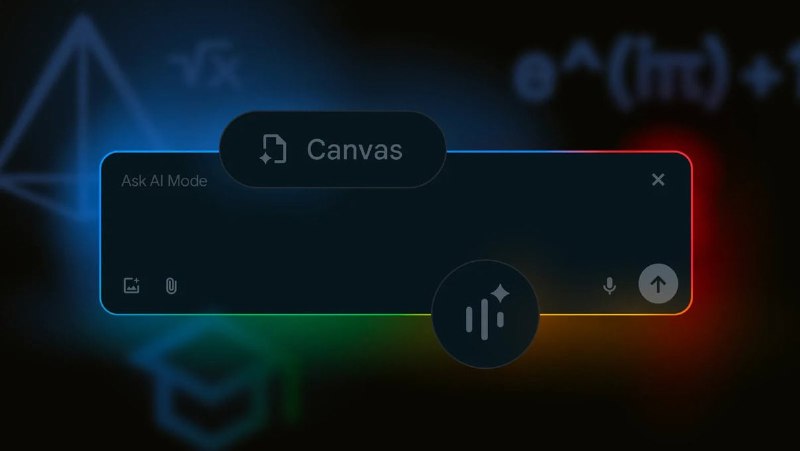
Google's AI Mode Revolutionizes Search with Direct App Integration
Google has unveiled a groundbreaking enhancement to its search capabilities, enabling its AI mode to communicate directly with users' favorite applications directly within the Search interface. This development marks a significant leap forward in the convergence of artificial intelligence and everyday digital workflows, promising to streamline how users interact with both their search queries and their installed applications.
The Evolution of Search Intelligence
For years, Google Search has served as the gateway to the internet, connecting users with information through billions of queries daily. With the introduction of AI-powered search features, Google has progressively transformed from a simple information retrieval system to an intelligent assistant capable of understanding context, providing comprehensive answers, and now, directly interfacing with applications.
This latest innovation represents the next logical step in Google's quest to make search more conversational, contextual, and actionable. By bridging the gap between search queries and app functionality, Google is creating a more seamless digital experience where information discovery and task execution become virtually indistinguishable.
Technical Implementation and Capabilities
The new AI mode operates through Google's advanced language models, which have been specifically fine-tuned to recognize user intent and translate it into actionable commands within supported applications. When a user makes a query that requires app interaction—such as "add milk to my shopping list" or "find a table for two tonight"—the AI can now directly execute these commands within the relevant apps.
Key Technical Features:
- Cross-App Communication: The AI can identify which app is most appropriate for a given request and communicate with it using standardized APIs.
- Context Awareness: The system maintains context across multiple interactions, allowing for follow-up commands that build upon previous requests.
- Permission Management: User privacy is maintained through granular permission controls that determine which apps the AI can access and what actions it can perform.
- Natural Language Processing: Advanced NLP capabilities allow the system to understand colloquial phrasing and translate it into precise app commands.
Supported Applications and Use Cases
During the initial rollout, Google has prioritized integration with some of the most widely used applications across various categories. The supported ecosystem spans productivity, e-commerce, food delivery, travel, entertainment, and more.
| Category | Supported Applications | Example Interactions |
|---|---|---|
| Productivity | Google Calendar, Gmail, Todoist | Schedule meetings, send emails, create tasks |
| E-commerce | Amazon, eBay, Shopify stores | Add items to cart, track orders, compare prices |
| Food & Delivery | Uber Eats, DoorDash, Grubhub | Order food, find restaurants, track deliveries |
| Travel | Booking.com, Expedia, Airbnb | Book flights, find accommodations, plan itineraries |
| Entertainment | Netflix, Spotify, YouTube | Play content, create playlists, find recommendations |
User Experience Enhancements
From a user perspective, this integration dramatically reduces friction in daily digital tasks. Previously, actions requiring app involvement would necessitate switching between applications, often losing context and requiring redundant information entry. Now, users can accomplish complex, multi-step processes through natural language queries within the familiar Search interface.
The AI mode provides visual feedback within the search results, showing users exactly which actions are being taken in their apps and confirming successful execution. This transparency helps build trust and gives users confidence in the system's capabilities.
Privacy and Security Considerations
As with any technology that bridges multiple services, Google has placed significant emphasis on privacy and security. The new AI mode operates with user consent, requiring explicit permission before accessing any applications. Users can granularly control which apps the AI can interact with and what specific actions it can perform.
All interactions are encrypted, and user data is processed in accordance with Google's privacy policies. The company has also implemented robust safeguards to prevent unauthorized access or manipulation of user accounts through the AI interface.
Market Implications and Competitive Landscape
This development positions Google at the forefront of the AI-powered digital assistant space, potentially leapfrogging competitors who have yet to achieve similar levels of app integration. Microsoft's Bing, while making strides with its own AI capabilities, currently lacks the breadth of app connectivity that Google is now offering.
The feature also intensifies competition in the smart assistant market, where Amazon's Alexa and Apple's Siri have traditionally led in home device integration. However, Google's advantage lies in its ubiquitous search presence and the vast ecosystem of Android applications.
Future Roadmap and Potential Expansions
Google has outlined an ambitious roadmap for expanding this AI mode's capabilities. Future updates are expected to include:
- Support for third-party applications beyond the initial selection
- Advanced multi-step task automation across multiple apps
- Personalized predictive actions based on user patterns and preferences
- Integration with emerging technologies like AR/VR for immersive app interactions
- Enhanced multimodal capabilities combining text, voice, and visual inputs
Industry Expert Perspectives
Technology analysts have welcomed this development as a significant step toward more intuitive human-computer interaction. "What Google has achieved here is the holy grail of digital assistance—truly seamless integration between information retrieval and task execution," noted Dr. Sarah Chen, a human-computer interaction researcher at Stanford University. "This represents a fundamental shift in how we think about the relationship between search and applications."
Industry observers also point out that this move could accelerate the adoption of AI-powered workflows across various sectors, from personal productivity to enterprise solutions. By lowering the barrier to complex app interactions, Google is making sophisticated AI capabilities accessible to everyday users.
Conclusion: The Dawn of the Integrated AI Ecosystem
Google's new AI mode with direct app integration marks a pivotal moment in the evolution of digital interaction. By breaking down the barriers between search and applications, Google is creating a more cohesive and efficient digital ecosystem where information discovery and task execution become virtually seamless.
As this technology matures and expands, we can expect to see a fundamental transformation in how users navigate the digital landscape. The distinction between searching for information and taking action may soon disappear entirely, replaced by an intuitive, conversational interface that understands and executes our intent with remarkable precision.
For Google, this represents both a technological achievement and a strategic positioning in the increasingly competitive AI landscape. As users become accustomed to this level of integration, the company may solidify its dominance not just as a search provider, but as the central nervous system of the digital experience.
This article is based on the latest information available at the time of writing. Features and availability may vary by region and device. Google continues to refine and expand this AI mode through ongoing updates and user feedback.
Google’s AI Mode Can Now Talk Directly to Your Favorite Apps Inside Search https://ift.tt/bWf0w5S Google’s AI Mode Can Now Talk Directly to Your Favorite Apps Inside Search https://ift.tt/bWf0w5S


