 TechOffice
Google Maps' Immersive Navigation: Revolutionary Redesign, Limited to Select Users
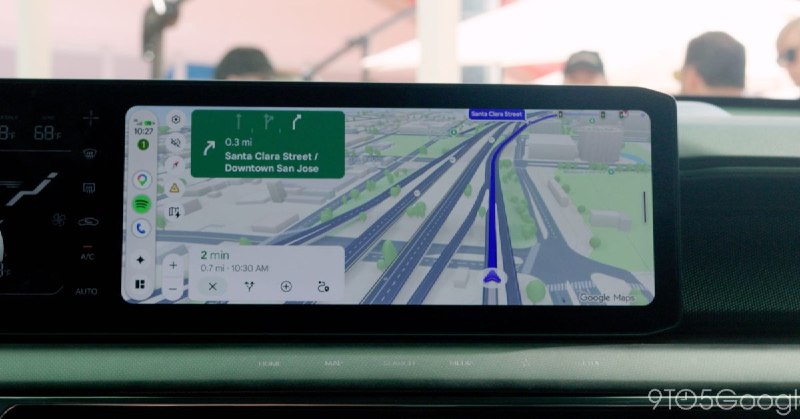
Google Maps Unveils "Immersive Navigation" Redesign: A New Era of Digital Wayfinding
Google appears to be rolling out a significant redesign to its popular Maps application, internally dubbed "Immersive Navigation." This substantial update promises to transform how users interact with digital maps and navigation, potentially setting a new standard for location-based services and wayfinding technology.
The redesign, which has begun appearing for select users, represents Google's latest effort to enhance the visual and functional aspects of its mapping platform. While the company has not officially announced the feature broadly, early adopters have begun sharing screenshots and experiences of the new interface, signaling a gradual rollout of what could be one of the most significant updates to Google Maps in recent years.
Understanding the "Immersive Navigation" Concept
Based on early reports and the name itself, "Immersive Navigation" appears to focus on creating a more engaging and intuitive user experience. The redesign likely incorporates enhanced visual elements, more detailed 3D representations of environments, and improved real-time navigation features.
Key aspects of the redesign may include:
- Enhanced 3D mapping with more detailed building and terrain representations
- Improved visual cues for navigation directions
- More realistic rendering of environments
- Streamlined interface with reduced clutter
- Potentially augmented reality integration for pedestrian navigation
The Evolution of Google Maps Navigation
Google Maps has undergone numerous transformations since its initial release in 2005. Each major update has brought incremental improvements to navigation, but the "Immersive Navigation" redesign appears to represent a more substantial leap forward.
| Version Era | Key Navigation Features | User Experience Focus |
|---|---|---|
| Early Maps (2005-2010) | Basic turn-by-turn directions, street view | Functionality over aesthetics |
| Modern Maps (2010-2020) | Real-time traffic, public transit options, offline maps | Comprehensive information delivery |
| Current Maps (2020-2026) | AI-powered suggestions, detailed local information, EV routing | Contextual awareness and personalization |
| Immersive Navigation (2026) | Enhanced 3D visualization, AR integration, improved spatial awareness | Immersive and intuitive wayfinding |
Potential Technical Innovations
The "Immersive Navigation" redesign likely incorporates several technological advancements:
- Enhanced 3D Rendering: Utilizing advanced graphics processing to create more realistic and detailed representations of environments, potentially leveraging Google's extensive database of 3D imagery.
- Machine Learning Integration: AI algorithms that better understand context, predict user needs, and provide more accurate navigation suggestions.
- Improved Sensor Fusion: Better integration with device sensors for more precise location tracking, especially in challenging environments like urban canyons or indoors.
- Advanced Visualization Techniques: New methods for displaying complex navigation information in an easily digestible format.
User Experience Implications
The shift to "Immersive Navigation" represents more than just a visual update—it fundamentally changes how users interact with digital maps. The enhanced visual elements likely make navigation more intuitive, particularly for complex urban environments where traditional 2D maps can be challenging to interpret.
Potential benefits for users include:
- Reduced cognitive load while navigating
- Improved spatial awareness and orientation
- More engaging and visually appealing interface
- Better understanding of complex intersections and multi-level environments
- Enhanced accessibility for users with different navigation preferences
Industry Impact and Competitive Landscape
The introduction of "Immersive Navigation" positions Google to further solidify its dominance in the digital mapping space. This update comes as competitors like Apple Maps, Waze (owned by Google's parent company Alphabet), and various regional mapping services continue to innovate in their own ways.
Industry analysts suggest that this focus on immersive experiences reflects broader trends in technology:
- The increasing importance of spatial computing
- The growing demand for augmented reality applications
- Consumer expectations for more natural and intuitive interfaces
- The integration of AI into everyday applications
Rollout and Availability
As with many Google feature updates, the "Immersive Navigation" redesign appears to be rolling out gradually rather than being released simultaneously to all users. This staged approach allows Google to monitor performance, gather user feedback, and address any issues before a broader release.
Early reports indicate that the new design is becoming available to users of both the Android and iOS versions of Google Maps, though availability may vary based on region, device capabilities, and whether users are part of Google's testing programs.
User Reactions and Early Feedback
While the redesign is still reaching users, early reactions from those who have received it have been mixed but generally positive. Common points of praise include the enhanced visual quality and improved intuitiveness of navigation directions. Some users have noted that the learning curve for the new interface is minimal, suggesting that Google has maintained a balance between innovation and familiarity.
However, as with any significant interface change, some users have expressed concerns about potential adjustments to their established workflows with the application. Google typically addresses such concerns through continued refinement based on user feedback.
The Future of Digital Navigation
The "Immersive Navigation" redesign may represent a stepping stone toward even more advanced navigation experiences in the future. Industry experts suggest that we can expect continued evolution in several directions:
- Deeper integration with augmented reality for pedestrian navigation
- Improved indoor navigation capabilities for complex venues like airports and shopping centers
- Enhanced predictive capabilities that anticipate user needs before they're explicitly stated
- Greater accessibility features for users with disabilities
- Integration with autonomous vehicle navigation systems
Conclusion
Google's "Immersive Navigation" redesign represents a significant evolution in digital mapping technology. By focusing on creating a more intuitive and visually engaging experience, Google appears to be responding to changing user expectations and technological capabilities.
As this update continues to roll out to users worldwide, it will be interesting to observe how the new interface impacts navigation efficiency, user satisfaction, and the broader competitive landscape in digital mapping services. The redesign not only enhances the user experience but also positions Google at the forefront of spatial computing and location-based technology.
For users who haven't yet received the update, it's likely to become more widely available in the coming weeks and months. In the meantime, those who have experienced the new "Immersive Navigation" interface will be watching to see how Google refines the feature based on early feedback.
Google Maps is reportedly introducing a significant redesign, dubbed 'Immersive Navigation,' which aims to provide a more intuitive and visually appealing navigation experience. The update appears to be rolling out to users, but we want to know - have you seen it yet? If you have, please let us know in the comments below. If not, we'll keep an eye out for its release and provide an update when it becomes available. Google Maps appears to be rolling out ‘Immersive Navigation’ redesign – do you have it yet? [Poll] Source: https://9to5google.com/2026/07/14/google-maps-immersive-navigation-rollout-poll/


