 TechOffice
China's Smartphone Market Contracts in Q2 as Huawei and Apple Defy Industry Downturn
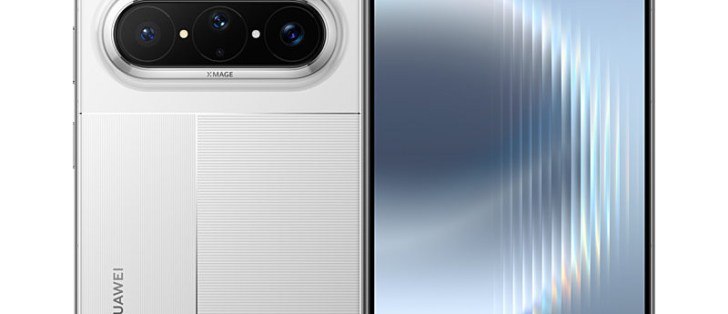
China's Smartphone Market Faces Headwinds in Q2 as Huawei and Apple Defy Industry Decline
Amidst economic uncertainty and global supply chain disruptions, China's smartphone market experienced a significant downturn in the second quarter of 2023. According to recent data from Counterpoint Research, the market contracted by 12.3% during this period, reflecting broader challenges facing the technology sector. Despite this overall decline, two industry giants—Huawei and Apple—demonstrated remarkable resilience by achieving substantial growth, highlighting the divergent trajectories within China's competitive smartphone landscape.
Market Overview: A Quarter of Contrasting Fortunes
The Chinese smartphone market, which represents a substantial portion of global mobile device sales, has been grappling with multiple challenges in 2023. The ongoing impact of the COVID-19 pandemic continues to influence consumer spending patterns, while intensified competition from domestic manufacturers has further complicated the market dynamics. These factors combined to create a challenging operating environment for most smartphone vendors during the second quarter.
Despite the overall contraction, market analysts note that the decline was less severe than initially projected, suggesting underlying resilience in consumer demand for premium devices. This nuanced performance indicates that while the mid-range and budget segments may be experiencing significant pressure, the premium segment continues to show relative stability.
Outperformers: Huawei's Remarkable Comeback
Among the major players, Huawei stands out as a particularly compelling story of recovery and growth. Despite facing stringent US trade restrictions that have limited its access to critical components and technologies over the past few years, the company managed to achieve a 10.3% increase in smartphone sales during Q2. This performance represents a significant turnaround for a manufacturer that had been forced to scale back its global operations substantially.
Huawei's success can be attributed to several strategic initiatives:
- Strengthened brand loyalty among Chinese consumers
- Heavy investment in 5G network technology and innovation
- Strategic partnerships with domestic carriers to ensure seamless connectivity
- Development of alternative supply chains for critical components
The company's ability to navigate these challenges demonstrates the effectiveness of its "dual circulation" strategy, which emphasizes both domestic market development and technological self-sufficiency. This approach has allowed Huawei to maintain its competitive edge despite external pressures.
Apple's Continued Dominance in Premium Segment
Apple, the world's most valuable technology company, continued its strong performance in the Chinese market with iPhone sales growing by an impressive 15.4% in Q2. This growth outpaced not only the overall market but also most of Apple's global competitors, solidifying its position as a leader in the premium smartphone segment.
The company's success in China can be attributed to several key factors:
- The strength of Apple's integrated ecosystem of hardware, software, and services
- Effective marketing strategies that emphasize brand prestige and innovation
- Strong performance of the iPhone 14 series, particularly in the Pro models
- Growing adoption of Apple's services among Chinese consumers
Apple's ecosystem approach provides a seamless experience across devices, creating high switching costs that contribute to customer retention. This strategy has proven particularly effective in China's urban centers where disposable income remains relatively high despite broader economic challenges.
Comparative Analysis: Divergent Paths to Success
While both Huawei and Apple achieved significant growth in Q2, their strategies and market positions differ considerably. The following table highlights key differences in their approaches:
| Factor | Huawei | Apple |
|---|---|---|
| Market Focus | Mid to high-range, with emphasis on technological innovation | Primarily premium segment, with strong brand positioning |
| Key Strategy | Technological self-sufficiency and domestic market focus | Ecosystem integration and premium brand experience |
| Supply Chain | Developing domestic alternatives to overcome restrictions | Global optimization with focus on quality control |
| Technology Emphasis | 5G innovation, camera technology, and software optimization | Processor performance, ecosystem integration, and privacy |
Despite these differences, both companies share common success factors: strong brand loyalty, effective product differentiation, and the ability to adapt to changing market conditions. These attributes have enabled them to outperform competitors during a challenging quarter for the industry.
Market Segmentation Performance
The contrasting performances of Huawei and Apple become even more interesting when examining different market segments. The following table provides a breakdown of market performance by price segment:
| Price Segment | Market Growth Q2 2023 | Key Players | Notable Trends |
|---|---|---|---|
| Premium ($800+) | +5.2% | Apple, Huawei, Samsung | Strong demand for Pro models |
| Mid-range ($400-$799) | -8.7% | Xiaomi, OPPO, Vivo | Intense price competition |
| Entry-level ( | -15.3% | Realme, Xiaomi, Honor | Consumer downshift |
This segmentation reveals that while the premium segment continues to show relative resilience, lower price points are experiencing significant contraction. This trend suggests that economic uncertainty is disproportionately affecting consumers with more limited disposable income, while those purchasing premium devices remain less sensitive to economic fluctuations.
Future Outlook: Navigating Uncertain Terrain
As we move into the second half of 2023, China's smartphone market is expected to continue facing challenges. Economic recovery remains uneven, and global supply chain disruptions persist. However, the resilience demonstrated by Huawei and Apple suggests that the market may be more adaptable than initially anticipated.
For Huawei, the critical question will be whether the company can sustain its momentum without access to advanced semiconductor technology. The company's progress in developing domestic alternatives will be closely watched by industry observers. Meanwhile, Apple will need to balance its premium positioning with growing competition from domestic brands that are increasingly focusing on the high-end segment.
Other manufacturers, including Xiaomi, OPPO, and Vivo, will likely intensify their efforts to differentiate their offerings in the mid-range segment, where competition is fiercest. These companies may need to emphasize specific features or value propositions to maintain market share in an increasingly crowded marketplace.
Conclusion: Lessons from Market Leaders
The divergent performances of smartphone manufacturers in China during Q2 2023 offer valuable insights into the dynamics of the global mobile device market. While the overall market contracted, the ability of Huawei and Apple to achieve significant growth demonstrates that strong brand positioning, effective product differentiation, and strategic adaptation to market conditions can drive success even in challenging times.
As the Chinese smartphone market continues to evolve, these two companies are likely to remain at the forefront of innovation and competition. Their approaches—whether through technological self-sufficiency or ecosystem integration—may serve as models for other navigating an increasingly complex and competitive global marketplace.
The resilience of China's smartphone market, as evidenced by the performance of its leading players, suggests that despite short-term challenges, the sector maintains underlying strength. As economic conditions normalize and technological innovation continues, the market is poised for potential recovery in the coming quarters, with Huawei and Apple well-positioned to maintain their leadership roles.
In a quarter marked by economic uncertainty and global supply chain disruptions, China's smartphone market experienced a decline in Q2, according to recent data. Despite this downturn, two of the world's leading smartphone manufacturers - Huawei and Apple - managed to buck the trend and continue to drive growth. The Chinese smartphone market, which accounts for a significant share of the global market, saw a decline of 12.3% in Q2, according to a report by Counterpoint Research. This decline can be attributed to various factors, including the ongoing COVID-19 pandemic, which has had a lasting impact on consumer spending habits, as well as increased competition from local brands. However, Huawei and Apple, two of the largest smartphone manufacturers in the world, managed to defy the trend and show resilience. Huawei, which has been facing significant challenges in recent years due to US trade restrictions, continued to drive growth in the Chinese market, with its smartphone sales increasing by 10.3% in Q2. Apple, on the other hand, also saw a significant increase in sales, with its iPhone sales growing by 15.4% in the quarter. The success of Huawei and Apple in the Chinese market can be attributed to their strong brand loyalty and their ability to adapt to changing consumer preferences. Huawei, in particular, has been investing heavily in its 5G network and has been working closely with local carriers to provide seamless connectivity to its customers. Apple, on the other hand, has been focusing on its ecosystem, with its seamless integration of devices and services providing customers with a unique and personalized experience. The Chinese smartphone market is expected to continue to face challenges in the coming months, but the resilience of Huawei and Apple suggests that the market may be more resilient than initially thought. As the market continues to evolve, it will be interesting to see how these two manufacturers continue to adapt and innovate in order to stay ahead of the competition. China smartphone market shrank in Q2, but Huawei and Apple bucked the trend https://ift.tt/mxipuO1


