 TechOffice
Apple vs. OpenAI: Tech Giant Files Lawsuit Over Alleged Trade Secret Theft
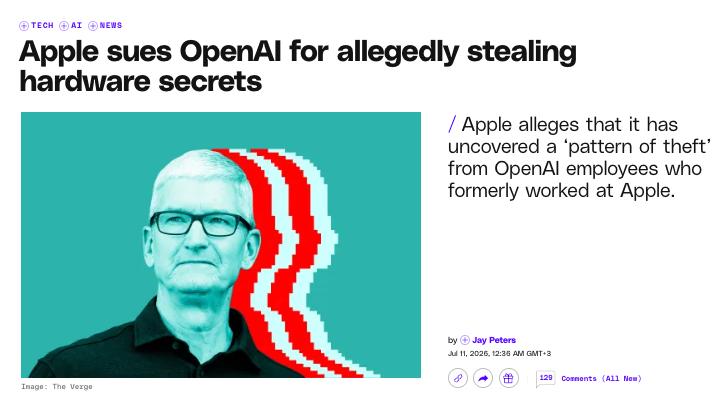
Apple Files Lawsuit Against OpenAI, Alleging Systematic Theft of Trade Secrets
In a high-stakes legal battle that underscores the intense competition in the artificial intelligence and hardware sectors, Apple has initiated a lawsuit against OpenAI, accusing the AI research company of orchestrating a coordinated scheme to steal confidential information. The lawsuit specifically targets OpenAI along with two former Apple employees: designer Tang Tan and engineer Chang Liu, alleging they participated in systematic data theft.
Background of the Dispute
The legal action represents a significant escalation in tensions between two of the technology industry's most prominent players. Apple, known for its stringent security protocols and proprietary approach to technology development, has long guarded its trade secrets closely. OpenAI, meanwhile, has rapidly emerged as a leader in artificial intelligence research, particularly following the breakthrough success of its ChatGPT platform and subsequent development of AI hardware.
The timing of this lawsuit is noteworthy, coming as both companies are reportedly investing billions in developing their own AI-powered hardware. Apple has been working on integrating AI more deeply into its ecosystem, while OpenAI has been expanding beyond software into physical products.
Allegations of Systemic Data Theft
According to Apple's legal complaint, the alleged theft was not an isolated incident but represented a coordinated effort by OpenAI to acquire proprietary information. The lawsuit paints a picture of deliberate misconduct, with Apple claiming that OpenAI actively encouraged former employees to bring confidential materials to their new positions.
Specific Claims Made by Apple
Apple has outlined several specific instances of alleged misconduct in its lawsuit:
- Retention of Company Property: One former iPhone engineer allegedly refused to return his work laptop after leaving Apple. Instead, he continued to use the device to access and download data from Apple's internal databases while already employed at OpenAI.
- Boastful Communications: The same engineer reportedly made concerning statements to former colleagues, including phrases like "lol, I still have access, this'll be fun," according to court documents. He allegedly created guides on how to surreptitiously copy work files without triggering security alerts.
- Aggressive Talent Poaching: Tang Tan, who spent nearly 25 years working on the iPhone before becoming OpenAI's head of hardware, is accused of actively recruiting Apple employees and instructing them to bring mockups and schematics to job interviews at OpenAI.
Impact on Apple's Operations
The alleged theft, if proven true, could have significant implications for Apple's competitive position. The company claims that the stolen data has directly aided OpenAI in developing its own AI hardware products, potentially giving the upstart company an unfair advantage in a market where Apple has invested heavily for years.
"Apple's innovations are the result of immense investment in research and development," the company stated in its legal filing. "When former employees and new competitors conspire to steal that work, they undermine the very innovation that drives our industry forward."
Legal Remedies Sought
Apple is seeking multiple forms of legal relief in its lawsuit. The company has requested an injunction that would prohibit OpenAI from using any allegedly stolen trade secrets in its products and business operations. Additionally, Apple is seeking monetary damages to compensate for any harm resulting from the alleged theft.
The lawsuit also asks the court to order the return of all allegedly stolen materials and to prevent the defendants from destroying any evidence related to the case.
OpenAI's Response
OpenAI has vigorously denied the allegations, characterizing Apple's lawsuit as an attempt to exaggerate what was essentially a routine hiring dispute. In a public statement, the company emphasized its commitment to ethical business practices.
"OpenAI has no interest in other companies' trade secrets," the company stated. "We are disappointed that Apple has chosen to spin an ordinary hiring dispute into a systematic scheme. We will defend ourselves vigorously against these baseless claims."
OpenAI also highlighted its own robust policies regarding intellectual property, noting that the company conducts thorough reviews of all materials brought by new employees to ensure compliance with intellectual property laws.
Industry Context and Precedents
This lawsuit comes amid increasing scrutiny of employee mobility and intellectual property protection in the tech industry. Similar legal battles have shaped the sector in recent years, with cases involving Google versus Waymo and Uber versus Waymo setting important precedents.
The following table outlines some notable recent trade secret disputes in the technology industry:
| Case | Year | Allegations | Outcome |
|---|---|---|---|
| Google v. Waymo | 2017 | Self-driving car trade secret theft | Settlement for $128 million |
| Uber v. Waymo | 2017 | Lidar technology theft | Settlement for $245 million |
| Apple v. Samsung | 2011-2018 | Patent infringement | Multiple rulings, total damages over $5 billion |
| Apple v. OpenAI | 2023 | Trade secret theft | Pending |
Potential Implications
The outcome of this lawsuit could have far-reaching implications for both companies and the broader tech industry. For Apple, a successful legal action would reinforce its position as a guardian of proprietary technology and potentially deter future attempts at data theft. For OpenAI, defeat could result in significant financial penalties and forced delays in product development.
Legal experts suggest that this case may also influence how companies approach employee onboarding and offboarding processes, potentially leading to enhanced security measures and more restrictive employment agreements.
Expert Analysis
"This case highlights the increasing value of AI-related trade secrets in today's technology landscape," noted Dr. Sarah Johnson, a technology law professor at Stanford University. "As AI becomes more integrated with physical hardware, the boundaries between different companies' innovations become blurrier, making protection of intellectual property more challenging but also more critical."
"The evidence Apple has presented, if accurate, would be quite damning," added Michael Chen, a former federal prosecutor now specializing in tech-related intellectual property cases. "The combination of retained access devices, boastful communications, and systematic recruitment of employees with confidential materials creates a compelling narrative of intentional wrongdoing."
Conclusion
As Apple and OpenAI prepare for what promises to be a closely watched legal battle, the tech industry will be paying attention to how the courts handle allegations of trade secret theft in the rapidly evolving field of artificial intelligence. The case serves as a reminder of the high stakes involved in technological innovation and the lengths to which companies may go to protect their competitive advantages.
Regardless of the outcome, this lawsuit is likely to have lasting effects on how tech companies approach talent acquisition, data security, and the protection of proprietary information in an increasingly competitive global marketplace.
🧑⚖️ Apple sues OpenAI over alleged theft of trade secrets 📰 Apple is accusing OpenAI and two former employees – designer Tang Tan and engineer Chang Liu – of running a coordinated scheme to leak confidential data. According to Apple, this wasn't an isolated incident but a systemic practice. What came out: • One former iPhone engineer refused to hand back his work laptop when he left – and kept using it to pull data from Apple's internal databases while already working at OpenAI. • He reportedly told former colleagues things like "lol, I still have access, this'll be fun," and even wrote guides on how to quietly copy work files without tripping security. • Tang Tan, who spent nearly 25 years working on the iPhone before becoming OpenAI's head of hardware, allegedly poached people from Apple and asked them to bring mockups and schematics to interviews. 😤 Apple claims the stolen data helped OpenAI in developing its own AI hardware, and is seeking an injunction against its use plus damages. OpenAI has responded by saying it has "no interest in other companies' trade secrets" and that Apple's lawsuit is an attempt to spin an ordinary hiring dispute into a "systematic scheme." @DailyApple 🧑⚖️ Apple sues OpenAI over alleged theft of trade secrets 📰 Apple is accusing OpenAI and two former employees – designer Tang Tan and engineer Chang Liu – of running a coordinated scheme to leak confidential data. According to Apple, this wasn't an isolated incident but a systemic practice. What came out: • One former iPhone engineer refused to hand back his work laptop when he left – and kept using it to pull data from Apple's internal databases while already working at OpenAI. • He reportedly told former colleagues things like "lol, I still have access, this'll be fun," and even wrote guides on how to quietly copy work files without tripping security. • Tang Tan, who spent nearly 25 years working on the iPhone before becoming OpenAI's head of hardware, allegedly poached people from Apple and asked them to bring mockups and schematics to interviews. 😤 Apple claims the stolen data helped OpenAI in developing its own AI hardware, and is seeking an injunction against its use plus damages. OpenAI has responded by saying it has "no interest in other companies' trade secrets" and that Apple's lawsuit is an attempt to spin an ordinary hiring dispute into a "systematic scheme." @DailyApple


