 TechOffice
Apple Sues OpenAI Over Alleged Trade Secret Theft
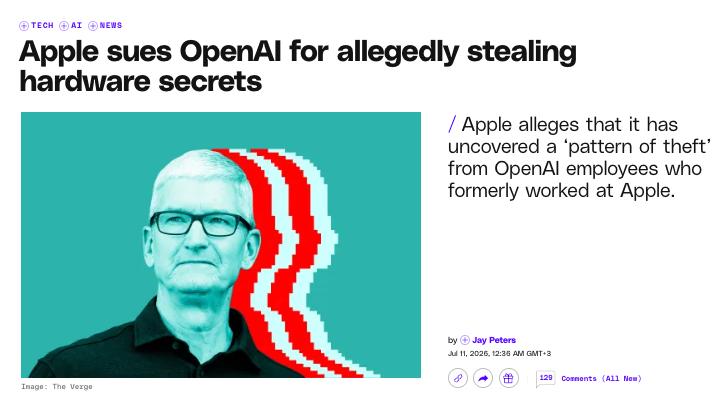
Apple Sues OpenAI in High-Stakes Trade Secrets Case
Apple has filed a lawsuit against OpenAI and two former employees, alleging a coordinated scheme to steal confidential information and trade secrets. The tech giant claims that designer Tang Tan and engineer Chang Liu were part of a systematic effort to leak proprietary data, which Apple asserts has been used to develop OpenAI's artificial intelligence hardware.
Background of the Dispute
The legal battle represents a significant escalation in tensions between two major players in the technology sector. Apple, traditionally known for its secretive approach to product development and stringent security measures, has accused OpenAI—a company at the forefront of artificial intelligence research—of benefiting from stolen intellectual property.
The lawsuit comes amid increasing competition in the AI hardware space, where both companies are reportedly developing next-generation computing devices powered by advanced artificial intelligence systems.
Specific Allegations Against Former Employees
Chang Liu's Alleged Actions
According to Apple's lawsuit, one former iPhone engineer (identified as Chang Liu) refused to return his work laptop upon leaving the company. Instead, Liu allegedly continued using the device to access Apple's internal databases while already employed by OpenAI.
Apple claims Liu made concerning statements to former colleagues, including:
- "lol, I still have access, this'll be fun"
- Writing detailed guides on how to quietly copy work files without triggering security protocols
- Systematically downloading confidential information over an extended period
Tang Tan's Alleged Recruitment Practices
Tang Tan, who spent nearly 25 years working on the iPhone before becoming OpenAI's head of hardware, faces particularly serious allegations. Apple claims Tan engaged in aggressive recruitment of Apple employees, specifically asking them to bring mockups and schematics to job interviews at OpenAI.
The lawsuit suggests that Tan's recruitment practices were not merely standard talent acquisition but a deliberate effort to obtain Apple's proprietary design information and technical specifications.
Apple's Legal Claims
In its legal filing, Apple asserts that the stolen data has directly contributed to OpenAI's development of AI hardware. The company is seeking both an injunction to prevent the further use of allegedly stolen information and unspecified damages.
"This wasn't an isolated incident but a systemic practice," Apple's legal team stated in the court documents. "The coordinated efforts of these individuals and OpenAI have resulted in the misappropriation of valuable trade secrets that form the foundation of our competitive advantage."
OpenAI's Response
OpenAI has vehemently denied the allegations, characterizing Apple's lawsuit as an attempt to transform a standard employment dispute into a "systematic scheme." The company issued a statement reading:
"We have no interest in other companies' trade secrets. The claims described in Apple's filing are baseless and appear to be an effort to spin ordinary hiring practices into something more sinister than they are."
OpenAI maintains that its hardware development has been conducted independently, using its own research and development resources rather than proprietary information from competitors.
Industry Implications
This legal dispute raises significant questions about the boundaries of employee mobility and the protection of trade secrets in the technology industry. As companies increasingly compete in the AI space, the potential for such conflicts may grow.
Legal experts note that while employees generally have the right to change jobs, they cannot带走 or use proprietary information from their former employers. The challenge often lies in proving what constitutes trade secret misappropriation versus general knowledge gained through employment.
Timeline of Events
| Time Period | Alleged Events |
|---|---|
| Pre-2023 | Tang Tan works at Apple for approximately 25 years, primarily on iPhone development |
| 2023 | Tang Tan joins OpenAI as Head of Hardware |
| 2023-2024 | Alleged recruitment of Apple employees by Tang Tan, with requests for proprietary materials |
| 2024 | Chang Liu leaves Apple but allegedly retains access to internal systems |
| Early 2024 | Apple claims data theft continues while Liu works at OpenAI |
| Mid-2024 | Apple files lawsuit against OpenAI and the former employees |
Legal Precedents and Potential Outcomes
Similar cases in the tech industry have set important precedents for how courts handle trade secret disputes. In 2019, Google was ordered to pay $265 million to Uber over allegations of autonomous vehicle technology theft, though the case ultimately settled before reaching a final determination on liability.
Legal analysts suggest several potential outcomes for the Apple-OpenAI case:
- Settlement before trial, with OpenAI agreeing to restrictions on certain hiring practices
- Court-ordered injunction preventing use of specific technologies Apple claims were developed using stolen information
- Monetary damages if Apple can prove actual harm resulting from the alleged theft
- Dismissal of claims if Apple cannot provide sufficient evidence of systematic theft
Broader Industry Impact
Beyond the immediate legal ramifications, this case may prompt companies to reevaluate their approach to protecting trade secrets and managing employee transitions. Tech firms may implement more robust exit protocols, enhanced data monitoring, and clearer communication about what constitutes proprietary information.
The dispute also highlights the increasingly competitive nature of the AI hardware market, where companies are racing to develop the next generation of computing devices. As these technologies become more valuable, the temptation to gain competitive advantage through questionable means may increase.
Conclusion
The Apple-OpenAI lawsuit represents a significant development in the ongoing battle to protect intellectual property in the technology sector. As both companies continue to invest heavily in AI hardware, the outcome of this case could have far-reaching implications for how trade secrets are protected and enforced in the rapidly evolving artificial intelligence landscape.
Regardless of the legal outcome, this dispute serves as a reminder of the delicate balance that must be maintained between allowing employee mobility and protecting the proprietary information that forms the foundation of technological innovation and competitive advantage.
🧑⚖️ Apple sues OpenAI over alleged theft of trade secrets 📰 Apple is accusing OpenAI and two former employees – designer Tang Tan and engineer Chang Liu – of running a coordinated scheme to leak confidential data. According to Apple, this wasn't an isolated incident but a systemic practice. What came out: • One former iPhone engineer refused to hand back his work laptop when he left – and kept using it to pull data from Apple's internal databases while already working at OpenAI. • He reportedly told former colleagues things like "lol, I still have access, this'll be fun," and even wrote guides on how to quietly copy work files without tripping security. • Tang Tan, who spent nearly 25 years working on the iPhone before becoming OpenAI's head of hardware, allegedly poached people from Apple and asked them to bring mockups and schematics to interviews. 😤 Apple claims the stolen data helped OpenAI in developing its own AI hardware, and is seeking an injunction against its use plus damages. OpenAI has responded by saying it has "no interest in other companies' trade secrets" and that Apple's lawsuit is an attempt to spin an ordinary hiring dispute into a "systematic scheme." @DailyApple 🧑⚖️ Apple sues OpenAI over alleged theft of trade secrets 📰 Apple is accusing OpenAI and two former employees – designer Tang Tan and engineer Chang Liu – of running a coordinated scheme to leak confidential data. According to Apple, this wasn't an isolated incident but a systemic practice. What came out: • One former iPhone engineer refused to hand back his work laptop when he left – and kept using it to pull data from Apple's internal databases while already working at OpenAI. • He reportedly told former colleagues things like "lol, I still have access, this'll be fun," and even wrote guides on how to quietly copy work files without tripping security. • Tang Tan, who spent nearly 25 years working on the iPhone before becoming OpenAI's head of hardware, allegedly poached people from Apple and asked them to bring mockups and schematics to interviews. 😤 Apple claims the stolen data helped OpenAI in developing its own AI hardware, and is seeking an injunction against its use plus damages. OpenAI has responded by saying it has "no interest in other companies' trade secrets" and that Apple's lawsuit is an attempt to spin an ordinary hiring dispute into a "systematic scheme." @DailyApple


