 TechOffice
Apple Overhauls Mac Chip Roadmap Amid Industry Changes
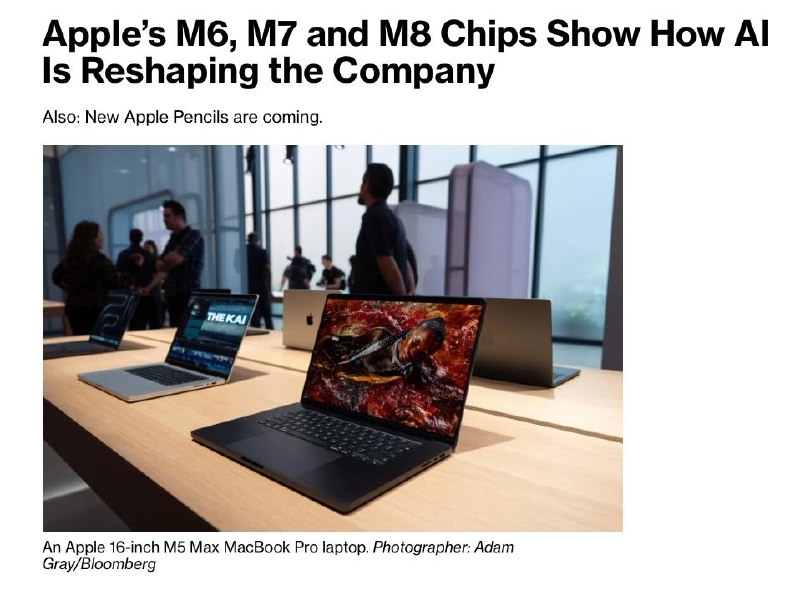
Apple Restructures Mac Chip Roadmap, Skipping M6 Pro, Max, and Ultra in Major Strategic Shift
In a surprising development that has sent ripples through the technology industry, Apple is reportedly restructuring its Mac chip development roadmap, marking a significant strategic shift in its silicon strategy. According to renowned tech journalist Mark Gurman, the company is preparing to launch the M6 chip this year but in a limited capacity, while simultaneously accelerating development of its next-generation M7 series that promises substantial advancements in on-device artificial intelligence capabilities.
The M6: A Streamlined Launch
Apple's upcoming M6 chip will debut exclusively as a base model, designed specifically for the entry-level 14-inch MacBook Pro. This marks a departure from Apple's established pattern of releasing multiple variants of each M-series generation. The company is reportedly skipping the M6 Pro, M6 Max, and M6 Ultra variants entirely—a first in the history of Apple's M-series chips.
This streamlined approach suggests a strategic realignment of resources, with Apple focusing its engineering efforts on the next major leap forward rather than incremental improvements across the product line. The decision reflects Apple's confidence in its current chip architecture and its desire to allocate more resources toward the revolutionary M7 series.
| Chip Model | Status | Target Device | Expected Launch |
|---|---|---|---|
| M6 (Base) | Confirmed | Entry-level 14" MacBook Pro | 2024 |
| M6 Pro | Reportedly Skipped | Not Applicable | Not Released |
| M6 Max | Reportedly Skipped | Not Applicable | Not Released |
| M6 Ultra | Reportedly Skipped | Not Applicable | Not Released |
The M7 Revolution: Focus On-Device AI
Behind this strategic decision lies Apple's significant bet on the M7 series, which is expected to deliver a major leap forward in on-device artificial intelligence capabilities. The M7 chips are reportedly being designed with specialized neural processing units and optimized architectures specifically for AI workloads, positioning Apple to compete more aggressively in the rapidly evolving AI space.
Apple's increased focus on AI comes at a time when the technology company faces growing pressure from competitors who have been heavily investing in AI capabilities. By prioritizing on-device AI processing, Apple aims to enhance user privacy while delivering responsive, intelligent features that work seamlessly without constant cloud connectivity.
M7 Timeline and Variants
The M7 series will roll out according to the following schedule:
- Base M7: Expected in the first half of 2027
- M7 Pro and M7 Max: Targeted for late 2027
- M7 Ultra: Planned for 2028, with potential deployment in Apple Intelligence servers starting in 2029
This staggered rollout suggests Apple is methodically expanding its AI capabilities across its product line, with the Ultra variant potentially serving as the foundation for more complex AI infrastructure and server-side applications.
Implications for Future Mac Products
The restructuring of Apple's chip roadmap has significant implications for future Mac product launches, particularly the long-rumored touchscreen MacBook Pro. According to reports, this highly anticipated device will now ship with the older M5 Pro or M5 Max chips, with an expected launch window of late 2026 to early 2027.
Apple's decision to delay the touchscreen MacBook Pro until the M7 Pro and M7 Max variants are available—likely not before late 2027—suggests that the company views advanced AI capabilities as essential for this product category. This aligns with industry speculation that Apple plans to differentiate its touchscreen Macs with AI-powered features and enhanced productivity tools.
Updated M5 Ultra for Mac Studio
In the interim, Apple is reportedly preparing an updated version of the M5 Ultra chip specifically for the Mac Studio. This refresh, expected later this year, will likely bring modest performance improvements and potentially enhanced graphics capabilities, ensuring the Mac Studio remains competitive in the professional desktop market.
The Mac Studio has been positioned as Apple's powerhouse for creative professionals, and the updated M5 Ultra will likely maintain its standing as a top-tier option for video editing, 3D rendering, and other demanding workflows.
New Apple Pencil Models for iPad Pro
Beyond its Mac chip strategy, Apple is also reportedly developing two new Apple Pencil models to accompany the next-generation iPad Pro. These updated styluses are expected to feature more repairable batteries, a move that appears to be in response to new European Union regulations requiring longer product lifecycles and easier repairability.
The emphasis on repairability signals Apple's increasing attention to sustainability concerns and regulatory requirements in key markets. By making the batteries in its Apple Pencils more accessible for repair, Apple can potentially extend the lifespan of its accessories and reduce electronic waste.
Strategic Analysis: Apple's Silicon Evolution
This significant shift in Apple's chip development strategy reflects several broader trends in the company's product philosophy:
- AI as a Priority: Apple is clearly positioning artificial intelligence as a key differentiator in its future products, potentially leapfrogging competitors in on-device AI capabilities.
- Resource Optimization: By skipping intermediate M6 variants, Apple is streamlining its development process and concentrating engineering resources on what it perceives as the next major technological breakthrough.
- Market Positioning: The delayed touchscreen MacBook Pro suggests Apple is carefully considering how to position this new product category, likely with AI features as a central selling point.
- Regulatory Compliance: The focus on repairable batteries in the new Apple Pencils indicates Apple's increasing attention to sustainability and regulatory requirements in key markets.
As Apple continues to refine its silicon strategy, the company appears to be balancing innovation with practical considerations, ensuring its hardware roadmap aligns with both technological advancements and market demands. The coming years will likely see Apple's M-series chips evolve not just in terms of raw performance, but in their ability to deliver intelligent, AI-enhanced experiences across the Mac ecosystem.
Industry analysts will be closely watching how Apple executes this revised roadmap, particularly as the M7 series approaches its expected launch. The success of this strategy could significantly influence Apple's competitive position in the personal computer market and establish new standards for on-device AI processing.
🤔 Apple shakes up its Mac chip roadmap 📰 Mark Gurman revealed an updated Apple Silicon roadmap, and there's a surprising twist. M6 launches this year, but only as a base chip – for the entry-level 14" MacBook Pro. Apple is reportedly skipping M6 Pro, Max, and Ultra – a first for the M-series. Why: it's betting on M7, which promises a major leap in on-device AI. Base M7 arrives in H1 2027, M7 Pro/Max by late 2027, and the flagship M7 Ultra in 2028 (possibly powering Apple Intelligence servers from 2029). As a result, the long-rumored touchscreen MacBook Pro will ship on the older M5 Pro/Max chips (expected late 2026/early 2027), with an M7 Pro/Max version not before late 2027. An updated M5 Ultra for the Mac Studio is also expected this year. 🙂Apple is also prepping two new Apple Pencil models to launch alongside the next-gen iPad Pro – likely with more repairable batteries to meet EU rules. @iPhone 🤔 Apple shakes up its Mac chip roadmap 📰 Mark Gurman revealed an updated Apple Silicon roadmap, and there's a surprising twist. M6 launches this year, but only as a base chip – for the entry-level 14" MacBook Pro. Apple is reportedly skipping M6 Pro, Max, and Ultra – a first for the M-series. Why: it's betting on M7, which promises a major leap in on-device AI. Base M7 arrives in H1 2027, M7 Pro/Max by late 2027, and the flagship M7 Ultra in 2028 (possibly powering Apple Intelligence servers from 2029). As a result, the long-rumored touchscreen MacBook Pro will ship on the older M5 Pro/Max chips (expected late 2026/early 2027), with an M7 Pro/Max version not before late 2027. An updated M5 Ultra for the Mac Studio is also expected this year. 🙂Apple is also prepping two new Apple Pencil models to launch alongside the next-gen iPad Pro – likely with more repairable batteries to meet EU rules. @iPhone


