 TechOffice
Global Smartphone Shipments Experience Significant Decline Once More
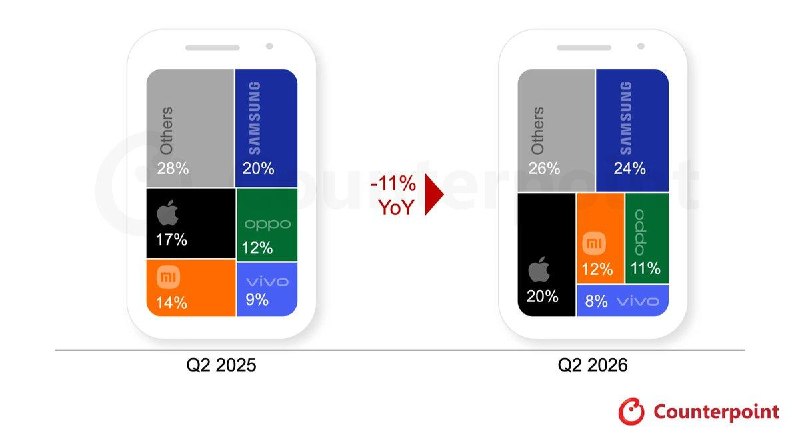
Global Smartphone Shipments Hit 13-Year Low, Major Players Adapt
In a notable turn of events within the smartphone industry, global shipments have declined significantly, marking an 11% drop year-over-year (YoY) and plunging to a level not seen in 13 years. This report, released by Counterpoint Research, highlights the evolving landscape of the smartphone market and the strategic responses by leading manufacturers.
Market Overview
The decline in shipments is a stark reminder of the challenges facing the smartphone market. As consumer demand fluctuates and companies grapple with economic uncertainties, manufacturers are forced to adapt swiftly to changing conditions. The recent data reveals a diversification of market shares among leading brands, showcasing how competition remains fierce, even in downturns.
Top Manufacturers and Their Performance
| Brand | Market Share (%) | Year-Over-Year Change (%) |
|---|---|---|
| Samsung | 24 | N/A |
| Apple | 20 | +3 |
| Xiaomi | 12 | -double-digit |
| OPPO | 11 | -sharp decline |
| vivo | 8 | -double-digit |
| N/A | +16 | |
| Huawei | N/A | +6 |
Samsung: A Return to the Top
Samsung has successfully reclaimed its position as the world's leading smartphone manufacturer, securing 24% of the overall market share. Despite the overall decline in shipments, Samsung's effective product lineup and strategic marketing have allowed the company to maintain its dominance.
Apple's Record Performance
Apple has also made headlines by achieving a remarkable 20% market share in the second quarter, a 3% increase YoY. The company’s continued innovation and loyal customer base have played a crucial role in this growth, further solidifying its standing in the competitive market.
Challenges for Other Brands
While Samsung and Apple have exhibited resilience, other major players are experiencing notable declines:
- Xiaomi: With a 12% market share, the company has encountered a double-digit decline in shipments.
- OPPO: Capturing 11% of the market, OPPO is also grappling with a sharp decline.
- vivo: Holding 8% of the market, vivo sees a continued downturn reflected in double-digit decreases.
Emerging Competitors: Google and Huawei
On a more positive note, both Google and Huawei have reported growth in their shipments. Google saw a 16% increase YoY, reflecting its efforts to carve out a niche in the smartphone arena through premium hardware and software synergy. Meanwhile, Huawei experienced a 6% growth, suggesting resilience in markets where it has been traditional stronghold.
Conclusion
As the global smartphone market confronts significant challenges, adaptability is the cornerstone of success. With notable shifts in market share among leading brands, Samsung and Apple continue to navigate these turbulent waters successfully, while others are compelled to innovate and adjust their strategies in response to this downturn. As the industry evolves, the focus will undoubtedly shift to how these manufacturers will harness technology and consumer trends to regain momentum.
Global Smartphone Shipments Are Down Again • Overall shipments fell 11% YoY to a 13-year low. • Samsung regained No.1 with 24% market share. • Apple hit a record 20% Q2 share, up 3% YoY. • Xiaomi held 12% share despite double-digit decline. • OPPO captured 11% share despite a sharp decline. • vivo kept 8% share despite double-digit decline. • Google grew shipments 16% YoY. • Huawei shipments rose 6% YoY. Source: Counterpoint Research ❤️ @techroma Global Smartphone Shipments Are Down Again • Overall shipments fell 11% YoY to a 13-year low. • Samsung regained No.1 with 24% market share. • Apple hit a record 20% Q2 share, up 3% YoY. • Xiaomi held 12% share despite double-digit decline. • OPPO captured 11% share despite a sharp decline. • vivo kept 8% share despite double-digit decline. • Google grew shipments 16% YoY. • Huawei shipments rose 6% YoY. Source: Counterpoint Research ❤️ @techroma


