 TechOffice
New Android Malware Poses Serious Threat by Taking Control of Your Device
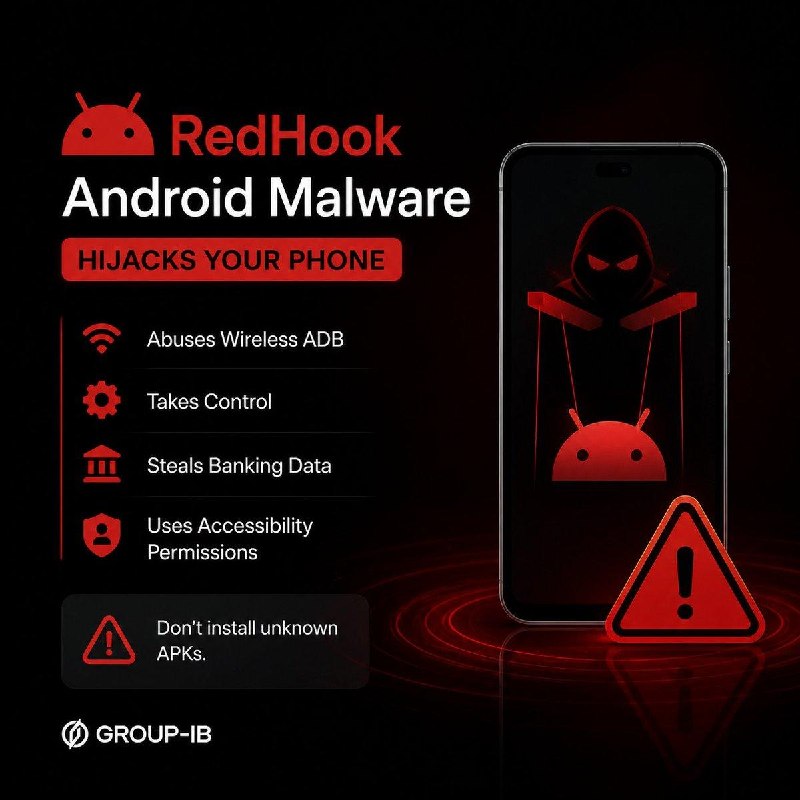
Unveiling RedHook: A New Era of Android Malware
In a disturbing development within the landscape of mobile cybersecurity, researchers have identified an advanced Android banking trojan named RedHook. This malware presents a grave threat as it possesses capabilities that far exceed those of its predecessors, enabling it to effectively hijack Android devices.
Capabilities of RedHook
Cybersecurity experts have revealed that RedHook is not just another run-of-the-mill malware. Its sophisticated features include:
- Enable Developer Options: Activates itself without user consent.
- Wireless ADB Debugging: Turns on this feature to gain deeper access to the device.
- Pairing as Authorized Computer: Pairs itself to the device as a trusted machine.
- Shell-Level Access: Obtains full control over the device's operating system.
- Remote Control: Allows attackers to manipulate the phone from afar.
- Theft of Banking Information: Targets sensitive financial data to facilitate unauthorized transactions.
- Persistence: Maintains functionality even after critical services are terminated.
The Most Worrying Aspect
The most alarming fact about RedHook is that it does not require root access or the exploitation of new Android vulnerabilities. Instead, it exploits Android's built-in Wireless Debugging feature and Accessibility permissions, enabling it to gain a more profound grip on the device.
Propagation Methods
RedHook primarily spreads through fake APK files, cleverly disguised as legitimate applications from banks or government agencies. This tactic is particularly misleading, making unsuspecting users more vulnerable. Current observations indicate that the malware is largely targeting users in Vietnam and Indonesia, although its reach could potentially expand.
Prevention Strategies
To combat this growing threat, cybersecurity experts emphasize the importance of caution. Users should never install unknown APK files received through unsolicited calls, text messages, or dubious links. Here are some best practices to enhance mobile security:
- Only download applications from official app stores.
- Enable security features on your device, such as two-factor authentication.
- Regularly update your device’s operating system and applications.
- Be wary of unsolicited communications requesting sensitive information.
The Evolving Landscape of Android Malware
The discovery of RedHook underscores a disturbing trend in the evolution of Android malware. As cyber threats become increasingly sophisticated, users must remain vigilant and informed about the potential risks associated with installing unknown or unverified applications. The landscape of mobile security is ever-changing, and it is crucial for users to adopt a proactive approach to safeguard their personal information.
Comparison Table: Traditional vs. RedHook Malware
| Feature | Traditional Android Malware | RedHook |
|---|---|---|
| Requires Root Access | Yes | No |
| Methods of Propagation | Malicious APKs, Phishing | Fake APKs, disguised as legitimate apps |
| Remote Control Capabilities | Limited | Extensive |
| Persistence After Termination | Varies | High |
As the threat of malware continues to escalate, a collaborative effort between developers, users, and cybersecurity professionals is essential to ensure safer digital environments. The unprecedented capabilities of RedHook serve as a wake-up call for Android users to prioritize their security practices moving forward.
NEW ANDROID MALWARE CAN LITERALLY HIJACK YOUR PHONE Cybersecurity researchers have discovered an upgraded Android banking trojan called RedHook, and this one is scary 😳 It can reportedly: • Enable Developer Options by itself • Turn on Wireless ADB Debugging • Pair itself as an authorized computer • Gain shell-level access • Control the phone remotely • Steal banking data and help drain accounts • Keep itself alive even after services are killed The craziest part? RedHook doesn't need to ROOT your phone or use a new Android exploit. It abuses Android's own Wireless Debugging feature and Accessibility permissions to take deeper control of the device. The malware spreads through fake APKs disguised as bank or government apps and has been observed targeting users in Vietnam and Indonesia. Never install random APKs sent through calls, texts or unknown links. Android malware is getting way too advanced ❤️ @techroma NEW ANDROID MALWARE CAN LITERALLY HIJACK YOUR PHONE Cybersecurity researchers have discovered an upgraded Android banking trojan called RedHook, and this one is scary 😳 It can reportedly: • Enable Developer Options by itself • Turn on Wireless ADB Debugging • Pair itself as an authorized computer • Gain shell-level access • Control the phone remotely • Steal banking data and help drain accounts • Keep itself alive even after services are killed The craziest part? RedHook doesn't need to ROOT your phone or use a new Android exploit. It abuses Android's own Wireless Debugging feature and Accessibility permissions to take deeper control of the device. The malware spreads through fake APKs disguised as bank or government apps and has been observed targeting users in Vietnam and Indonesia. Never install random APKs sent through calls, texts or unknown links. Android malware is getting way too advanced ❤️ @techroma


