 TechOffice
iPhone 18 Pro: Increased Price Coupled with Slower Storage Performance
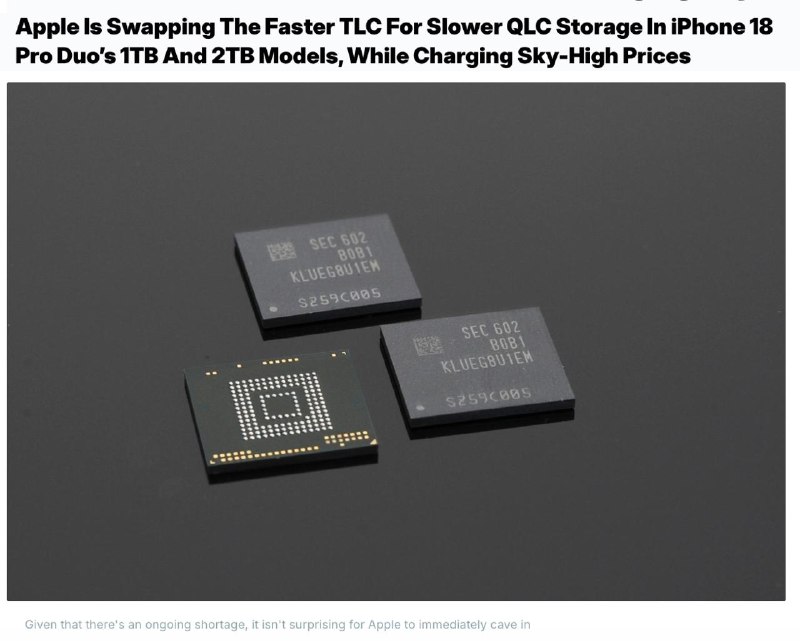
Potential Storage Downgrade in Apple's iPhone 18 Pro and Pro Max
In a surprising development for Apple enthusiasts, the upcoming iPhone 18 Pro and Pro Max models may feature a downgrade in storage technology, particularly for the higher-capacity options. This revelation comes from Wccftech, which cites information from a leaker known as Reptalicant. The implications of this change could significantly impact user experience, especially for those who opt for higher storage configurations.
Storage Variants and Technology Comparison
The 256GB and 512GB models of the iPhone 18 Pro and Pro Max will continue to utilize fast TLC (Triple-Level Cell) flash storage. This technology, provided by major suppliers such as SK hynix, Kioxia, and SanDisk, offers three bits per cell, providing enhanced speed and durability. However, the larger storage options present a less favorable scenario:
- 1TB Model: This variant is expected to primarily use a QLC (Quad-Level Cell) chip, specifically the SK hynix BC8Q-1T. QLC technology involves packing four bits per cell but has drawbacks, namely slower performance and reduced endurance. A Samsung TLC chip may serve as a rare alternative, but its presence remains uncertain.
- 2TB Model: The situation becomes even more concerning with the 2TB version, which will reportedly utilize the SK hynix BC8Q-2T. Designed initially for server workloads, this chip is anticipated to perform less effectively in random 4K operations. In stark contrast, the 2TB iPhone 17 Pro Max retains a TLC storage solution, meeting the expectations for a flagship device.
| Storage Variant | Type | Manufacturer | Performance Notes |
|---|---|---|---|
| 256GB | TLC | SK hynix, Kioxia, SanDisk | Fast and durable |
| 512GB | TLC | SK hynix, Kioxia, SanDisk | Fast and durable |
| 1TB | QLC | SK hynix (BC8Q-1T) | Slower and less durable |
| 2TB | QLC | SK hynix (BC8Q-2T) | Notable performance issues in random 4K operations |
Understanding the Motivations Behind the Downgrade
The rationale for this shift in storage technology may be linked to rising memory costs. Reports indicate a significant increase in the cost of flash memory; for example, the estimated cost of a 256GB module for the iPhone 18 is around $51, a sharp rise from the $13 cost for the iPhone 17 Pro. As a result, customers might find themselves paying more for a phone that not only features a higher retail price but also compromises on storage performance.
Price Predictions and Consumer Reactions
Rumors suggest that the base prices for the iPhone 18 Pro and Pro Max will be set at $1399 and $1499, respectively. This price point, coupled with the anticipated storage downgrades, has raised concerns among consumers. Many view this shift not as a necessary adjustment due to rising costs but rather as a strategic move by Apple to protect its profit margins, especially from its most loyal and premium-paying customers.
As the tech community eagerly awaits the official announcement of the iPhone 18 Pro and Pro Max, it remains to be seen how these changes will resonate with consumers and impact Apple's market position in the highly competitive smartphone landscape.
😰 iPhone 18 Pro: paying more, getting slower storage 📰 Apple is reportedly downgrading the flash storage in the high-capacity iPhone 18 Pro and Pro Max, according to Wccftech, citing leaker Reptalicant. 1️⃣ The 256GB and 512GB models will keep fast TLC (Triple-Level Cell) storage from SK hynix, Kioxia, and SanDisk – same tech as before, three bits per cell, quick and durable. But the 1TB model will mostly switch to a QLC (Quad-Level Cell) chip – SK hynix's BC8Q-1T – which packs four bits per cell but is slower and less durable. A Samsung TLC chip will only appear as a rare alternative. 2️⃣ The 2TB version gets it worse: it'll use SK hynix's BC8Q-2T, a QLC chip originally built for server workloads. The leaker claims this chip suffers noticeably in random 4K performance. For comparison, the 2TB iPhone 17 Pro Max still uses proper TLC storage, as you'd expect from a flagship. 💸 Why the downgrade? Wccftech points to rising memory costs — earlier reports suggested a 256GB flash module now costs Apple around $51 per unit, up from $13 for the iPhone 17 Pro. Meanwhile, base prices for the 18 Pro and Pro Max are expected to hit $1399 and $1499. The math doesn't add up in customers' favor – this looks less like a cost-driven necessity and more like Apple protecting its margins at the expense of top-tier buyers. @DailyApple 😰 iPhone 18 Pro: paying more, getting slower storage 📰 Apple is reportedly downgrading the flash storage in the high-capacity iPhone 18 Pro and Pro Max, according to Wccftech, citing leaker Reptalicant. 1️⃣ The 256GB and 512GB models will keep fast TLC (Triple-Level Cell) storage from SK hynix, Kioxia, and SanDisk – same tech as before, three bits per cell, quick and durable. But the 1TB model will mostly switch to a QLC (Quad-Level Cell) chip – SK hynix's BC8Q-1T – which packs four bits per cell but is slower and less durable. A Samsung TLC chip will only appear as a rare alternative. 2️⃣ The 2TB version gets it worse: it'll use SK hynix's BC8Q-2T, a QLC chip originally built for server workloads. The leaker claims this chip suffers noticeably in random 4K performance. For comparison, the 2TB iPhone 17 Pro Max still uses proper TLC storage, as you'd expect from a flagship. 💸 Why the downgrade? Wccftech points to rising memory costs — earlier reports suggested a 256GB flash module now costs Apple around $51 per unit, up from $13 for the iPhone 17 Pro. Meanwhile, base prices for the 18 Pro and Pro Max are expected to hit $1399 and $1499. The math doesn't add up in customers' favor – this looks less like a cost-driven necessity and more like Apple protecting its margins at the expense of top-tier buyers. @DailyApple


