 TechOffice
Apple Takes Legal Action Against OpenAI Over Accusations of Trade Secret Misappropriation
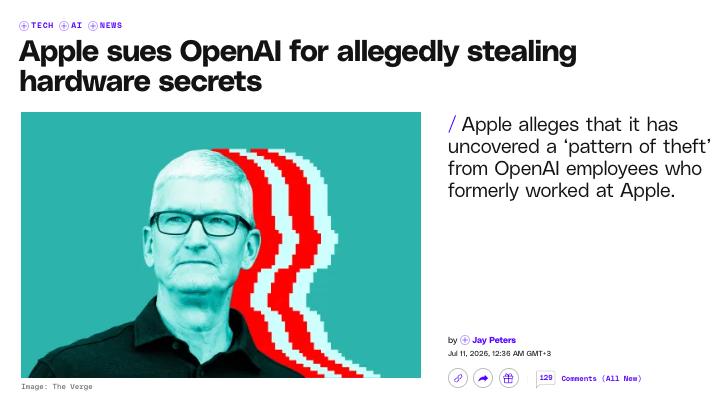
Apple Files Lawsuit Against OpenAI, Alleging Systematic Theft of Trade Secrets
In a significant development in the competitive artificial intelligence landscape, Apple Inc. has filed a lawsuit against OpenAI, accusing the AI research company of engaging in a coordinated scheme to steal confidential trade secrets. The legal action targets OpenAI along with two former Apple employees who now work for the AI pioneer, marking an escalation in tensions between these tech giants.
Background of the Legal Dispute
The lawsuit, filed in a California court, represents Apple's most aggressive move yet to protect its intellectual property as the company increasingly focuses on AI development. Apple alleges that the theft of trade secrets wasn't an isolated incident but rather a systematic practice orchestrated by OpenAI and former employees Tang Tan and Chang Liu.
This legal battle comes at a particularly sensitive time for both companies. Apple has been working to enhance its AI capabilities to compete with industry leaders like OpenAI, while OpenAI continues to expand its influence in the AI hardware space, a domain where Apple has traditionally held significant strength.
Details of Apple's Allegations
According to Apple's complaint, the company has uncovered evidence suggesting a deliberate effort by former employees to smuggle confidential information from Apple to OpenAI. The allegations paint a picture of coordinated actions that Apple claims have given OpenAI an unfair advantage in developing its own AI hardware products.
Specific Accusations Against Former Employees
Apple's lawsuit details several specific instances of alleged misconduct:
- Retention of Company Property: One former iPhone engineer allegedly refused to return his work laptop after leaving Apple and continued accessing the company's internal databases while already employed at OpenAI.
- Unauthorized Data Access: The same engineer reportedly boasted to former colleagues about maintaining access to Apple's systems, with messages like "lol, I still have access, this'll be fun," according to court documents.
- Circumvention of Security Measures: The engineer allegedly created guides on how to quietly copy work files without triggering security alerts, facilitating the exfiltration of confidential information.
- Poaching of Personnel: Tang Tan, who spent nearly 25 years working on the iPhone before becoming OpenAI's head of hardware, is accused of actively recruiting Apple employees and instructing them to bring mockups and schematics to interviews at OpenAI.
Apple's Legal Claims and What They're Seeking
In its lawsuit, Apple contends that the stolen trade secrets have directly benefited OpenAI's development of AI hardware products. The company is seeking both injunctive relief to prevent the further use of its proprietary information and substantial damages for the alleged theft.
"This wasn't just an isolated incident but part of a coordinated effort to undermine Apple's competitive position," the complaint alleges. "The defendants engaged in a systematic scheme to misappropriate Apple's trade secrets and confidential information."
Table: Key Allegations in Apple's Lawsuit
| Defendant | Position at Apple | Alleged Misconduct | Impact on Apple |
|---|---|---|---|
| OpenAI | N/A | Received stolen trade secrets | Unfair competitive advantage in AI hardware |
| Tang Tan | Senior Designer (iPhone) | Poached employees, requested schematics | Loss of proprietary design information |
| Chang Liu | iPhone Engineer | Retained laptop, accessed databases | Unauthorized data access and exfiltration |
OpenAI's Response
OpenAI has swiftly responded to Apple's allegations, denying any wrongdoing and characterizing the lawsuit as an attempt to exaggerate a routine hiring dispute into a "systematic scheme." The company emphasized its commitment to ethical business practices and stated that it "has no interest in other companies' trade secrets."
"We take intellectual property rights very seriously and have robust policies in place to ensure we respect confidential information from other companies," OpenAI representatives stated in their official response. "This appears to be a standard employment dispute that Apple has chosen to escalate unnecessarily."
Context and Industry Implications
This lawsuit highlights the increasingly competitive nature of the AI industry, where companies are fiercely protecting their intellectual property. The case also underscores the challenges tech firms face when employees move between competitors, particularly in fields where proprietary information provides significant competitive advantages.
Similar legal disputes have emerged in the tech industry in recent years, with companies like Google, Microsoft, and Tesla all facing lawsuits related to alleged trade secret theft. These cases often revolve around the movement of employees between competing firms and the alleged unauthorized use of confidential information.
Table: Recent Notable Trade Secret Disputes in Tech
| Year | Plaintiff | Defendant | Key Allegation | Outcome |
|---|---|---|---|---|
| 2023 | Uber | Self-driving car trade secrets | Settled for $245 million | |
| 2022 | Microsoft | Samsung | Patent infringement | Settled for undisclosed amount |
| 2021 | Tesla | Rivian | Electric vehicle technology | Dismissed with prejudice |
| 2024 | Apple | OpenAI | AI hardware trade secrets | Pending |
Potential Implications for Both Companies
For Apple, this lawsuit represents a significant legal battle that could impact its competitive position in the emerging AI hardware market. The company will need to demonstrate that its trade secrets were indeed stolen and that this theft has caused measurable harm to its business.
For OpenAI, the lawsuit threatens to disrupt its momentum in hardware development and could damage its reputation as an ethical AI company. The case may also lead to increased scrutiny of its hiring practices and relationships with former employees of competing firms.
Legal experts suggest that the outcome of this case could set important precedents for how trade secret disputes are handled in the AI industry, particularly as companies increasingly compete in both software and hardware aspects of artificial intelligence.
Conclusion
The lawsuit between Apple and OpenAI represents a significant escalation in the competitive dynamics of the AI industry. As both companies continue to develop their respective AI strategies, the protection of intellectual property has become increasingly critical.
While the legal process will determine the validity of Apple's allegations, this case serves as a reminder of the high stakes in the AI race and the lengths to which companies may go to protect their competitive advantages. The outcome of this dispute could have far-reaching implications for the tech industry as a whole, potentially reshaping how companies approach talent acquisition and the protection of proprietary information in an era of rapid technological advancement.
🧑⚖️ Apple sues OpenAI over alleged theft of trade secrets 📰 Apple is accusing OpenAI and two former employees – designer Tang Tan and engineer Chang Liu – of running a coordinated scheme to leak confidential data. According to Apple, this wasn't an isolated incident but a systemic practice. What came out: • One former iPhone engineer refused to hand back his work laptop when he left – and kept using it to pull data from Apple's internal databases while already working at OpenAI. • He reportedly told former colleagues things like "lol, I still have access, this'll be fun," and even wrote guides on how to quietly copy work files without tripping security. • Tang Tan, who spent nearly 25 years working on the iPhone before becoming OpenAI's head of hardware, allegedly poached people from Apple and asked them to bring mockups and schematics to interviews. 😤 Apple claims the stolen data helped OpenAI in developing its own AI hardware, and is seeking an injunction against its use plus damages. OpenAI has responded by saying it has "no interest in other companies' trade secrets" and that Apple's lawsuit is an attempt to spin an ordinary hiring dispute into a "systematic scheme." @DailyApple 🧑⚖️ Apple sues OpenAI over alleged theft of trade secrets 📰 Apple is accusing OpenAI and two former employees – designer Tang Tan and engineer Chang Liu – of running a coordinated scheme to leak confidential data. According to Apple, this wasn't an isolated incident but a systemic practice. What came out: • One former iPhone engineer refused to hand back his work laptop when he left – and kept using it to pull data from Apple's internal databases while already working at OpenAI. • He reportedly told former colleagues things like "lol, I still have access, this'll be fun," and even wrote guides on how to quietly copy work files without tripping security. • Tang Tan, who spent nearly 25 years working on the iPhone before becoming OpenAI's head of hardware, allegedly poached people from Apple and asked them to bring mockups and schematics to interviews. 😤 Apple claims the stolen data helped OpenAI in developing its own AI hardware, and is seeking an injunction against its use plus damages. OpenAI has responded by saying it has "no interest in other companies' trade secrets" and that Apple's lawsuit is an attempt to spin an ordinary hiring dispute into a "systematic scheme." @DailyApple


