 TechOffice
Apple Takes Legal Action Against OpenAI, Alleges Trade Secret Theft by Former Employees
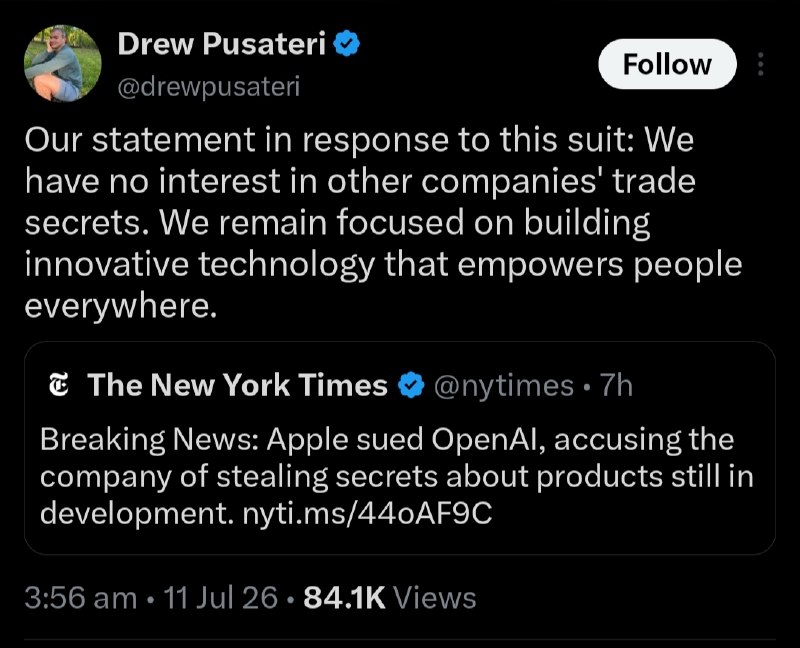
Apple Takes Legal Action Against OpenAI Over Allegations of Trade Secret Theft
In a significant move within the tech industry, Apple Inc. has filed a lawsuit against OpenAI and two former employees, alleging the theft of confidential trade secrets. The lawsuit, which was officially lodged on July 10, names several key parties: OpenAI, io Products, and ex-Apple employees Tang Yew Tan and Chang Liu.
Background of the Key Individuals
- Tang Yew Tan: Previously held the position of Vice President of Product Design at Apple before transitioning to io Products.
- Chang Liu: A former senior system electrical engineer at Apple, Liu worked for the company for eight years prior to joining OpenAI.
Allegations of Misconduct
Apple's lawsuit centers around a series of serious allegations against Liu and Tan that suggest a willful breach of company protocol and ethical standards. The specific charges include:
- Unauthorized Data Access: Chang Liu allegedly retained an Apple work laptop after his departure and exploited an authentication vulnerability to infiltrate Apple’s internal network. It is claimed that he downloaded dozens of confidential hardware files, which could pose a significant risk to Apple’s proprietary technologies.
- Recruitment Ethics Violations: Tang Yew Tan is accused of misusing Apple’s internal information during recruitment processes. Reports suggest he used internal codenames to attract candidates and instructed potential hires to bring physical Apple components to interviews, ostensibly to extract proprietary information.
- Supplier Interference: OpenAI representatives reportedly approached Apple’s suppliers, persuading at least one partner to demonstrate a proprietary metal-finishing technique without proper authorization from Apple.
Apple's Legal Demands
In its legal filing, Apple is seeking multiple forms of relief, which include:
- An injunction to prevent further misuse of their confidential information.
- The return or destruction of any materials obtained unlawfully.
- Monetary damages for the alleged harm caused by these actions.
Response from OpenAI
In response to the allegations, OpenAI has categorically denied all claims made by Apple. The organization has stated that the circumstances surrounding the lawsuit are unfounded, emphasizing its commitment to ethical business practices.
Implications for the Tech Industry
This legal battle not only highlights the increasing tensions between leading technology firms around the safeguarding of intellectual property but also raises questions about the ethical responsibilities of companies in recruiting talent from competitors.
Conclusion
As the situation unfolds, the outcomes of this lawsuit could have significant repercussions on how trade secrets are handled in the tech industry. Both Apple and OpenAI are set to face public scrutiny as they navigate this contentious dispute over their respective reputations and operational integrity.
| Party Involved | Role | Allegations |
|---|---|---|
| Tang Yew Tan | Former VP of Product Design at Apple | Using internal codenames for recruitment; soliciting proprietary information |
| Chang Liu | Former Senior System Electrical Engineer at Apple | Unauthorized access to Apple’s internal network; downloading confidential files |
| OpenAI | AI Research and Deployment Company | Encouraging suppliers to share proprietary techniques without authorization |
This case serves as a reminder of the critical importance of safeguarding intellectual properties and the potential impact on innovations within the technology sector.
Apple sues OpenAI, accuses ex-employees of stealing trade secrets The lawsuit filed on July 10 names OpenAI, io Products, Tang Yew Tan and Chang Liu. Tang Tan served as VP of product design at Apple before working at iO products. Chang Liu worked at Apple for eight years and was a senior system electrical engineer before departing to join OpenAl. Chang Liu kept an Apple work laptop, exploited an authentication bug to access Apple's internal network and downloaded dozens of confidential hardware files. Tang Yew Tan used Apple internal codenames when recruiting and instructed candidates to bring physical Apple parts to interviews as a way to elicit proprietary information. OpenAI representatives approached Apple suppliers and persuaded at least 1 partner to demonstrate a proprietary metal-finishing technique without Apple's authorization. Apple is asking for injunctions, the return or destruction of materials, and monetary damages. OpenAI has denied all allegations. 🔗 Filing | 9to5Mac 🧑💻 @agamtechtricks Apple sues OpenAI, accuses ex-employees of stealing trade secrets The lawsuit filed on July 10 names OpenAI, io Products, Tang Yew Tan and Chang Liu. Tang Tan served as VP of product design at Apple before working at iO products. Chang Liu worked at Apple for eight years and was a senior system electrical engineer before departing to join OpenAl. Chang Liu kept an Apple work laptop, exploited an authentication bug to access Apple's internal network and downloaded dozens of confidential hardware files. Tang Yew Tan used Apple internal codenames when recruiting and instructed candidates to bring physical Apple parts to interviews as a way to elicit proprietary information. OpenAI representatives approached Apple suppliers and persuaded at least 1 partner to demonstrate a proprietary metal-finishing technique without Apple's authorization. Apple is asking for injunctions, the return or destruction of materials, and monetary damages. OpenAI has denied all allegations. 🔗 Filing | 9to5Mac 🧑💻 @agamtechtricks


