 TechOffice
Apple Announces Over $30 Billion Investment in Broadcom
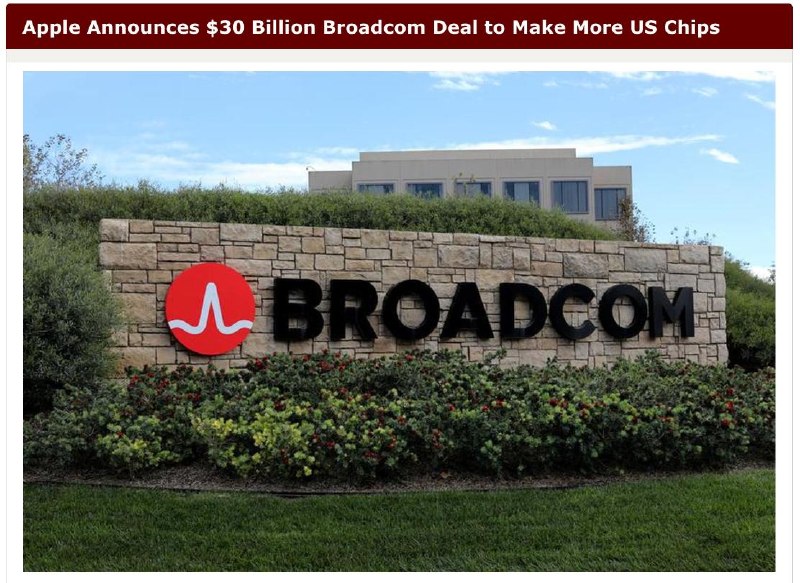
Apple Signs Landmark Agreement with Broadcom
In a significant strategic move, Apple has announced a multiyear agreement with Broadcom, committing over $30 billion to collaborate on the design and production of custom silicon and wireless connectivity chips aimed at enhancing the performance and functionality of Apple devices. This ambitious partnership not only showcases Apple's commitment to innovation but also reinforces its dedication to American manufacturing.
Key Details of the Agreement
The deal entails Broadcom manufacturing more than 15 billion wireless chips for Apple products within the United States. This manufacturing commitment comes as part of Apple’s ongoing efforts to solidify its supply chain domestically and ensure that its devices remain at the cutting edge of technology.
Investment in Manufacturing Facilities
In addition to the robust financial commitment, the agreement also signifies a substantial $1.5 billion investment aimed at expanding and modernizing Broadcom's manufacturing facilities located in Fort Collins, Colorado. This facility is expected to produce advanced radio frequency (RF) components, including FBAR filters, which are crucial for wireless connectivity technology.
Impact on the U.S. Economy
This partnership represents Apple’s largest investment commitment to date under its American Manufacturing Program (AMP). It aligns with the company's broader vision to inject $600 billion into the U.S. economy over the next four years. This initiative is expected to bolster job creation and enhance technological capabilities within the country.
Summary of Key Points
| Aspect | Details |
|---|---|
| Investment Amount | $30 billion+ |
| Wireless Chips to be Produced | 15 billion+ |
| Affected Manufacturing Facility | Fort Collins, Colorado |
| Additional Investment for Facility Modernization | $1.5 billion |
| Apple’s Total Investment in U.S. Economy | $600 billion (over four years) |
Future Prospects
The collaboration between Apple and Broadcom is set to reshape the technological landscape, fostering a new era of innovation while simultaneously boosting domestic manufacturing. As both companies leverage their expertise, the expectation is that consumers will soon witness enhanced performance in Apple's product lineup, driven by these next-generation chips.
This agreement not only signifies a remarkable milestone for Apple and Broadcom but also serves as a testament to the potential of large-scale investments in technology and manufacturing to transform economies and create opportunities for future growth.
💸 Apple to invest $30B+ in Broadcom 📰 Apple has signed a multiyear agreement with Broadcom worth more than $30 billion to design and produce custom silicon and wireless connectivity chips for Apple devices. As part of the deal, Broadcom will manufacture over 15 billion wireless chips for Apple products in the US. 🏭 The agreement also includes a $1.5B investment to expand and modernize Broadcom's manufacturing facility in Fort Collins, Colorado, which will produce advanced RF components (including FBAR filters) and wireless connectivity technology. ℹ️ This is Apple's largest commitment yet under its American Manufacturing Program (AMP) – and part of the company's broader pledge to invest $600B in the US economy over the next four years. @DailyApple 💸 Apple to invest $30B+ in Broadcom 📰 Apple has signed a multiyear agreement with Broadcom worth more than $30 billion to design and produce custom silicon and wireless connectivity chips for Apple devices. As part of the deal, Broadcom will manufacture over 15 billion wireless chips for Apple products in the US. 🏭 The agreement also includes a $1.5B investment to expand and modernize Broadcom's manufacturing facility in Fort Collins, Colorado, which will produce advanced RF components (including FBAR filters) and wireless connectivity technology. ℹ️ This is Apple's largest commitment yet under its American Manufacturing Program (AMP) – and part of the company's broader pledge to invest $600B in the US economy over the next four years. @DailyApple


