 TechOffice
PC Market Experiences Significant Slowdown
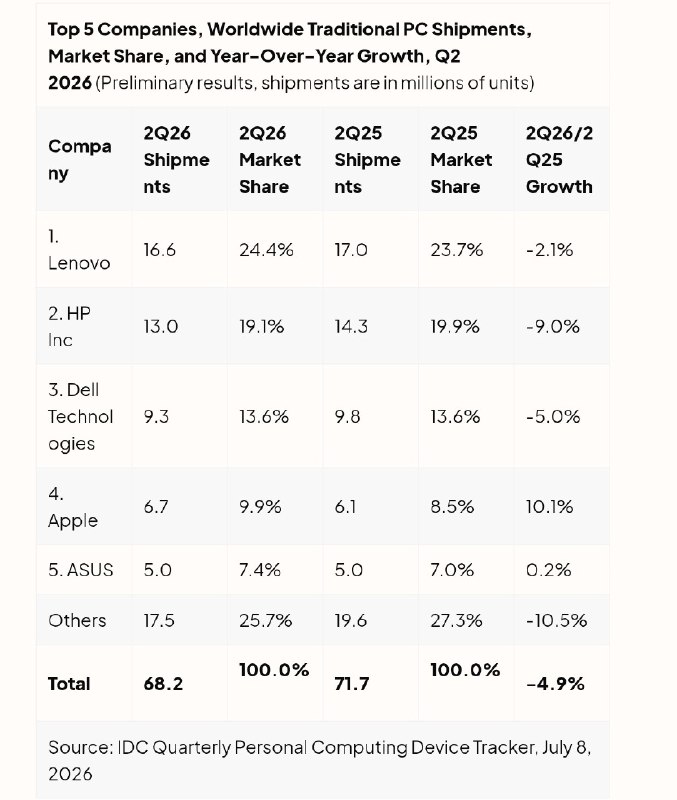
The Decline of Global PC Shipments: A Market in Transition
The global personal computer (PC) market has encountered a significant downturn as shipments fell by 4.9% in the second quarter of 2026. This marks the conclusion of a robust nine-quarter growth streak, which has raised concerns about the future trajectory of the market. An intricate web of factors is contributing to this slowdown, with memory supply issues being a primary influence.
Memory Supply Issues: The Core Problem
A substantial factor behind the decline in PC shipments is the soaring demand for memory components from artificial intelligence (AI) data centers. These centers are aggressively purchasing vast amounts of Dynamic Random-Access Memory (DRAM) and NAND flash memory. As a result, the available supply for traditional PC manufacturers is dwindling. This imbalance is not only affecting the supply chain but is also driving up memory prices significantly, leading to increased manufacturing costs for laptops and desktops alike.
Higher memory costs translate to a steeper price tag for consumers, which in turn influences purchasing decisions. Many potential buyers are opting to postpone their upgrades or purchases of new PCs, thus further exacerbating the decline in shipments.
Market Leaders Amidst a Slowdown
Despite the downturn, Lenovo has managed to retain its position as the world's largest PC brand, showcasing resilience amidst market challenges. Following closely behind are other notable brands, including:
- HP
- Dell
- Apple
- ASUS
The competitive landscape remains vigorous, with each brand vying for market share despite the prevailing economic pressures. The adaptability of these companies will be crucial as they navigate through the complexities of supply chain disruptions and changing consumer behaviors.
Future Implications for Pricing and Supply
As the PC market adjusts to these new realities, one key question looms: Will memory prices stabilize? Analysts warn that if the demand from AI data centers continues at its current pace, PC pricing may not return to expected levels soon. This scenario could discourage many consumers from entering the market or upgrading their devices, prompting a prolonged ripple effect throughout the industry.
Conclusion
The current slowdown of the global PC market serves as a critical reminder of the shifting dynamics brought on by technological advancements and demand shifts. While the ongoing competition among leading brands may offer some reassurance, the ultimate fate of the market will heavily depend on the resolution of memory supply issues and the corresponding impact on pricing strategies.
| Brand | Market Position |
|---|---|
| Lenovo | 1st |
| HP | 2nd |
| Dell | 3rd |
| Apple | 4th |
| ASUS | 5th |
In summary, while the current state of the PC market presents challenges, it also signals potential shifts that could shape the industry in years to come. Stakeholders will need to adopt strategic approaches to thrive in an increasingly competitive environment fueled by technological progress and changing consumer preferences.
PC MARKET HAS SLOWED DOWN. Global PC shipments fell 4.9% in Q2 2026, ending nine straight quarters of growth. A big reason is memory. AI data centers are buying massive amounts of DRAM and NAND, leaving less supply for PC makers. That has pushed memory prices higher, making laptops and desktops more expensive to build. As prices go up, many people are delaying upgrades instead of buying a new PC. Even with the slowdown, Lenovo remained the world's biggest PC brand, followed by HP, Dell, Apple and ASUS. If memory prices don't ease anytime soon, PC prices could stay higher than many people were expecting. PC MARKET HAS SLOWED DOWN. Global PC shipments fell 4.9% in Q2 2026, ending nine straight quarters of growth. A big reason is memory. AI data centers are buying massive amounts of DRAM and NAND, leaving less supply for PC makers. That has pushed memory prices higher, making laptops and desktops more expensive to build. As prices go up, many people are delaying upgrades instead of buying a new PC. Even with the slowdown, Lenovo remained the world's biggest PC brand, followed by HP, Dell, Apple and ASUS. If memory prices don't ease anytime soon, PC prices could stay higher than many people were expecting.


