 TechOffice
Tim Cook Alerts: Potential Price Increases for Apple Devices Ahead
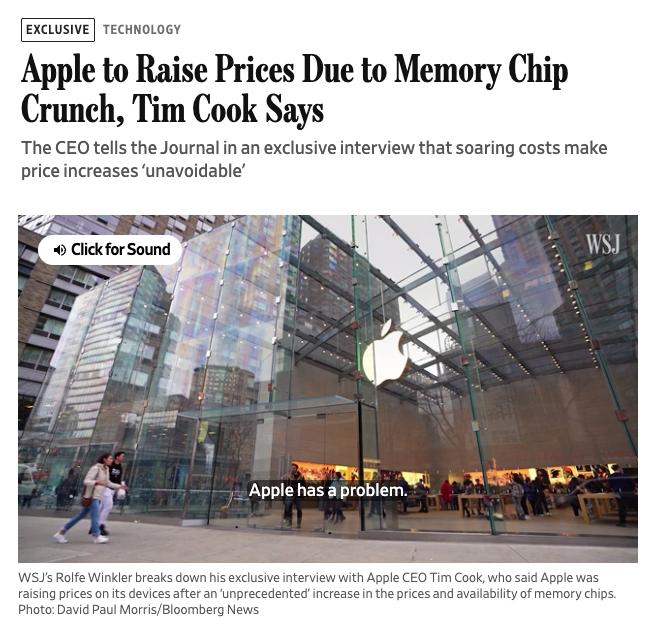
Apple Faces Potential Price Increases Due to Memory Chip Shortages
In a recent statement, Apple CEO Tim Cook highlighted an alarming trend that could affect the costs of a range of Apple devices. The warning comes in light of an increasing shortage of memory chips, a crucial component in the production of consumer electronics. According to Cook, this scarcity is largely attributed to chip manufacturers pivoting their resources toward the production of artificial intelligence (AI) servers and data center infrastructure, which consequently diminishes the availability of chips for consumer-oriented products.
The Shift in Chip Production
The semiconductor industry is experiencing a significant upheaval, with manufacturers prioritizing AI-related advancements over traditional consumer electronics. This shift raises concerns not only for Apple but also for various tech companies that rely heavily on memory chips for their devices.
- Reduced Supply: The concentration on AI servers has led to a substantial reduction in the supply available for products such as smartphones, tablets, and laptops.
- Price Implications: Should supply constraints continue, it is likely that prices for a range of Apple devices could rise as component costs increase.
Apple's Strategic Response
In response to the ongoing challenges in the semiconductor landscape, Apple has decided against establishing its own memory manufacturing facilities. Instead, the tech giant aims to secure long-term supply agreements with various chip manufacturers around the globe. This strategy allows Apple to stabilize its supply chain without the substantial financial investment and time requirements of building factory infrastructure.
| Strategy | Description |
|---|---|
| Long-Term Supply Agreements | Securing contracts with chip manufacturers to ensure a steady supply of memory chips. |
| No In-House Manufacturing | Choosing not to build memory production facilities, which can be costly and time-consuming. |
Regulatory Considerations
However, these agreements may not be straightforward. Some contracts could require approval from U.S. regulators due to national security considerations. This aspect of the process adds another layer of complexity to Apple's planned procurement strategy, potentially delaying timelines for securing necessary components.
Uncertainty for Consumers
As of now, Apple has not specified which devices may be subject to potential price increases. This uncertainty leaves consumers and industry analysts alike keenly observing the developments in supply chain dynamics and pricing strategies.
As the situation continues to evolve, Apple will have to navigate these challenges effectively to maintain its market position and satisfy consumer demand. The implications of this chip shortage extend far beyond Apple, potentially affecting the pricing and availability of electronics across the board.
Conclusion
The warnings from Tim Cook serve as a clarion call for both consumers and industry stakeholders to prepare for possible pricing adjustments in the near future. With the semiconductor supply chain under strain, the broader implications could reshape consumer expectations and lead to a reevaluation of purchasing strategies in the tech sector.
💸 Tim Cook warns Apple devices could become more expensive 📰 Apple CEO Tim Cook said some Apple devices may see price increases due to a growing shortage of memory chips. Chipmakers are increasingly shifting production toward AI servers and data center infrastructure, reducing supply for consumer electronics. 🏭 Instead of building its own memory factories, Apple plans to secure long-term supply agreements with manufacturers worldwide. Some of these deals may require approval from U.S. regulators because of national security requirements. 🤷♂️ Apple has not yet disclosed which devices could be affected by the potential price increases. @DailyApple 💸 Tim Cook warns Apple devices could become more expensive 📰 Apple CEO Tim Cook said some Apple devices may see price increases due to a growing shortage of memory chips. Chipmakers are increasingly shifting production toward AI servers and data center infrastructure, reducing supply for consumer electronics. 🏭 Instead of building its own memory factories, Apple plans to secure long-term supply agreements with manufacturers worldwide. Some of these deals may require approval from U.S. regulators because of national security requirements. 🤷♂️ Apple has not yet disclosed which devices could be affected by the potential price increases. @DailyApple


