 TechOffice
Caution: Important Update Ahead
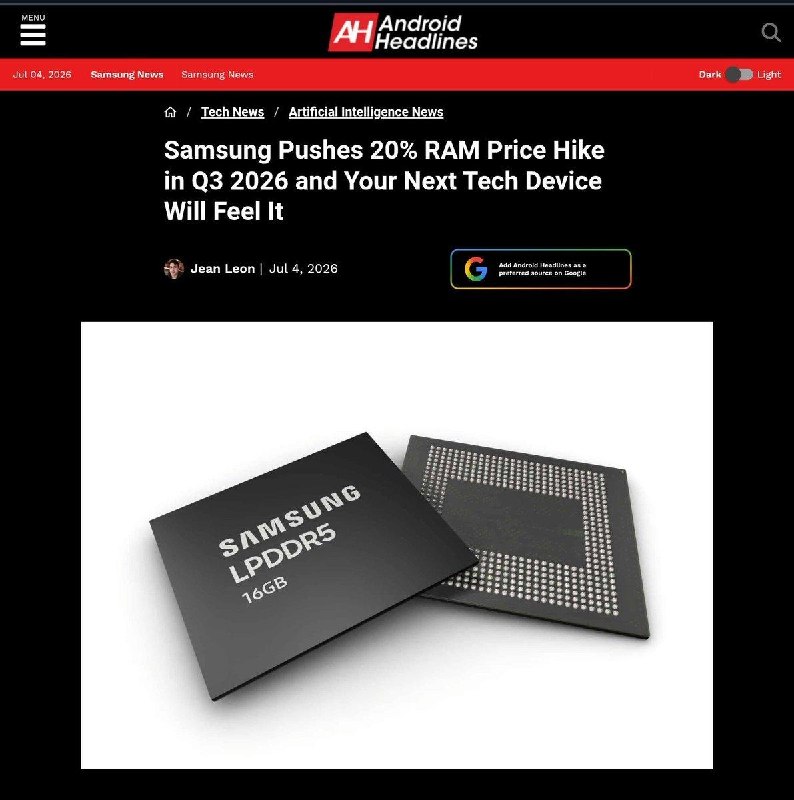
Samsung's Anticipated Increase in DRAM Memory Chip Prices: A Deep Dive
The semiconductor industry is poised for significant changes in the near future, particularly concerning Dynamic Random-Access Memory (DRAM) chips. In a recent announcement, Samsung Electronics has confirmed plans to increase the prices of its DRAM memory chips by 20% in the third quarter of 2026. This move has implications not only for the company itself but for the broader technology landscape, impacting various sectors, including consumer electronics.
Factors Driving the Price Increase
The primary driver behind this price adjustment is the escalating demand for artificial intelligence (AI) capabilities. As tech giants such as Google, Amazon, and Microsoft accelerate their investments in AI infrastructure, the need for high-performance memory components has surged. These companies are opting to procure DRAM chips in bulk, consequently raising the stakes for general-purpose memory.
- Escalating Demand for AI: The rapid evolution of AI technologies necessitates efficient data processing capabilities, which in turn requires robust memory solutions.
- Investment from Tech Giants: Major players in the tech industry are allocating considerable resources to enhance their AI infrastructures, thereby driving demand for high-margin memory components.
- Shift in Semiconductor Production Priorities: Semiconductor foundries are increasingly focusing on producing components tailored for data centers, often sidelining consumer-grade memory products.
Broader Implications for Consumer Electronics
The ramifications of this price increase extend beyond corporate profit margins and touch on the consumer market. Upcoming releases of smartphones, laptops, and graphics cards are expected to reflect the heightened costs of DRAM. Here’s how various sectors may be affected:
| Sector | Expected Impact |
|---|---|
| Smartphones | Higher prices due to increased memory costs; potential reduction in features offered at lower price points. |
| Laptops | More expensive models with better specs; entry-level models may see reduced capabilities. |
| Graphics Cards | Increased prices, particularly for high-performance options; lead times may extend as manufacturers negotiate supply. |
Conclusion
As Samsung gears up for this expected price jump in DRAM memory chips, it marks a significant shift in the landscape of the tech industry, catalyzed by the growing importance of AI. The transition towards producing components optimized for data centers not only mirrors current market trends but also highlights the expanding role of AI in our daily lives. Consumers and manufacturers alike will need to navigate this new reality, where the cost of technological advancement may ultimately trickle down to end users.
This evolving scenario serves as a reminder of the complex interplay between technology, market demands, and consumer pricing in an age increasingly defined by artificial intelligence.
Stay informed for more updates on this topic and the continuous changes within the tech landscape.Bad news 🚨 Samsung to increase its DRAM memory chips by 20% in the third quarter of 2026! • The main reason behind this is AI. • Tech giants are investing heavily in AI infrastructure, buying up high margin memory components at a huge scale. • Semiconductor foundries are prioritizing data center components over general purpose consumer memory. Upcoming smartphones, laptops and graphics card will likely cost more. ❤️ @OneUIForGalaxy Bad news 🚨 Samsung to increase its DRAM memory chips by 20% in the third quarter of 2026! • The main reason behind this is AI. • Tech giants are investing heavily in AI infrastructure, buying up high margin memory components at a huge scale. • Semiconductor foundries are prioritizing data center components over general purpose consumer memory. Upcoming smartphones, laptops and graphics card will likely cost more. ❤️ @OneUIForGalaxy


