 TechOffice
A Glimpse into the Future: iPhone Enters Time Capsule for 2276
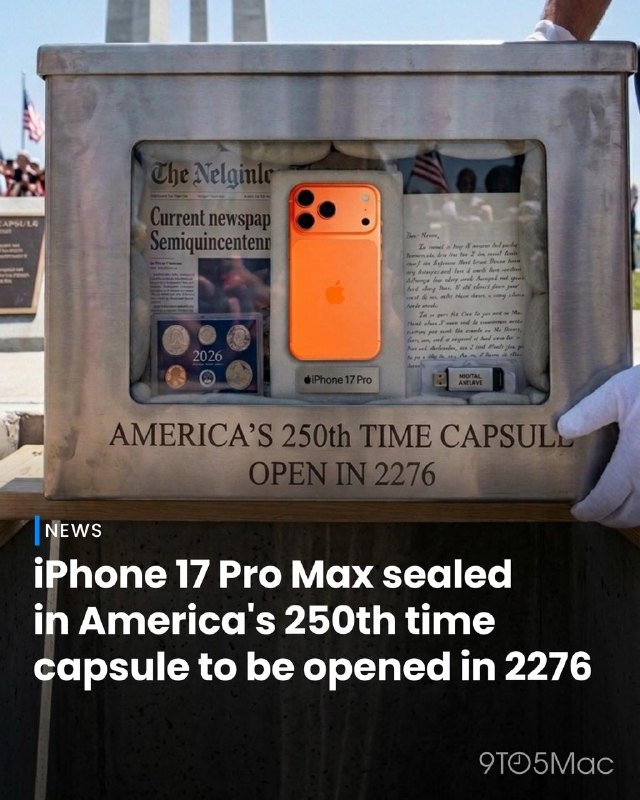
Time Capsule Project: An iPhone for the Next Century
To commemorate America’s 250th anniversary, a substantial time capsule has been buried in Philadelphia, weighing nearly 900 pounds. This stainless steel container is a veritable treasure trove of artifacts, encompassing contributions from all 50 states, Washington D.C., and five U.S. territories. Scheduled for opening in the year 2276, this capsule marks a forward-looking celebration of the planned 500th anniversary of the United States.
Contents of the Time Capsule
Among a myriad of items housed within this historic vessel is the iPhone 17 Pro Max, elegantly presented in a striking Cosmic Orange finish. This particular device is not just a smartphone; it is equipped with "digital artifacts" preserved in its Notes app, providing a digital glimpse into the lives and thoughts of current generations. However, a critical question looms: will the device still function by the time it is unearthed in 250 years?
Challenges Ahead: The Longevity of Technology
The inclusion of a modern smartphone in a time capsule raises significant challenges, particularly relating to its functionality over such an extensive timespan. Key concerns include:
- Battery Degradation: Lithium-ion batteries, which power smartphones like the iPhone, are known to degrade over time. The likelihood of the iPhone powering on after 250 years is alarmingly low due to this degradation.
- Unlocking Difficulties: Even in the improbable scenario that the iPhone's battery survives, another significant obstacle stands in the way—the device’s dependency on Apple's servers for unlocking. The existence of these servers, or any analogous technological infrastructure, 250 years from now remains uncertain.
Future Implications
This venture raises broader questions about our relationship with technology and the durability of digital material. While it serves as an imaginative representation of our current era, it underscores the fragility of information stored in digital formats. The historical significance of artifacts depends not only on their physical preservation but also on their accessibility and utility in the future.
Table: Key Features and Concerns of the iPhone in the Time Capsule
| Feature | Details |
|---|---|
| Device Model | iPhone 17 Pro Max |
| Color | Cosmic Orange |
| Stored Content | Digital artifacts in Notes app |
| Battery Type | Lithium-ion |
| Expected Lifespan | Highly unlikely to function after 250 years |
| Unlocking Mechanism | Dependent on Apple's current server infrastructure |
Conclusion
This ambitious time capsule project serves as a fascinating intersection of technology, culture, and history. While it encapsulates the spirit of our age, it concurrently raises profound questions regarding the preservation of our digital legacies. As we look to the future, it becomes increasingly essential to consider how we can safeguard our stories for generations yet unborn.
🙂 Time capsule: an iPhone bound for the year 2276 🇺🇸 To mark America's 250th anniversary, a massive time capsule was buried in Philadelphia — a nearly 900-pound stainless steel container holding hundreds of artifacts from all 50 states, Washington D.C., and five U.S. territories. It won't be opened until 2276, for the nation's 500th anniversary. 📱 Among the items is the iPhone 17 Pro Max in Cosmic Orange. The phone has "digital artifacts" saved in the Notes app for future generations to look through – assuming the device even turns on. But that's the real problem: 🔋 Lithium-ion batteries degrade over time, so the odds of the phone powering on in 250 years are basically zero. 🔒 But even if the battery somehow survives, there's a bigger catch – unlocking an iPhone depends on Apple's servers, which may not even exist 250 years from now. @iPhone 🙂 Time capsule: an iPhone bound for the year 2276 🇺🇸 To mark America's 250th anniversary, a massive time capsule was buried in Philadelphia — a nearly 900-pound stainless steel container holding hundreds of artifacts from all 50 states, Washington D.C., and five U.S. territories. It won't be opened until 2276, for the nation's 500th anniversary. 📱 Among the items is the iPhone 17 Pro Max in Cosmic Orange. The phone has "digital artifacts" saved in the Notes app for future generations to look through – assuming the device even turns on. But that's the real problem: 🔋 Lithium-ion batteries degrade over time, so the odds of the phone powering on in 250 years are basically zero. 🔒 But even if the battery somehow survives, there's a bigger catch – unlocking an iPhone depends on Apple's servers, which may not even exist 250 years from now. @iPhone


