 TechOffice
iPhone 18 Pro: Higher Prices But Slower Storage Performance
iPhone 18 Pro: A Costly Compromise on Storage Performance
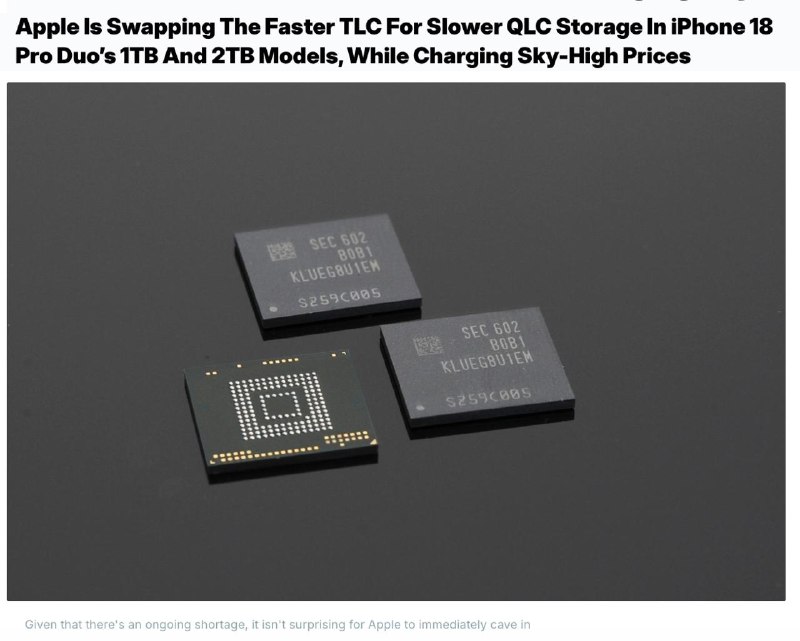
In the ever-evolving landscape of premium smartphones, Apple has long been a figurehead for quality and innovation. However, recent reports have surfaced indicating that the upcoming iPhone 18 Pro and Pro Max may compromise on one of the most critical aspects of smartphone performance—storage. According to credible leaker Reptalicant, cited by Wccftech, Apple is set to downgrade the flash storage in the high-capacity models, much to the dismay of prospective buyers.
Storage Specifications: What to Expect
In a surprising turn of events, the iPhone 18 Pro's storage configurations will feature differing technologies based on capacity. Here is a breakdown of what consumers can expect:
| Model | Storage Capacity | Storage Type | Performance |
|---|---|---|---|
| iPhone 18 Pro | 256GB | TLC (Triple-Level Cell) | Fast and durable |
| iPhone 18 Pro | 512GB | TLC | Fast and durable |
| iPhone 18 Pro | 1TB | QLC (Quad-Level Cell) | Slower, less durable |
| iPhone 18 Pro | 2TB | QLC | Notably poor random 4K performance |
The 256GB and 512GB versions of the iPhone 18 Pro will retain the commendable TLC (Triple-Level Cell) storage technology from renowned manufacturers such as SK hynix, Kioxia, and SanDisk. This technology, utilized across previous models, offers a three bits-per-cell configuration that is not only quick but also durable.
However, the story changes significantly for the 1TB and 2TB models. The 1TB variant will primarily utilize a QLC (Quad-Level Cell) chip—specifically SK hynix's BC8Q-1T—a setup that accommodates four bits per cell. Unfortunately, this configuration is slower and less reliable than its TLC predecessors, with a Samsung TLC chip appearing only as a rare alternative.
In an even more concerning development, the 2TB version is reportedly set to use SK hynix's BC8Q-2T, a chip originally designed for server applications, leading to significantly slower random 4K performance compared to the 2TB iPhone 17 Pro Max, which proudly boasted TLC storage.
The Cost of Compromise
This decision raises crucial questions regarding Apple's strategy, particularly when it comes to pricing. As reported by Wccftech, the cost of memory modules has surged considerably. The price for a 256GB flash module has jumped to approximately $51, a dramatic increase from the $13 associated with the iPhone 17 Pro's storage. In light of these rising costs, the base prices for the iPhone 18 Pro and Pro Max are expected to reach $1399 and $1499, respectively.
| Model | Base Price | Cost of 256GB Flash Module |
|---|---|---|
| iPhone 18 Pro | $1399 | $51 |
| iPhone 18 Pro Max | $1499 | $51 |
The discrepancy in pricing and performance is evident. While Apple has historically positioned its flagship devices as the pinnacle of quality, this shift appears less as a necessity driven by escalated costs and more as a strategy to safeguard profit margins at the expense of consumer experience. Given the high investment required for these premium devices, many potential buyers may feel they are receiving a reduced value in return for their increased expenditure.
Conclusion
As the imminent release of the iPhone 18 Pro and Pro Max draws near, it remains to be seen how consumers will respond to these controversial storage decisions. Will they prioritize brand loyalty and the Apple ecosystem over performance, or will they demand more value for their hard-earned money? Only time will tell, but one thing is clear: the latest iteration of Apple’s flagship iPhone is shaping up to be a contentious topic among tech enthusiasts and casual users alike.
😰 iPhone 18 Pro: paying more, getting slower storage 📰 Apple is reportedly downgrading the flash storage in the high-capacity iPhone 18 Pro and Pro Max, according to Wccftech, citing leaker Reptalicant. 1️⃣ The 256GB and 512GB models will keep fast TLC (Triple-Level Cell) storage from SK hynix, Kioxia, and SanDisk – same tech as before, three bits per cell, quick and durable. But the 1TB model will mostly switch to a QLC (Quad-Level Cell) chip – SK hynix's BC8Q-1T – which packs four bits per cell but is slower and less durable. A Samsung TLC chip will only appear as a rare alternative. 2️⃣ The 2TB version gets it worse: it'll use SK hynix's BC8Q-2T, a QLC chip originally built for server workloads. The leaker claims this chip suffers noticeably in random 4K performance. For comparison, the 2TB iPhone 17 Pro Max still uses proper TLC storage, as you'd expect from a flagship. 💸 Why the downgrade? Wccftech points to rising memory costs — earlier reports suggested a 256GB flash module now costs Apple around $51 per unit, up from $13 for the iPhone 17 Pro. Meanwhile, base prices for the 18 Pro and Pro Max are expected to hit $1399 and $1499. The math doesn't add up in customers' favor – this looks less like a cost-driven necessity and more like Apple protecting its margins at the expense of top-tier buyers. @DailyApple 😰 iPhone 18 Pro: paying more, getting slower storage 📰 Apple is reportedly downgrading the flash storage in the high-capacity iPhone 18 Pro and Pro Max, according to Wccftech, citing leaker Reptalicant. 1️⃣ The 256GB and 512GB models will keep fast TLC (Triple-Level Cell) storage from SK hynix, Kioxia, and SanDisk – same tech as before, three bits per cell, quick and durable. But the 1TB model will mostly switch to a QLC (Quad-Level Cell) chip – SK hynix's BC8Q-1T – which packs four bits per cell but is slower and less durable. A Samsung TLC chip will only appear as a rare alternative. 2️⃣ The 2TB version gets it worse: it'll use SK hynix's BC8Q-2T, a QLC chip originally built for server workloads. The leaker claims this chip suffers noticeably in random 4K performance. For comparison, the 2TB iPhone 17 Pro Max still uses proper TLC storage, as you'd expect from a flagship. 💸 Why the downgrade? Wccftech points to rising memory costs — earlier reports suggested a 256GB flash module now costs Apple around $51 per unit, up from $13 for the iPhone 17 Pro. Meanwhile, base prices for the 18 Pro and Pro Max are expected to hit $1399 and $1499. The math doesn't add up in customers' favor – this looks less like a cost-driven necessity and more like Apple protecting its margins at the expense of top-tier buyers. @DailyApple


