 TechOffice
Rising Memory Prices Signal Potential Price Hikes for Phones and Laptops
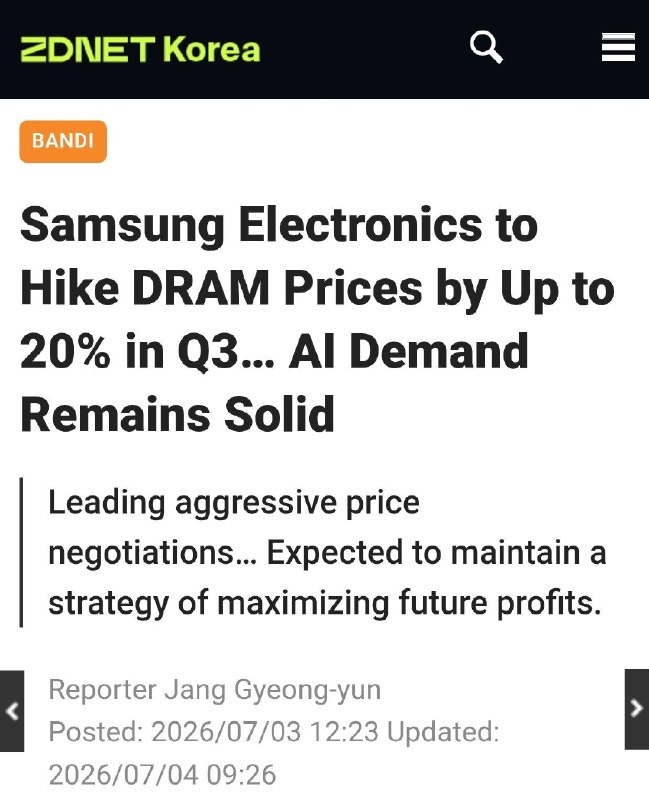
Rising Memory Prices: A Concern for Consumers and Manufacturers Alike
The semiconductor industry faces significant challenges as memory prices, particularly Dynamic Random Access Memory (DRAM), continue to escalate. Recent reports indicate that Samsung, a leading supplier in the memory market, is seeking an additional price increase of up to 20% for DRAM in the third quarter of 2026. Given the substantial price hikes that have already occurred this year, this trend could have far-reaching implications for consumers and device manufacturers.
Recent Price Trends
To comprehend the magnitude of the situation, it is essential to analyze the price fluctuations recorded in 2026 to date:
| Quarter | Price Increase |
|---|---|
| Q1 2026 | 90-95% |
| Q2 2026 | 58-63% |
| Q3 2026 (Expected) | Up to 20% |
This pattern of accelerating price increases is alarming. If Samsung's request for a price increase is approved, it will be the third consecutive rise this year, culminating in an overall increase of over 20% in just the first half of the year.
The Importance of Memory in Electronics
Memory modules are critical components in various electronic devices, including smartphones and laptops. They determine the speed and performance of these devices, impacting everything from multitasking capability to application load times. As demand for faster and more efficient memory rises alongside advancements in technology, such as artificial intelligence and high-definition media, manufacturers are eagerly seeking to secure their memory supply chains.
Potential Consumer Impact
If the price of memory continues to rise, manufacturers may have no choice but to pass these costs onto consumers. This could manifest in a range of outcomes:
- Increased Retail Prices: Smartphones, laptops, and other electronics may see price hikes, making them less accessible for consumers.
- Altered Product Specifications: Manufacturers might opt to reduce the memory capacity in entry-level models to keep costs down.
- Market Competition: Intense competition may lead to companies absorbing some costs, thereby affecting profit margins.
Looking Ahead
The persistent upward trend in memory prices poses a significant challenge for both the industry and consumers. As we move into the latter half of 2026, the memory market will be a focal point for manufacturers and consumers alike, with far-reaching implications for pricing strategies and product development.
In conclusion, with memory being a pivotal component in modern technology, all eyes will remain on Samsung and other key players in the memory sector. Stakeholders must navigate this tumultuous landscape carefully to mitigate the impact of rising costs on the end consumer.
❤️ @techroma
MEMORY PRICES KEEP GOING UP. PHONES AND LAPTOPS MAY GET MORE EXPENSIVE. Samsung is reportedly asking for another up to 20% increase in DRAM memory prices for Q3 2026. Price hikes so far this year: - Q1 2026: 90-95% - Q2 2026: 58-63% - Q3 2026: Up to 20% (expected) Memory is one of the most important parts used in smartphones, laptops and many other electronics. If memory prices keep rising, brands may eventually pass the extra cost on to buyers. ❤️ @techroma MEMORY PRICES KEEP GOING UP. PHONES AND LAPTOPS MAY GET MORE EXPENSIVE. Samsung is reportedly asking for another up to 20% increase in DRAM memory prices for Q3 2026. Price hikes so far this year: - Q1 2026: 90-95% - Q2 2026: 58-63% - Q3 2026: Up to 20% (expected) Memory is one of the most important parts used in smartphones, laptops and many other electronics. If memory prices keep rising, brands may eventually pass the extra cost on to buyers. ❤️ @techroma


