 TechOffice
Apple Under Fire: New Personalized App Store Recommendations Spark Privacy Concerns
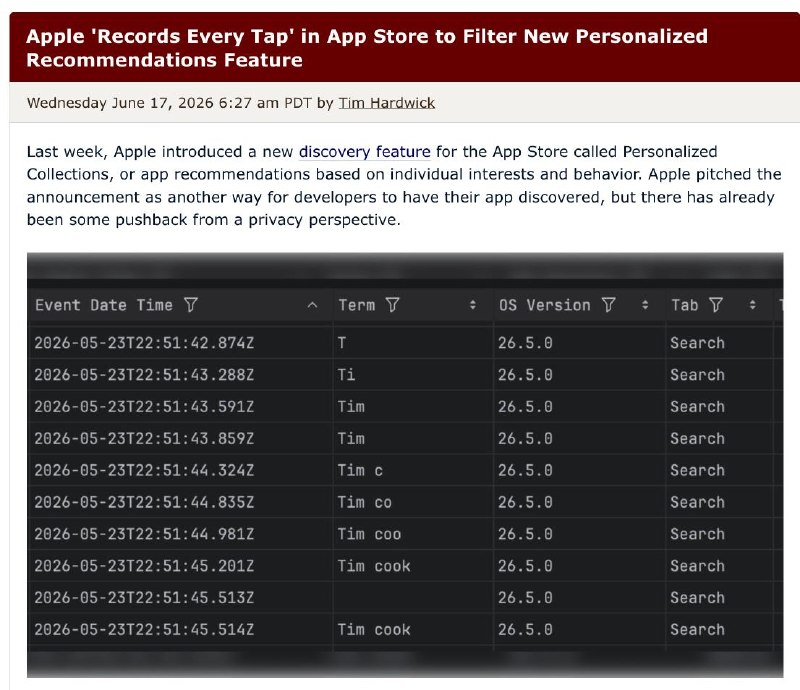
Apple Faces Fresh Privacy Criticism Over Personalized App Store Recommendations
Apple, a company renowned for its stringent privacy measures, is under new scrutiny due to its recently launched personalized App Store recommendations feature. This service suggests applications tailored to user behavior, but concerns have emerged regarding Apple’s methods of data collection that underpin these recommendations.
Understanding the Data Collection
The new recommendation system relies on detailed interaction data collected from users’ App Store activities. According to several reports, Apple tracks extensive data points that include:
- Every screen tap made by the user
- Typing speed during searches
- Other behavioral metrics within the App Store
Users can review this data via Apple’s privacy portal, allowing a glimpse into the extent of information being gathered about their habits and interactions.
Default Settings and User Consent
Critically, researchers have pointed out that this level of data collection is enabled by default and does not come with an option to opt-out. This automatically raises questions about transparency and informed user consent. In a time when privacy is a paramount concern for technology consumers, the implications of such data collection practices are significant.
The Irony of Apple's Privacy Stance
The most prominent criticism levied against Apple involves the contradiction between its marketing narrative and its operational practices. The company has famously built its brand around the idea of protecting user privacy, making this latest development feel like a departure from their stated values. Critics suggest that users are not explicitly asked to consent to the collection of such extensive behavioral data before it begins, thus undermining the very ethos Apple purports to uphold.
Table: Summary of Apple’s Data Collection Practices
| Data Collection Aspect | Details |
|---|---|
| Type of Data Collected | Screen taps, typing speed, and other interaction metrics |
| Default Settings | Enabled by default |
| Opt-Out Options | No option to turn off |
| User Awareness | Data accessible via privacy portal, lack of explicit consent |
| Brand Image | Known for emphasizing user privacy |
Conclusion
The juxtaposition of Apple’s privacy-first branding and its current data collection practices has evoke significant conversations among consumers and privacy advocates. As Apple continues to refine its features and offerings, the company faces the pressing challenge of aligning its operational methods with its proclaimed commitment to user privacy. The ongoing dialogue will undoubtedly shape how Apple responds to these criticisms and whether it will implement changes to enhance transparency and user consent in its data practices.
🅰️ Apple is facing fresh privacy criticism over its new personalized App Store recommendations 🤔 The feature suggests apps based on user behavior, but reports reveal that Apple collects detailed App Store interaction data to power these recommendations — including every screen tap and even typing speed. The findings come from data users can request through Apple's privacy portal. 📰 According to researchers, this data collection is enabled by default and cannot be turned off, raising concerns about transparency and user consent. 🤨 The biggest criticism? Apple has built its brand around protecting user privacy, yet users aren't explicitly asked to opt in before this level of behavioral data is collected. @DailyApple 🅰️ Apple is facing fresh privacy criticism over its new personalized App Store recommendations 🤔 The feature suggests apps based on user behavior, but reports reveal that Apple collects detailed App Store interaction data to power these recommendations — including every screen tap and even typing speed. The findings come from data users can request through Apple's privacy portal. 📰 According to researchers, this data collection is enabled by default and cannot be turned off, raising concerns about transparency and user consent. 🤨 The biggest criticism? Apple has built its brand around protecting user privacy, yet users aren't explicitly asked to opt in before this level of behavioral data is collected. @DailyApple


