 TechOffice
Apple Under Scrutiny for Privacy Concerns Amid New Personalized App Store Recommendations
Apple Faces Privacy Scrutiny Over Personalized App Store Recommendations
Apple Inc. is encountering renewed criticism regarding its approach to user privacy, particularly stemming from its new feature designed to offer personalized app recommendations in the App Store. While the intent behind these recommendations is to enhance user experience, revelations about the extensive data collection methods employed by Apple have raised significant concerns among privacy advocates and tech analysts.
The New Feature Explained
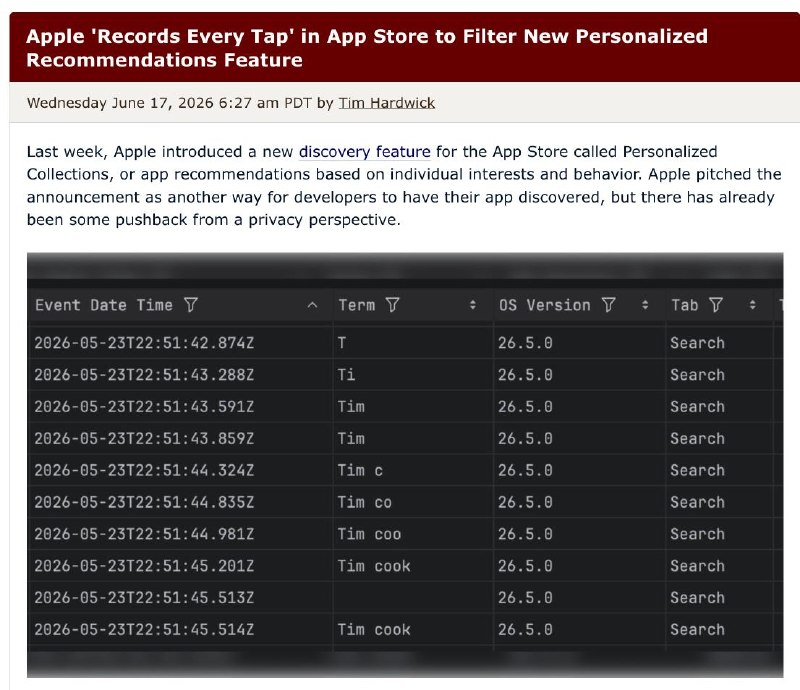
The personalized recommendations are designed to suggest applications based on individual user behavior, including prior app interactions and search queries. This feature reportedly utilizes detailed data acquired from how users interact with the App Store. Among the key metrics collected are:
- Every screen tap made within the App Store
- Typing speed when searching for apps
- Overall engagement patterns with different app categories
Such an extensive dataset is instrumental for Apple in curating a customized app experience. However, the extent of data collection has introduced a complex layer of ethical considerations, especially as it pertains to the company's well-publicized commitment to user privacy.
Emerging Concerns
Researchers and privacy advocates have pointed out alarming aspects of this data collection process. Most notably, the collection of detailed user interaction data is reportedly enabled by default, which raises fundamental questions about informed consent and transparency. Users of Apple devices have access to a privacy portal through which they can request information about the data collected about them. However, the default activation of this data collection feature implies a concerning lack of explicit opt-in measures for users.
Contradictions with Brand Messaging
Apple has long positioned itself as a guardian of user privacy, often contrasting its practices against those of its competitors. The juxtaposition of this privacy-centric branding against the backdrop of automatic and extensive data collection presents a paradox. Critics argue that the company is not living up to its promises regarding user data protection. They point out that users should be asked to consciously opt into such comprehensive monitoring of their app interactions, rather than having it imposed upon them without explicit consent.
Conclusion
As Apple navigates this challenging landscape of privacy concerns, it will need to reconcile its branding as a privacy champion with the reality of how it collects data for personalized services. The tech community, alongside regulatory bodies, will be watching closely to see how Apple addresses these challenges and whether it will take action to enhance user control over personal data collection.
Summary of Key Points
| Point | Description |
|---|---|
| Feature Introduction | Apple introduces personalized app recommendations based on user behavior. |
| Data Collection | Detailed metrics include screen taps and typing speed. |
| Consent Issues | Data collection is enabled by default and cannot be disabled. |
| Brand Image | Criticism arises from discrepancies between user privacy promises and data practices. |
As this situation unfolds, Apple's response will likely influence its reputation and customer trust as a leader in digital privacy standards.
🅰️ Apple is facing fresh privacy criticism over its new personalized App Store recommendations 🤔 The feature suggests apps based on user behavior, but reports reveal that Apple collects detailed App Store interaction data to power these recommendations — including every screen tap and even typing speed. The findings come from data users can request through Apple's privacy portal. 📰 According to researchers, this data collection is enabled by default and cannot be turned off, raising concerns about transparency and user consent. 🤨 The biggest criticism? Apple has built its brand around protecting user privacy, yet users aren't explicitly asked to opt in before this level of behavioral data is collected. @DailyApple 🅰️ Apple is facing fresh privacy criticism over its new personalized App Store recommendations 🤔 The feature suggests apps based on user behavior, but reports reveal that Apple collects detailed App Store interaction data to power these recommendations — including every screen tap and even typing speed. The findings come from data users can request through Apple's privacy portal. 📰 According to researchers, this data collection is enabled by default and cannot be turned off, raising concerns about transparency and user consent. 🤨 The biggest criticism? Apple has built its brand around protecting user privacy, yet users aren't explicitly asked to opt in before this level of behavioral data is collected. @DailyApple


