 TechOffice
Apple Under Scrutiny: New Personalized App Store Recommendations Spark Privacy Concerns
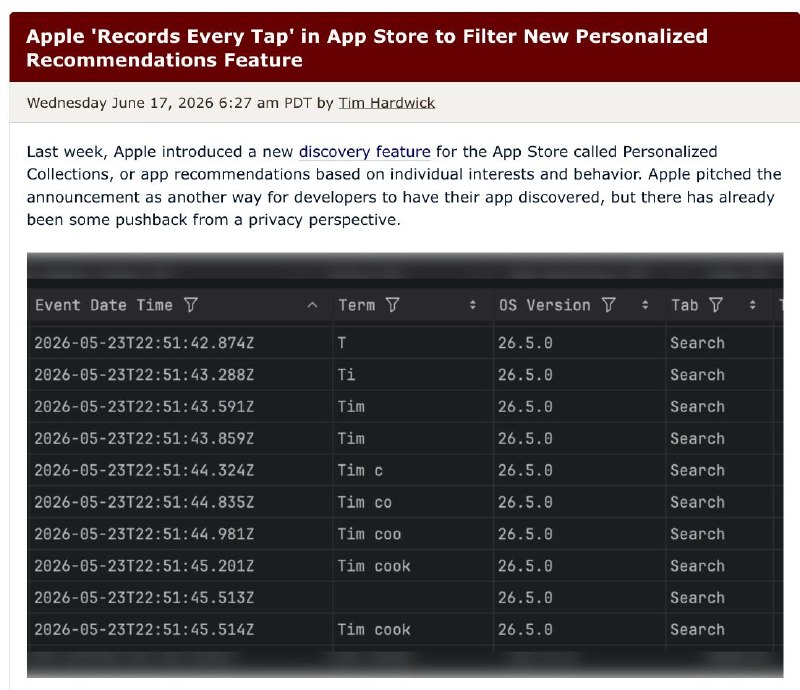
Apple's New Personalized App Store Recommendations Spark Privacy Concerns
Recently, tech giant Apple has come under scrutiny for its new personalized recommendations feature within the App Store. This update, which aims to enhance user experience by suggesting apps based on individual behavior, raises serious questions about user privacy due to the extensive data collection practices that accompany it.
User Behavior Tracking: Unpacking the Details
The primary function of the personalized recommendations system is to analyze user behavior in order to suggest relevant applications. However, reports have surfaced indicating that Apple collects a significant amount of detailed interaction data from its users while they are browsing the App Store. This information includes:
- Every screen tap performed by the user.
- Typing speed associated with text input.
- Time spent on various app profiles.
This data collection is not merely an aspect of app functionality; it is a systematic approach to understanding user preferences in a granular manner. Remarkably, users can only access these findings through Apple’s privacy portal, which raises additional concerns regarding the overall transparency of the process.
Privacy Settings and User Consent
Research suggests that this extensive data collection is enabled by default and cannot be turned off by users. This lack of control over their personal data is alarmingly contradictory to Apple's long-standing claims of prioritizing user privacy. Critics argue that:
- The company has built its brand reputation on the premise of protecting user information.
- There is no explicit request for users to opt-in before such extensive behavioral data is amassed.
Analysis of Privacy Implications
The implications of this data collection are profound. Users have a right to be informed and to consent to the collection of their behavioral data, particularly when such data is utilized to influence the recommendations they receive. Apple’s approach raises critical questions about the ethics of user consent and the adequacy of current privacy practices.
Table: Comparison of Data Collection Practices
| Aspect | Current Apple Practices | Ideal User Privacy Practices |
|---|---|---|
| Data Collection | Enabled by default, includes extensive user behavior tracking. | Explicit opt-in request for data collection with clear user benefits. |
| User Control | No option to disable interaction data collection. | Full user control over what data is collected and how it is used. |
| Transparency | Data is available through privacy portal but not well-publicized. | Open communication about data use and collection practices throughout the user experience. |
The Road Ahead
As Apple navigates these complex critiques, it faces a pivotal challenge: balancing enhanced user experience with robust privacy respect. The company’s next steps will be crucial in shaping public perception and maintaining user trust.
In conclusion, while personalized app recommendations may enrich the user experience, the ethical considerations surrounding data collection practices must be addressed decisively. Apple’s reputation for privacy hangs in the balance as it faces growing calls for transparency and user empowerment in the digital landscape.
🅰️ Apple is facing fresh privacy criticism over its new personalized App Store recommendations 🤔 The feature suggests apps based on user behavior, but reports reveal that Apple collects detailed App Store interaction data to power these recommendations — including every screen tap and even typing speed. The findings come from data users can request through Apple's privacy portal. 📰 According to researchers, this data collection is enabled by default and cannot be turned off, raising concerns about transparency and user consent. 🤨 The biggest criticism? Apple has built its brand around protecting user privacy, yet users aren't explicitly asked to opt in before this level of behavioral data is collected. @DailyApple 🅰️ Apple is facing fresh privacy criticism over its new personalized App Store recommendations 🤔 The feature suggests apps based on user behavior, but reports reveal that Apple collects detailed App Store interaction data to power these recommendations — including every screen tap and even typing speed. The findings come from data users can request through Apple's privacy portal. 📰 According to researchers, this data collection is enabled by default and cannot be turned off, raising concerns about transparency and user consent. 🤨 The biggest criticism? Apple has built its brand around protecting user privacy, yet users aren't explicitly asked to opt in before this level of behavioral data is collected. @DailyApple


