 TechOffice
Apple Faces Renewed Privacy Scrutiny Over Personalized App Store Recommendations
Apple Faces Privacy Backlash Over Personalized App Store Recommendations
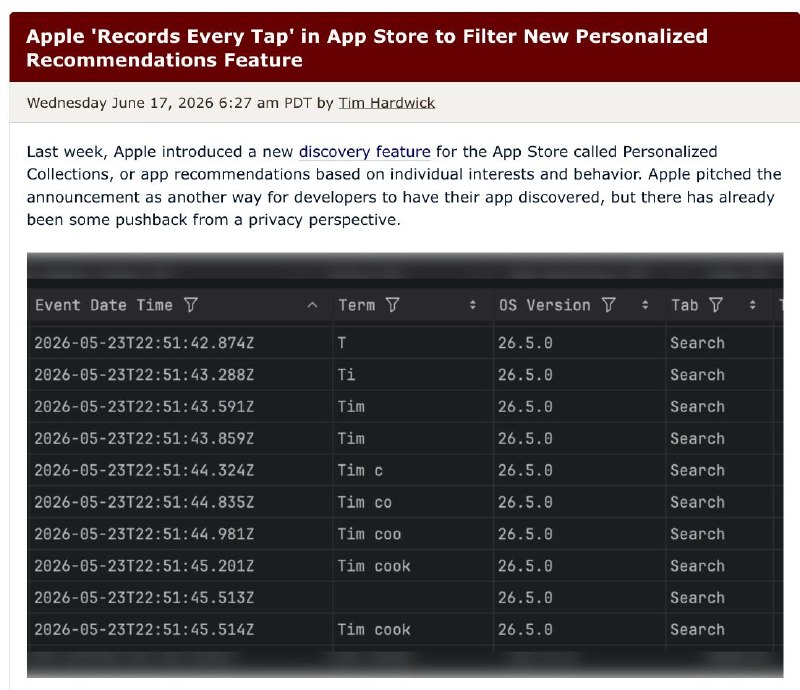
In a landscape increasingly focused on data privacy, Apple is currently under scrutiny for its newly launched personalized App Store recommendations. While the company maintains a strong public image centered on protecting user privacy, recent revelations have ignited controversy concerning the methods employed to deliver these recommendations. Users have recently learned that Apple collects extensive data on their App Store interactions—data that includes not only how they navigate the app but also intricate details such as each screen tap and even their typing speed.
The Mechanism Behind the Recommendations
The personalized recommendations in the App Store aim to enhance user experience by suggesting apps that are most aligned with individual behavior. This feature is touted as a way to simplify and improve the app discovery process. However, reports have surfaced indicating that the mechanics behind these personalized suggestions are far more invasive than initially believed. According to findings sourced from data that users can request through Apple’s privacy portal, the degree of information collected is alarming.
Extent of Data Collection
To power its recommendation engine, Apple gathers a comprehensive range of interaction data, including:
- Every screen tap within the App Store
- Typing speed when users search for apps
- Frequency of app usage
- Time spent on various pages
This aggregation of actionable insights is enabled by default, creating a scenario where users may not even be aware that they are being tracked to such a significant extent.
Lack of User Control and Transparency
One of the most pressing concerns raised by researchers is the inability for users to disable this data collection feature. Unlike other data collection practices where users have clearer opt-in or opt-out options, the default settings for Apple’s App Store interaction tracking raise questions about transparency and consent.
Critics of Apple highlight a stark contradiction between the company's self-proclaimed commitment to user privacy and its operational practices. The criticism posits that by not obtaining explicit user consent before gathering such detailed behavioral data, Apple fails to uphold the privacy standards it advertises. This has sparked a debate about whether the company’s practices are antithetical to its stated values.
Public Reaction and Implications
The backlash not only brings to the forefront the ethical dimensions of data privacy but also underscores the growing skepticism among users regarding the extent to which their data is collected and utilized by tech giants.
| Aspect | Details |
|---|---|
| Data Collected | Screen taps, typing speed, frequency of app usage, time spent on pages |
| Default Setting | Enabled by default; cannot be turned off |
| User Consent | No explicit opt-in process for collection |
| Brand Positioning | Promotes strong user privacy |
Conclusion
As Apple navigates this fallout, it will be pivotal for the company to reassess its data collection practices, particularly as scrutiny increases around transparency and user consent. The dichotomy between Apple’s privacy-oriented branding and these revelations may lead to broader calls for reform in how technology companies handle user data. Tech-savvy consumers are increasingly demanding accountability and greater control over their personal information, making it essential for industry leaders to align their practices with these expectations.
🅰️ Apple is facing fresh privacy criticism over its new personalized App Store recommendations 🤔 The feature suggests apps based on user behavior, but reports reveal that Apple collects detailed App Store interaction data to power these recommendations — including every screen tap and even typing speed. The findings come from data users can request through Apple's privacy portal. 📰 According to researchers, this data collection is enabled by default and cannot be turned off, raising concerns about transparency and user consent. 🤨 The biggest criticism? Apple has built its brand around protecting user privacy, yet users aren't explicitly asked to opt in before this level of behavioral data is collected. @DailyApple 🅰️ Apple is facing fresh privacy criticism over its new personalized App Store recommendations 🤔 The feature suggests apps based on user behavior, but reports reveal that Apple collects detailed App Store interaction data to power these recommendations — including every screen tap and even typing speed. The findings come from data users can request through Apple's privacy portal. 📰 According to researchers, this data collection is enabled by default and cannot be turned off, raising concerns about transparency and user consent. 🤨 The biggest criticism? Apple has built its brand around protecting user privacy, yet users aren't explicitly asked to opt in before this level of behavioral data is collected. @DailyApple


