 TechOffice
Unveiling Claude Sonnet 5: A New Era in AI Innovation
Introducing Claude Sonnet 5: A New Benchmark in AI Autonomy
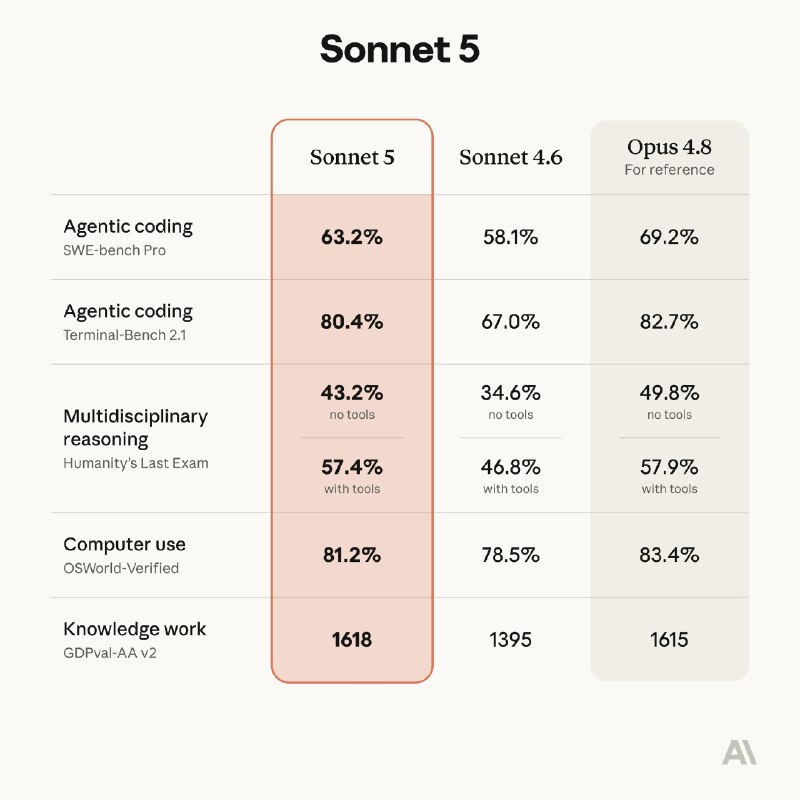
The landscape of artificial intelligence continues to evolve at a rapid pace, and one of the most anticipated advancements in this domain is the introduction of Claude Sonnet 5. This state-of-the-art model represents a significant leap in agentic capabilities, showcasing an ability to plan, utilize various tools, and operate autonomously in ways that previously required larger and more costly models.
Key Enhancements Over Claude Sonnet 4.6
Claude Sonnet 5 is not merely an incremental update; it embodies a substantial enhancement over its predecessor, Claude Sonnet 4.6. The improvements can be categorized into several core areas:
- Reasoning: Enhanced logical and analytical reasoning capabilities, enabling more sophisticated decision-making.
- Tool Utilization: Proficient in using tools such as browsers and terminals, which streamlines task execution.
- Coding: Superior coding abilities that facilitate the creation and debugging of various programming tasks.
- Knowledge Work: Advanced knowledge processing that aids in completing intricate tasks that earlier versions found challenging.
Performance Metrics
One of the distinguishing features of Claude Sonnet 5 is its impressive performance metrics, with capabilities that align closely with the more advanced Opus 4.8. This performance leap is particularly notable considering the significant cost reductions associated with using Claude Sonnet 5. The following table summarizes key comparisons between the different models:
| Feature | Claude Sonnet 4.6 | Claude Sonnet 5 | Opus 4.8 |
|---|---|---|---|
| Reasoning Capability | Standard | Enhanced | High |
| Tool Utilization | Limited | Advanced | Comprehensive |
| Coding Proficiency | Basic | Superior | Exceptional |
| Autonomous Task Completion | Partial | Comprehensive | Near-Complete |
| Affordability | Higher Cost | Lower Cost | Higher Cost |
Autonomous Capabilities
While previous AI models, including their predecessors, sometimes struggled with complex tasks, Claude Sonnet 5 excels in these areas by autonomously finishing intricate assignments that earlier iterations could not complete. A significant innovation is its ability to self-check outputs without prompts, ensuring high accuracy and reliability in its responses.
Availability
Claude Sonnet 5 is now the default model available on both Free and Pro platforms, making cutting-edge AI technology accessible to a broader audience while also reducing associated costs.
Conclusion
In summary, Claude Sonnet 5 marks a transformative step in the evolution of AI, setting a new standard for agentic models through its combination of enhanced performance, advanced functionalities, and cost-effectiveness. As organizations and individuals look to integrate more sophisticated AI solutions into their operations, Claude Sonnet 5 is poised to become an invaluable resource.
Stay updated on the latest developments in AI technologies by following @TechLeaksZone.
Introducing Claude Sonnet 5 Claude Sonnet 5 is the most agentic Sonnet yet and it makes plans, uses tools like browsers and terminals, and runs autonomously at a level that just a few months ago required larger and more expensive models. Sonnet 5 is a substantial improvement over Sonnet 4.6 on reasoning, tool use, coding, and knowledge work. Its performance is close to Opus 4.8. Sonnet 5 finishes complex tasks where previous Sonnets stopped short, checks its own output without being asked, and does all its agentic work while being cheaper. It is now default on Free and Pro platforms. Follow @TechLeaksZone Introducing Claude Sonnet 5 Claude Sonnet 5 is the most agentic Sonnet yet and it makes plans, uses tools like browsers and terminals, and runs autonomously at a level that just a few months ago required larger and more expensive models. Sonnet 5 is a substantial improvement over Sonnet 4.6 on reasoning, tool use, coding, and knowledge work. Its performance is close to Opus 4.8. Sonnet 5 finishes complex tasks where previous Sonnets stopped short, checks its own output without being asked, and does all its agentic work while being cheaper. It is now default on Free and Pro platforms. Follow @TechLeaksZone


