 TechOffice
Unveiling Claude Sonnet 5: Revolutionary Innovations in AI Technology
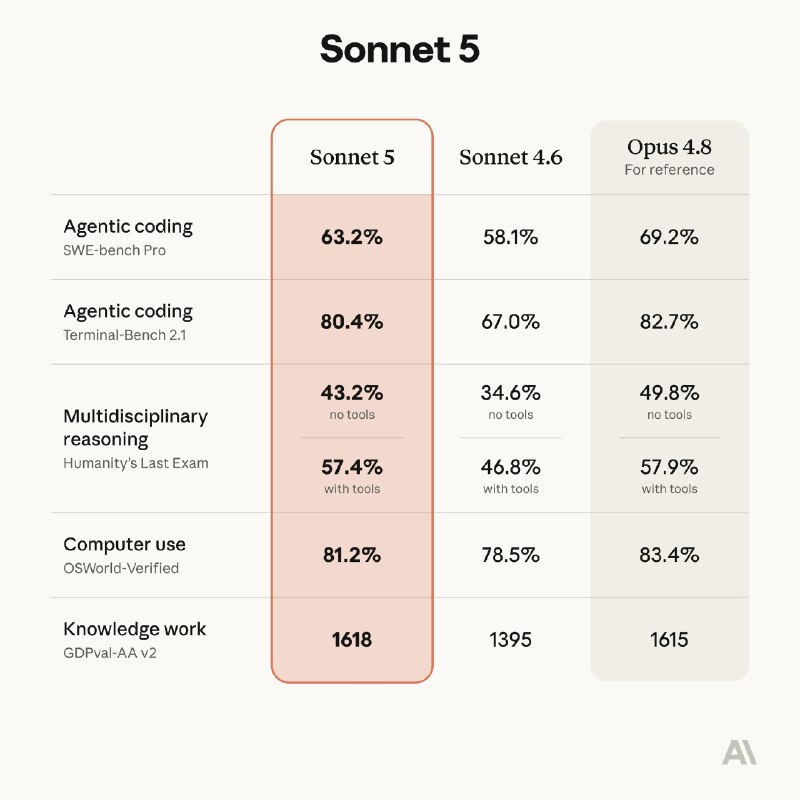
Introducing Claude Sonnet 5: A Leap Forward in Autonomous AI
The artificial intelligence landscape continues to evolve at an astonishing pace, and one of the most intriguing recent developments is the introduction of Claude Sonnet 5. This new iteration stands as the most agentic model yet, exhibiting capabilities that place it at the forefront of AI technology. With the ability to make plans, utilize various tools such as browsers and terminals, and operate autonomously, Claude Sonnet 5 marks a significant step forward in the functionality and affordability of AI systems.
Key Improvements: From Sonnet 4.6 to Sonnet 5
Claude Sonnet 5 is not merely an upgrade; it represents a paradigm shift in what users can expect from AI. It showcases substantial advancements over its predecessor, Sonnet 4.6, particularly in the following areas:
- Reasoning: Enhanced abilities to analyze and interpret complex scenarios.
- Tool Utilization: Increased efficiency in using external tools for a variety of tasks.
- Coding: Improved capabilities in generating and understanding code.
- Knowledge Work: A more adept approach to handling tasks that require substantial informational processing.
Performance Metrics
In terms of performance, Claude Sonnet 5 has demonstrated capabilities closely resembling those found in Opus 4.8, a model that was previously deemed more robust and resource-intensive. Below is a comparative overview:
| Feature | Claude Sonnet 4.6 | Claude Sonnet 5 | Opus 4.8 |
|---|---|---|---|
| Reasoning Ability | Moderate | High | Very High |
| Tool Utilization | Basic | Advanced | Expert |
| Coding Capabilities | Limited | Improved | Proficient |
| Knowledge Work Efficiency | Adequate | Enhanced | Optimized |
Features and Functionality
The enhancements in Claude Sonnet 5 are particularly notable in how it manages complex tasks. While earlier models often stalled at intricate challenges, Sonnet 5 consistently completes these tasks and even takes the initiative to evaluate its own outputs without being prompted. This self-sufficiency not only adds to its usability but also sets a new standard for what smaller and less expensive models can achieve.
Cost and Availability
In line with its advanced capabilities, Claude Sonnet 5 is also notable for being more cost-effective than its predecessors. It has officially become the default model on both Free and Pro platforms, ensuring wider accessibility for users looking to leverage cutting-edge AI technology.
Conclusion
The introduction of Claude Sonnet 5 not only represents a remarkable technological advancement but also redefines the expectations for AI performance and affordability. With its array of features and improved functionality, Claude Sonnet 5 sets a new benchmark in the ongoing evolution of artificial intelligence, paving the way for future innovations that will undoubtedly further transform the landscape.
For more insights and updates on technology, follow @TechLeaksZone.
Introducing Claude Sonnet 5 Claude Sonnet 5 is the most agentic Sonnet yet and it makes plans, uses tools like browsers and terminals, and runs autonomously at a level that just a few months ago required larger and more expensive models. Sonnet 5 is a substantial improvement over Sonnet 4.6 on reasoning, tool use, coding, and knowledge work. Its performance is close to Opus 4.8. Sonnet 5 finishes complex tasks where previous Sonnets stopped short, checks its own output without being asked, and does all its agentic work while being cheaper. It is now default on Free and Pro platforms. Follow @TechLeaksZone Introducing Claude Sonnet 5 Claude Sonnet 5 is the most agentic Sonnet yet and it makes plans, uses tools like browsers and terminals, and runs autonomously at a level that just a few months ago required larger and more expensive models. Sonnet 5 is a substantial improvement over Sonnet 4.6 on reasoning, tool use, coding, and knowledge work. Its performance is close to Opus 4.8. Sonnet 5 finishes complex tasks where previous Sonnets stopped short, checks its own output without being asked, and does all its agentic work while being cheaper. It is now default on Free and Pro platforms. Follow @TechLeaksZone


