 TechOffice
Apple Faces Renewed Privacy Scrutiny Amid Controversial Personalized App Store Recommendations
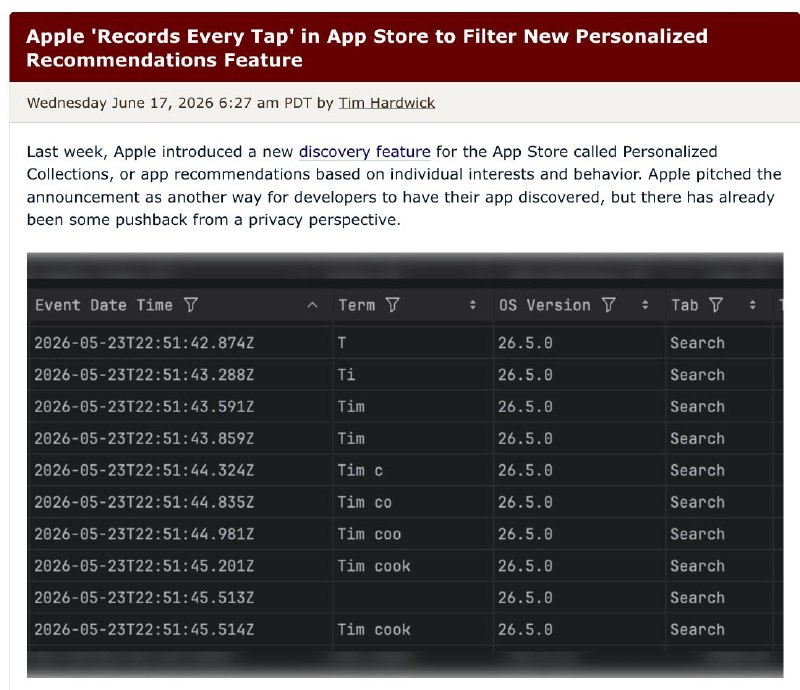
Apple's Privacy Dilemma: New App Store Recommendations Spark Controversy
In recent developments, Apple, a company renowned for its commitment to user privacy, finds itself under renewed scrutiny stemming from its personalized App Store recommendations feature. This offering, which utilizes user behavior to suggest apps, has raised significant concerns regarding the extent of data collection practices and the transparency surrounding them.
Analyzing the Data Collection Practices
The personalized recommendations feature leverages a range of data points from users' interactions within the App Store. Notably, Apple has been found to collect detailed information, including:
- Every screen tap within the App Store
- Typing speed during searches
- User engagement metrics associated with app downloads
This level of granular tracking is made possible by a framework embedded within the App Store, prompting concerns amongst privacy advocates and users alike. Recent findings indicate that this data collection is not just extensive but is also enabled by default, meaning users have not actively consented to such tracking practices.
Concerns Over User Consent and Transparency
Critics have raised pertinent questions regarding Apple’s adherence to its privacy-centric branding. According to research, users are not explicitly prompted to opt-in to this extensive tracking, leading to significant implications for user consent and awareness.
As a company that has long positioned itself as a defender of user privacy, Apple’s current practices could be seen as contradictory. The fact that data collection is automatic and cannot be turned off further compounds issues of transparency in how user data is handled.
Implications for Apple's Reputation
This situation poses a noteworthy dilemma for Apple as it navigates its reputation amidst the tech industry's evolving landscape of privacy concerns. Users have become increasingly aware of how their data is collected and used, and any perceived breaches of trust could have lasting impacts on Apple's customer loyalty.
Summary of Key Issues
| Issue | Description |
|---|---|
| Data Collection | Personalized app recommendations based on detailed user interaction data. |
| Default Settings | Data collection activated by default, cannot be turned off. |
| User Consent | No explicit opt-in request for users before data is collected. |
| Brand Reputation | Contradiction to Apple's established image as a consumer privacy advocate. |
Conclusion
As Apple continues to enhance its App Store offerings, the balancing act between personalization and privacy remains a critical point of contention. The current backlash emphasizes the need for clearer communication regarding data practices and a reassessment of default settings to restore user trust. In a world where privacy is paramount, Apple's future initiatives will likely be closely watched by both consumers and industry analysts alike.
🅰️ Apple is facing fresh privacy criticism over its new personalized App Store recommendations 🤔 The feature suggests apps based on user behavior, but reports reveal that Apple collects detailed App Store interaction data to power these recommendations — including every screen tap and even typing speed. The findings come from data users can request through Apple's privacy portal. 📰 According to researchers, this data collection is enabled by default and cannot be turned off, raising concerns about transparency and user consent. 🤨 The biggest criticism? Apple has built its brand around protecting user privacy, yet users aren't explicitly asked to opt in before this level of behavioral data is collected. @DailyApple 🅰️ Apple is facing fresh privacy criticism over its new personalized App Store recommendations 🤔 The feature suggests apps based on user behavior, but reports reveal that Apple collects detailed App Store interaction data to power these recommendations — including every screen tap and even typing speed. The findings come from data users can request through Apple's privacy portal. 📰 According to researchers, this data collection is enabled by default and cannot be turned off, raising concerns about transparency and user consent. 🤨 The biggest criticism? Apple has built its brand around protecting user privacy, yet users aren't explicitly asked to opt in before this level of behavioral data is collected. @DailyApple


