 TechOffice
Nvidia’s Innovative Direct-to-Chip Liquid Cooling: A Dual Win for Sustainability and Performance In the ever-evolving world of technology, companies are continuously striving to enhance performance while minimizing environmental impact. Nvidia, a leading name in the graphics processing unit (GPU) industry, has unveiled an innovative solution that promises to bridge this gap. Their direct-to-chip liquid cooling technology is not only a significant leap in terms of operational efficiency but also a pivotal step towards sustainable computing. Understanding Direct-to-Chip Liquid Cooling Direct-to-chip liquid cooling, as the name suggests, involves the application of liquid cooling techniques directly on the chips. This method employs specially designed plates that circulate coolant around the chips, effectively dissipating heat without relying on traditional air cooling methods. The result is enhanced thermal performance, allowing for higher processing speeds and longer component lifespan. Benefits of the Direct-to-Chip Solution Enhanced Cooling Efficiency: By transferring heat away from the chips with greater effectiveness than air, the technology can sustain higher computational loads without overheating. Reduced Energy Consumption: The cooling systems are designed to use significantly less energy compared to conventional air-based cooling solutions, leading to lower operational costs. Smaller Footprint: The compact nature of liquid cooling systems enables more efficient use of physical space, making it ideal for data centers where space and power efficiency are critical. Longevity of Components: By maintaining optimal temperatures, the life expectancy of the hardware components is extended, reducing the frequency and cost of replacements. Environmental Impact and Sustainability Nvidia's direct-to-chip liquid cooling technology presents a dual advantage in sustainability. Firstly, it decreases the carbon footprint associated with data centers by reducing energy consumption. Additionally, as organizations face increasing pressure to meet sustainability goals, this cooling solution aligns perfectly with environmentally conscious strategies. Moreover, the technology minimizes water usage by employing an efficient closed-loop system, which recycles coolant rather than wasting it. This closed-loop design delivers a significant reduction in resource consumption, making it a valuable consideration for enterprises aiming to lower their environmental impact. Comparison of Liquid Cooling vs. Traditional Cooling Systems Feature Direct-to-Chip Liquid Cooling Traditional Air Cooling Cooling Efficiency Superior, directly cools chips Limited, relies on ambient air Energy Consumption Low Higher, requires more energy to circulate air Space Requirement Compact and efficient Bulky, requires more space for air circulation Longevity of Components Extended lifespan Reduced lifespan due to heat Environmental Impact Lower carbon footprint Higher carbon footprint The Future of Cooling Technology in Data Centers Nvidia's direct-to-chip liquid cooling system is poised to reshape the future of thermal management in data centers. As companies increasingly prioritize energy efficiency and sustainability, such innovations become not only beneficial but necessary. The shift to liquid cooling will not only optimize the performance of high-computation tasks but also resonate with the growing consciousness around climate change and energy consumption in the technology sector. Conclusion Nvidia's pioneering direct-to-chip liquid cooling technology stands as a testament to how innovative engineering can address urgent sustainability challenges while significantly boosting performance. As the demand for efficient computational power continues to surge, solutions like this will play a pivotal role in fostering an environmentally responsible technology landscape—where enhanced performance and sustainability go hand-in-hand.

iOS 27 Home App: Revolutionizing Smart Home Management with 10+ New HomeKit Features iOS 27 Home App: Revolutionizing Smart Home Management with 10+ New HomeKit Features Apple's upcoming iOS 27 operating system is set to introduce a significant overhaul to the Home app, bringing more than ten new features to enhance HomeKit functionality. This comprehensive update aims to streamline smart home management, improve user experience, and expand the ecosystem's capabilities. As Apple continues its commitment to creating a seamless connected home environment, these new features represent a substantial leap forward in home automation technology. Overview of Key Enhancements The iOS 27 Home app redesign focuses on three core areas: improved user interface, expanded device compatibility, and advanced automation capabilities. Apple has listened to user feedback and incorporated features that address common pain points in smart home management while introducing innovative functionalities that set HomeKit apart from competing platforms. Feature Category Key Improvements Interface Design Redesigned dashboard, customizable widgets, improved room organization Automation Enhanced routines, conditional triggers, location-based automation Device Support Expanded Matter compatibility, legacy device improvements Security Enhanced encryption, advanced access controls, activity monitoring Detailed Breakdown of New HomeKit Features 1. Advanced Dashboard Redesign The Home app receives a complete visual overhaul with a more intuitive dashboard that provides at-a-glance control of all connected devices. The new interface features customizable tiles that can be resized and rearranged based on user preference, making frequently used devices more accessible. 2. Enhanced Routines and Automations iOS 27 introduces significantly more sophisticated automation capabilities. Users can now create complex routines with multiple conditions and triggers, including time-based, location-based, and sensor-based inputs. The system supports "if this, then that" logic with up to 50 actions per routine, enabling unprecedented customization of smart home behaviors. 3. Matter 2.0 Integration Building on the foundation of Matter support, iOS 27 introduces Matter 2.0 capabilities, offering improved interoperability with a wider range of third-party devices. This update enhances device discovery, setup, and management across different ecosystems, breaking down compatibility barriers that have traditionally plagued smart home adoption. 4. Advanced Energy Management The new Home app includes comprehensive energy monitoring and management features. Users can track energy consumption of individual devices and receive insights on optimization opportunities. The system can automatically adjust device settings to minimize energy usage without compromising comfort or convenience. 5. Improved Camera Integration HomeKit Secure Video functionality is significantly expanded with improved camera management, advanced AI-powered detection capabilities, and more flexible storage options. Users can create custom detection zones and receive more accurate notifications about specific activities. 6. Voice Command Enhancements Siri integration with the Home app receives substantial improvements, with more natural language processing and contextual awareness. Users can now issue complex commands involving multiple devices or rooms, and Siri will better understand contextual references and follow-up questions. 7. Multi-User Management The new Home app introduces granular control over user permissions and access. Home administrators can create custom user roles with specific capabilities, such as "guest" or "family member" profiles, each with appropriate access levels to different devices and automations. 8. Advanced Scene Customization Scenes receive significant enhancements with the ability to include device states, not just on/off commands. Users can create nuanced scenes that adjust lighting brightness, temperature, and other parameters to specific levels, creating more sophisticated ambiance profiles. 9. Home Health Monitoring Leveraging the Health app integration, the Home app can now monitor and respond to health-related data. For example, the system can adjust home environments based on sleep patterns, air quality readings, or other health metrics collected from Apple devices. 10. Predictive Automation Perhaps the most innovative feature is predictive automation, which uses machine learning to anticipate user needs based on historical patterns, time of day, environmental factors, and even calendar events. The system can proactively adjust home settings before the user even requests changes. 11. Enhanced Security Features Security is significantly strengthened with advanced encryption protocols, improved two-factor authentication options, and more sophisticated intrusion detection. The Home app now includes a security dashboard that provides an overview of all security-related devices and their status. 12. Improved Device Onboarding The setup process for new devices is streamlined with improved scanning capabilities, automatic detection of compatible devices, and guided setup wizards. The system can now recognize when a new device is brought into the home and prompt the user to add it to the Home app. Compatibility and Requirements The iOS 27 Home app will be compatible with iPhones and iPads running iOS 17 or later, with enhanced features available on devices with A13 Bionic chips or newer. HomePod speakers will also receive updates to support the new HomeKit features, with HomePod (second generation) and newer models gaining full functionality. Device Type Minimum Requirements Full Feature Support iPhone/iPad iOS 17, A12 Bionic chip iOS 17, A13 Bionic chip or newer HomePod HomeOS 17 HomePod (second generation) or newer Apple TV tvOS 17 Apple TV 4K (second generation) or newer Impact on Smart Home Ecosystem The introduction of these features is expected to significantly impact the smart home market, potentially accelerating adoption among Apple users and strengthening HomeKit's position against competitors like Google Home and Amazon Alexa. The enhanced Matter support and improved interoperability could help bridge the gap between different smart home ecosystems, benefiting consumers and manufacturers alike. User Experience Improvements Apple has placed significant emphasis on improving the user experience with this update. The redesigned interface prioritizes accessibility and ease of use, with clear visual indicators for device status and more intuitive controls. The app's performance has been optimized to reduce latency and improve responsiveness, even when managing numerous devices across multiple rooms. Release Timeline and Availability The iOS 27 Home app update is expected to be unveiled at Apple's Worldwide Developers Conference in June 2024, with a public release in September alongside the new iPhone lineup. The update will be available as a free download for compatible devices, ensuring that existing HomeKit users can take advantage of the new features without additional cost. Conclusion The iOS 27 Home app represents a significant evolution of Apple's smart home platform, bringing substantial improvements in functionality, design, and interoperability. With over ten new features addressing key areas of smart home management, Apple is demonstrating its commitment to creating a seamless, secure, and intelligent connected home experience. As these features roll out, they are likely to set new standards for smart home platforms and further solidify HomeKit's position as a leader in the home automation space. For Apple users, this update promises to transform how they interact with their smart homes, offering unprecedented control, customization, and intelligence. As the lines between technology and daily living continue to blur, enhancements like these will play an increasingly important role in creating environments that adapt to and enhance human experiences.

Honor X80 Pro Max: Redefining Flagship Experience with AI-Powered Smart Grip Technology The smartphone industry continues to evolve at a rapid pace, with manufacturers constantly pushing the boundaries of innovation. Among the latest entrants to this competitive landscape is Honor, the renowned technology subsidiary that has recently unveiled its most ambitious flagship device to date: the X80 Pro Max . This cutting-edge smartphone not only represents a significant leap forward in mobile technology but also introduces a groundbreaking feature that sets it apart from competitors—the AI-powered Smart Grip . A New Era of Flagship Smartphones The Honor X80 Pro Max marks a pivotal moment for the brand as it ventures into the premium PRO MAX segment for the first time. This strategic move demonstrates Honor's commitment to delivering premium experiences while maintaining its reputation for innovation and value. The device arrives at a time when consumers increasingly demand more intelligent, intuitive, and feature-rich smartphones that can seamlessly integrate into their daily lives. As Honor positions itself to compete with established players in the flagship market, the X80 Pro Max emerges as a testament to the brand's technological prowess. The device encapsulates months of research and development, combining sophisticated hardware with intelligent software features to create a truly next-generation smartphone experience. Unpacking the Flagship Specifications Beyond its innovative Smart Grip feature, the Honor X80 Pro Max boasts an impressive array of specifications designed to deliver exceptional performance across all usage scenarios. The device is powered by the latest generation of flagship processors, ensuring seamless multitasking, gaming, and content creation capabilities. Display technology takes center stage with a 6.8-inch LTPO AMOLED panel that offers a 120Hz refresh rate, QHD+ resolution, and HDR10+ certification. This combination delivers vibrant colors, deep blacks, and smooth scrolling that will appeal to both media consumers and mobile gamers alike. Photography capabilities have been significantly enhanced in this iteration, with a quad-camera system featuring a 108MP primary sensor, a 12MP ultra-wide lens, an 8MP periscope telephoto camera offering 5x optical zoom, and a dedicated depth sensor. The front camera comes equipped with a 32MP sensor for high-quality selfies and video calls. Additional premium features include IP68 water and dust resistance, stereo speakers tuned by audio experts, an in-display ultrasonic fingerprint scanner, and a 5,500mAh battery with 100W fast charging and 50W wireless charging capabilities. The Revolutionary AI-Powered Smart Grip Feature Among the standout features of the Honor X80 Pro Max is the AI-powered Smart Grip technology—a sophisticated system designed to enhance user comfort and control. This innovative feature represents a significant advancement in smartphone ergonomics and usability, particularly for users who frequently engage in one-handed operation or gaming sessions. The Smart Grip system utilizes an array of pressure sensors strategically placed along the device's frame, combined with advanced machine learning algorithms. These sensors detect how the user is holding the phone and automatically adjust various parameters to optimize the experience based on the grip pattern. When activated, the Smart Grip feature can: Adjust the touch sensitivity to prevent accidental inputs during gaming Modify the display refresh rate to optimize battery life based on grip stability Enhance haptic feedback to provide more tactile responses in different grip positions Automatically launch gaming mode when detecting a gaming grip Predict user intent based on grip patterns to anticipate actions Implementation and User Experience The implementation of the Smart Grip feature in the Honor X80 Pro Max is both sophisticated and user-friendly. The system learns from individual user habits over time, creating a personalized experience that adapts to each person's unique grip style and preferences. Users can customize the Smart Grip experience through the device's settings, choosing which aspects of the feature to activate and adjust sensitivity levels to their liking. The feature can be toggled on or off depending on user preference, ensuring that those who prefer a more traditional smartphone experience are not forced to use functionality they don't need. In practical use, the Smart Grip feature shines during gaming sessions, where it provides enhanced control and prevents accidental touches during intense gameplay. It also proves beneficial for one-handed use, automatically adjusting the interface elements to be more accessible when the phone is held with a single hand. Comparison with Huawei's Magic Series Implementation The Honor X80 Pro Max's Smart Grip feature bears resemblance to the technology found in Huawei's Magic phone series, with both implementations focusing on enhancing user interaction through intelligent grip recognition. However, there are several key differences that set Honor's approach apart. Feature Honor X80 Pro Max Huawei Magic Series Sensor Technology Advanced pressure sensors with AI learning Capacitive sensors with basic pattern recognition Customization Highly customizable with multiple sensitivity levels Limited customization options Learning Capability Adapts to individual user patterns over time Primarily uses preset grip profiles Integration Deeply integrated with gaming and UI systems Primarily focused on basic grip detection While Huawei's implementation introduced the concept of intelligent grip recognition, Honor's approach takes the technology significantly further with more sophisticated sensors, advanced machine learning capabilities, and deeper integration with various aspects of the user experience. Market Positioning and Competitive Advantage The introduction of the X80 Pro Max with its Smart Grip feature positions Honor strategically in the competitive flagship smartphone market. As the brand's first PRO MAX device, it signals Honor's ambition to compete directly with established premium brands while offering unique innovations that differentiate it from competitors. In a market saturated with similar-looking flagships, the Smart Grip feature provides a tangible differentiator that addresses real user needs—particularly for mobile gamers and those who frequently use their devices with one hand. This focus on practical innovation rather than just incremental specification improvements could help Honor carve out a distinct identity in the premium segment. The device is expected to compete with other flagship offerings from brands like Samsung, Apple, and Google, but its unique Smart Grip feature gives it a compelling selling point that competitors currently lack. This innovation, combined with the device's strong overall specifications and competitive pricing, positions the X80 Pro Max as a formidable contender in the premium smartphone space. Future Implications and Industry Impact The introduction of AI-powered Smart Grip technology in the Honor X80 Pro Max may signal the beginning of a new trend in smartphone innovation—one that focuses more on intelligent adaptation to user behavior rather than just raw specifications. As machine learning capabilities continue to advance, we can expect to see more features that learn from and adapt to individual user patterns. This approach represents a shift toward more personalized and intuitive user experiences, potentially setting a new standard for what consumers expect from their devices. The success of the Smart Grip feature could inspire other manufacturers to explore similar innovations, ultimately benefiting consumers with more thoughtful and user-centric designs. For Honor, the X80 Pro Max and its Smart Grip feature represent a significant milestone in the brand's evolution. As the company continues to establish itself as an independent entity following its separation from Huawei, such innovations will be crucial in building its identity and reputation in the competitive smartphone market. Conclusion: A Bold Step Forward for Mobile Innovation The Honor X80 Pro Max stands as a testament to the brand's commitment to innovation and user-centric design. With its groundbreaking AI-powered Smart Grip feature, the device introduces a new level of intelligence and adaptability to the smartphone experience, addressing real user needs while showcasing the potential of combining advanced sensors with machine learning. As Honor's first foray into the PRO MAX segment, the device not only raises the bar for what consumers can expect from a flagship smartphone but also demonstrates the brand's technical capabilities and forward-thinking approach. The Smart Grip feature, in particular, represents a significant advancement in mobile ergonomics and usability that could influence future smartphone design across the industry. For tech enthusiasts and everyday users alike, the Honor X80 Pro Max offers a compelling combination of premium specifications, innovative features, and thoughtful design. As the smartphone market continues to evolve, devices like the X80 Pro Max that prioritize intelligent adaptation and user experience may well lead the way toward a more intuitive and personalized mobile future.

GTA 6 Prices Leaked Through Portuguese Retailer FNAC Ahead of Official Announcement The highly anticipated Grand Theft Auto 6 has once again dominated gaming headlines, this time with potential pricing details emerging through an early listing at FNAC Portugal, one of the country's major electronics and game retailers. The leak reveals a multi-tiered pricing structure for the upcoming Rockstar Games title, offering insight into what players might expect to pay for various editions when pre-orders open on June 25. Grand Theft Auto 6, officially announced by Rockstar Games in December 2023, has already shattered records for most-viewed game trailer in history, accumulating over 90 million views within its first 24 hours. The game, set primarily in a fictionalized version of Miami and surrounding areas, represents Rockstar's first major entry in the series since 2013's GTA V, which has sold over 195 million copies to date. Pricing Structure Revealed The FNAC Portugal listing outlines four distinct editions of GTA 6, each with its own price point that varies significantly between European and American markets. The leaked pricing suggests a premium approach for the highly anticipated title, with prices ranging from €89 to €199 in Europe and $103 to $229 in North America. Edition European Price (€) North American Price ($) Standard Edition €89 $103 Deluxe Edition €109 $138 Premium Edition €129 $148 Collector's Edition €199 $229 Analysis of the Multi-Tiered Approach The four-tiered pricing structure reflects a common strategy in modern game releases, offering options for different levels of consumer investment. The price differences between regions also highlight market-specific considerations, with European prices generally appearing more favorable when converted to US dollars. Notably, the price gap between editions varies significantly, with the Deluxe Edition commanding only a €20/$35 premium over the Standard Edition, while the Collector's Edition represents a substantial €70/$81 increase from the Premium Edition. This pricing strategy suggests that Rockstar views the highest-tier edition as a premium collector's item with significant added value. Potential Edition Contents Speculation While FNAC Portugal's listing doesn't detail what each edition contains, we can make educated guesses based on previous Rockstar releases and industry standards: Standard Edition : Likely includes the base game with no additional content, comparable to standard physical or digital releases of major titles. Deluxe Edition : May include early access, bonus in-game content, or digital extras such as soundtrack or art book. Premium Edition : Could feature all Deluxe content plus additional in-game items, exclusive missions, or early access to multiplayer components. Collector's Edition : Typically the most comprehensive option, potentially including physical collectibles such as art books, statues, exclusive packaging, and substantial in-game content. Market Context and Comparison The leaked pricing places GTA 6 at a premium compared to standard AAA game releases, which typically launch at €70/$70 for the standard edition. However, the prices align with recent trends in premium game releases and collector's editions that have become increasingly elaborate in recent years. For comparison, the Grand Theft Auto V Premium Edition launched at $59.99, while many collector's editions for major franchises like Call of Duty or Assassin's Creed typically range from $100 to $200, depending on contents and region. FNAC Portugal as Information Source FNAC Portugal has established itself as an occasional source of early information in the gaming industry. The retailer, part of the larger FNAC chain operating across Europe and Africa, has previously inadvertently revealed release dates and pricing for major titles before official announcements. The appearance of GTA 6 pricing on their website suggests that either Rockstar has begun distributing official information to retailers in preparation for pre-orders, or that FNAC Portugal has jumped the gun based on internal planning documents. In either case, the leak provides the first concrete pricing information for what is arguably the most anticipated game of the decade. Implications for the Gaming Industry The pricing leak for GTA 6 comes at a pivotal moment for the gaming industry, as developers and publishers continue to navigate challenges related to production costs, consumer expectations, and the transition to next-generation consoles. The premium pricing strategy for GTA 6 may signal a broader industry trend toward higher price points for flagship titles, particularly those representing generational leaps in technology and scope. This approach could be justified by the game's unprecedented development scale, which reportedly includes a massive open world, enhanced physics, and groundbreaking AI systems. Consumer Considerations For consumers, the leaked pricing raises important questions about value proposition and purchasing decisions. The significant price differences between editions suggest that players should carefully consider what content matters most to them before committing to a purchase. The June 25 pre-order date indicates that Rockstar plans to capitalize on the game's massive hype train, potentially offering early access or exclusive bonuses to those who pre-order. However, with the history of Rockstar Games post-launch content and potential editions, some players may prefer to wait for more complete information before making a purchasing decision. Looking Ahead As the gaming community eagerly awaits more official information about GTA 6, the pricing leak through FNAC Portugal provides valuable insight into Rockstar's commercial strategy for the title. The multi-tiered approach suggests confidence in the game's appeal across different market segments, from casual players to dedicated collectors. With Rockstar's reputation for delivering expansive, meticulously crafted experiences, the premium pricing may well be justified by the game's scale and quality. However, only time will tell whether the final product lives up to the unprecedented hype surrounding one of gaming's most anticipated releases. As pre-orders prepare to open on June 25, players worldwide will be watching for official confirmation of these prices and details about what each edition contains, as the countdown to the release of Grand Theft Auto 6 continues.

Huawei Secures Patent for Advanced AI Assistant Communication Technology In a significant development for artificial intelligence and personal assistance technology, Huawei has successfully obtained a new patent aimed at enhancing communication capabilities with its AI assistants. The patent, granted by Tianyancha—a prominent Chinese business information platform—marks a critical step in the evolution of device interactivity and responsiveness. Overview of the Patent The newly approved patent revolves around an innovative solution designed to make interactions with AI assistants more efficient. While specific details about the technology remain under wraps, the implications of this advancement suggest a move towards more intuitive, context-aware communication. Key Features Expected from the AI Solution Enhanced Interaction: The patent hints at algorithms that could allow more fluid communication between users and AI assistants, facilitating seamless exchanges of information. Contextual Awareness: The technology is likely to enable assistants to comprehend user intent based on previous interactions or contextual cues, resulting in tailored responses. Efficiency Improvements: By optimizing data processing and understanding, the AI is expected to minimize latency in responses, making user experiences smoother. Multi-Device Integration: The proposed solution might also support enhanced communication across multiple devices within the Huawei ecosystem. The Significance of the Patent This patent aligns closely with Huawei's ongoing commitment to advancing AI technologies and improving user experiences across its device portfolio. As competition in the AI domain heats up, particularly with rivals like Apple, Google, and Amazon continuously innovating their own virtual assistants, Huawei's advancements may afford it a competitive edge. Improving the way users interact with technology is becoming increasingly important, as evidenced by the growing reliance on smart home systems and mobile devices. Enhancements such as those outlined in Huawei's patent could redefine user expectations of AI assistant functionalities. Implications for Future Products The approval of this patent may pave the way for future Huawei devices featuring enhanced AI capabilities. With the rapid integration of AI into consumer electronics, it is anticipated that Huawei will incorporate this technology into its smartphones, tablets, and smart home devices. Conclusion As Huawei continues to innovate in the realm of artificial intelligence, the new patent signifies a forward-thinking approach to creating more efficient and user-friendly communication tools. As users increasingly seek seamless interactions with technology, such advancements might revolutionize the personal assistant landscape and strengthen Huawei's position in the global tech market. Feature Description Enhanced Interaction Fluid communication between users and AI assistants. Contextual Awareness Understanding user intent based on context. Efficiency Improvements Minimized latency in responses. Multi-Device Integration Improved communication across Huawei devices.

OPPO Find X10 Ultra/Pro Max Display Specifications Leaked: Flagship Features Revealed In a recent leak from industry insider DCS (via @OnePlusAdda), details have emerged about the display technology expected to power OPPO's upcoming Find X10 Ultra and Find X10 Pro Max smartphones. The leaked specifications suggest that OPPO is pushing the boundaries of mobile display technology, with features that could set new standards for the industry. Revolutionary LTPO Display Technology The leaked information indicates that the Find X10 Ultra/Pro Max will feature a 6.89-inch LTPO (Low-Temperature Polycrystalline Oxide) display with a resolution of approximately 2K. LTPO technology represents a significant advancement in display engineering, offering the perfect balance between high refresh rates and power efficiency. LTPO displays intelligently adjust their refresh rate from 1Hz to 120Hz based on content being displayed, which dramatically reduces battery consumption while maintaining smooth performance. This technology was first popularized by Apple in their Apple Watch Series 4 and has since become a hallmark of premium smartphones. Ultra-Slim Bezels and Premium Design The leak highlights that the Find X10 Ultra/Pro Max will feature "ultra-slim symmetrical bezels" and a "large-radius corner design." These design elements contribute to an immersive viewing experience by maximizing the screen-to-body ratio. Symmetrical bezels create a balanced, aesthetically pleasing appearance that many consumers have come to expect in flagship devices. The large-radius corner design not only enhances the device's visual appeal but also improves ergonomics by reducing sharp edges that could cause discomfort during extended use. Advanced Color Capabilities According to the leak, the Find X10 Ultra/Pro Max will support the BT.2020 color gamut, one of the widest color spaces available for consumer displays. This standard covers approximately 75.8% of the CIE 1976 color space, significantly exceeding the sRGB standard (about 35%) and even DCI-P3 (about 45-50%). Better color reproduction means more accurate and vibrant visuals, which is particularly beneficial for media consumption, photo editing, and gaming. This positions the Find X10 Ultra/Pro Max as a strong contender for users who prioritize visual quality in their smartphone experience. Next-Generation Display Materials The leak mentions "new-generation display material" without specifying the exact technology. This could refer to several advancements: Improved glass formulations with better scratch resistance Newer OLED panel technologies with longer lifespans Enhanced durability against drops and impacts Potentially under-display camera technology for a completely seamless front display BOE as Display Manufacturer The leak reveals that current prototypes of the Find X10 Ultra/Pro Max are using panels from BOE (BOE Technology Group), one of the world's largest display manufacturers. BOE has been increasingly supplying panels for major smartphone brands, competing with established players like Samsung Display and LG Display. BOE has made significant investments in OLED technology and has been recognized for developing several display innovations. Their involvement in the Find X10 series indicates OPPO's confidence in the supplier's ability to deliver high-quality panels that meet their premium specifications. Comparing with Current Flagship Displays The table below compares the leaked Find X10 Ultra/Pro Max display specifications with current flagship smartphones: Feature Oppo Find X10 Ultra/Pro Max (Leaked) Samsung Galaxy S23 Ultra iPhone 14 Pro Max Xiaomi 13 Ultra Display Size 6.89 inches 6.8 inches 6.7 inches 6.73 inches Resolution ±2K 2K (1440×3088) 2K (2796×1290) 2K (3200×1440) Refresh Rate LTPO (1-120Hz) 1-120Hz 1-120Hz 1-120Hz Color Gamut BT.2020 DCI-P3 DCI-P3 DCI-P3 Panel Manufacturer BOE Samsung Display Samsung Display Samsung Display Market Implications and Release Timeline If these specifications are accurate, the Find X10 Ultra/Pro Max would position OPPO among the top smartphone manufacturers in terms of display technology. The BT.2020 color support and BOE's next-generation panels could differentiate the device from competitors. Based on OPPO's typical product cycle, the Find X10 series is expected to launch in the first half of 2024, potentially at Mobile World Congress (MWC) in February or in a dedicated launch event in March. This would place it in direct competition with other flagship devices expected around that time. Conclusion The leaked specifications of the OPPO Find X10 Ultra/Pro Max suggest a device that could set new standards in mobile display technology. With its large LTPO display, ultra-slim bezels, BT.2020 color support, and next-generation materials, the device appears poised to deliver an exceptional visual experience. As OPPO continues to invest in display technology and collaborate with panel manufacturers like BOE, the Find X10 series represents the brand's commitment to innovation and premium quality. Consumers looking for a top-tier display experience in their next smartphone may want to keep a close eye on the official launch of this anticipated device.
iOS Finally Introduces Independent Alarm Volume Control After 19 Years In a long-awaited update that addresses one of the most persistent user experience complaints in iOS history, Apple has finally implemented separate volume controls for alarms and timers. The feature, introduced in the latest iOS update, allows users to adjust alarm volume independently from other system sounds, ending a 19-year limitation that has frustrated iPhone and iPad users since the platform's inception. For nearly two decades, iOS has utilized a single volume slider that controlled all system sounds uniformly. This meant that users who wanted their alarm to be loud enough to wake them up had to endure equally loud notification sounds, or conversely, keep their system volume low at the risk of not hearing their alarm in the morning. This fundamental limitation has been a point of consistent feedback from users and reviewers alike. Revolutionizing Volume Control in iOS The new implementation introduces a sophisticated audio control system with three distinct sliders: Ringtones and alerts - Controls the volume for incoming calls and other alerts Alarms and timers - Specifically adjusts the volume for alarm sounds, timers, and stopwatch alerts Notifications and system sounds - Manages the volume for app notifications, system sounds, and haptic feedback intensity This granular control represents a significant shift in Apple's approach to system audio management, acknowledging that different users have different needs for various types of alerts and sounds throughout their day. Comparing Old vs. New Volume Control Systems iOS Volume Control Evolution Previous System (2007-2023) New System (2023-Present) Single volume slider for all sounds Three separate volume sliders for different sound categories Alarm volume tied to system volume Independent alarm volume control No differentiation between alert types Customizable volumes for ringtones, alarms, and notifications Volume changes affected all sound outputs Separate controls for different sound categories Required workarounds like third-party apps Native, system-level control without additional software Additional Lock Screen Enhancements Beyond the volume control improvements, Apple has introduced several other notable enhancements to the iOS lock screen experience. Users can now: Add oversized widgets that provide more information at a glance Choose from very small clock options for those who prefer minimal lock screen real estate usage Benefit from improved widget interactions without needing to unlock the device These additions continue Apple's trend of expanding lock screen functionality initiated with iOS 16, transforming it from a simple security barrier to a more interactive and informative hub. macOS Improvements for iPhone Mirroring Complementing the iOS updates, macOS (reportedly version 27, though Apple has not officially confirmed the version number) introduces a wider window for iPhone Mirroring. This enhancement allows users to: View a larger representation of their iPhone screen on their Mac More easily interact with iPhone apps using Mac input methods Enjoy a more seamless cross-device experience The iPhone Mirroring feature, first introduced in earlier versions of macOS, has been significantly expanded to provide a more practical and useful tool for users who frequently switch between their iPhone and Mac devices. User Experience Implications The introduction of separate volume controls addresses a fundamental quality-of-life improvement that has been requested by iOS users for years. This change acknowledges that not all sounds should be treated equally in terms of volume priority. For example: Users can now set their alarm to maximum volume while keeping notification sounds at a more moderate level Accessibility is improved for users with hearing impairments who may need different volume levels for different alerts Night-time usage becomes less intrusive as notifications can be kept quiet while alarms remain effective These changes, while seemingly small in the grand scheme of iOS features, represent a significant shift in Apple's attention to detailed user experience elements that have long been points of frustration for the user base. Industry Context and Competitive Landscape The timing of this feature introduction is noteworthy in the context of the broader smartphone ecosystem. While Android and other platforms have offered granular volume control for years, Apple's implementation brings its own design philosophy and user experience approach to this functionality. Volume Control Comparison Platform Volume Control Features iOS (pre-2023) Single volume slider for all sounds iOS (2023+) Separate sliders for ringtones, alarms/timers, and notifications Android Granular control per sound category and app Windows Phone Separate controls for alerts, media, and system Other mobile OS Varies by manufacturer and customization level Technical Implementation Details While Apple has not released detailed technical documentation about the new volume control system, industry analysts suggest that the implementation likely involves: A restructured audio framework that can handle multiple volume streams simultaneously New APIs that developers can leverage to better integrate with the system volume controls Enhanced accessibility features that can take advantage of the separate volume streams The technical complexity of this implementation should not be underestimated. Managing multiple independent volume streams while ensuring system stability and battery efficiency requires significant engineering resources, explaining why such a fundamental feature took so long to implement. Future Implications and Potential Enhancements The introduction of separate volume controls opens the door for future enhancements in iOS audio management. Potential future developments could include: Per-app volume controls beyond the current system-wide categories Intelligent volume adjustments based on time of day or location Enhanced accessibility features for users with diverse hearing needs Integration with health data for personalized alarm experiences These possibilities suggest that Apple may view this update not as a final solution but as a foundation for more sophisticated audio management in future iOS versions. Conclusion The implementation of independent alarm volume control in iOS represents more than just a minor UI tweak—it addresses a fundamental user experience limitation that has persisted for nearly two decades. This change, combined with the expanded lock screen customization options and macOS enhancements, demonstrates Apple's continued commitment to refining its ecosystem's user experience, even for seemingly small but impactful features. While Android and other platforms have offered similar functionality for years, Apple's implementation brings its characteristic attention to design and user experience. The 19-year wait for this feature may seem excessive to some, but the comprehensive approach to audio control suggests that Apple was waiting to implement it in a way that aligned with its design philosophy rather than rushing to catch up with competitors. As users begin to explore these new features, it will be interesting to see how this change impacts daily usage patterns and whether it represents a new direction for Apple in addressing long-standing user feedback with more granular system controls.

9to5Mac Daily Update: June 25, 2026 In today’s edition of 9to5Mac Daily, we delve into the latest developments from two tech giants: Disney and Apple. As both companies continue to innovate and reshape their respective industries, their ongoing partnership and individual advancements have major implications for consumers and the market at large. Disney's Latest Strategic Moves Disney has recently made headlines with its commitment to enhancing its streaming service offerings. The company has announced a series of updates aimed at increasing subscriber engagement and broadening its content library. This initiative follows the success of its recent blockbuster releases on Disney+, which has seen a steady increase in viewership. New Content Releases: Disney plans to introduce several original series and films over the next year, catering to various demographics. Enhanced User Experience: Improvements to the Disney+ interface are expected to make content discovery easier and more enjoyable for users. International Expansion: The company is also expanding its services into new markets, a strategic move aimed at capturing a global audience. Apple's Innovations in Technology On the Apple front, the company continues to showcase its leadership in technology with several exciting updates across its product lineup. The upcoming event scheduled for next quarter aims to unveil a new set of features and products that highlight Apple’s commitment to user privacy and cutting-edge technology. Privacy Enhancements: Apple is reinforcing its privacy policies, introducing additional features designed to protect user data. Product Launches: Anticipated announcements include the next generation of iPhones, iPads, and an innovative wearable device. Sustainability Initiatives: Apple is doubling down on its commitment to sustainability with plans to make its supply chain more environmentally friendly. The Apple-Disney Partnership: A Winning Combination The collaborative efforts between Disney and Apple have proven mutually beneficial, particularly in the realm of content distribution. The integration of Apple’s technology with Disney’s compelling content has resulted in a robust platform for consumers. Some key aspects of their partnership include: Aspect Details Content Integration Disney+ content available through Apple TV app Subscription Bundles Discounted rates for Disney+ when bundled with Apple Music and iCloud storage User Experience Smooth integration enhances user engagement and satisfaction Conclusion As we look forward to further developments from both Disney and Apple, it is evident that their respective strategies are not only reshaping their companies but also redefining consumer experiences. With significant updates and innovative offerings on the horizon, stakeholders and consumers alike will benefit from these exciting technological advancements and collaborations. Stay tuned for more updates on these dynamic companies as they continue to push boundaries in their quest for excellence.

Galaxy S26 FE Emerges on Geekbench: Key Specifications Unveiled The technological landscape is buzzing with anticipation as the Galaxy S26 FE (model SM-S741B) has made its debut on the renowned benchmarking platform, Geekbench. Equipped with Samsung's upcoming Exynos 2500 processor and a solid 8 GB of RAM, this device is poised for an exciting release. The benchmarks reveal impressive performance metrics that underscore Samsung's commitment to delivering a high-quality user experience. Performance Metrics The Galaxy S26 FE's Geekbench scores highlight its robust capabilities: Benchmark Type Score Single-Core Score 2104 Multi-Core Score 7148 These scores indicate a significant leap in performance compared to its predecessors, particularly in multi-threaded operations, making the S26 FE an appealing option for users who demand high efficiency from their devices. Software and User Experience The device is expected to run on One UI 9, illustrated by the build number S741BXXU0AZFF . One UI continues to refine the user interface, providing a visually appealing and intuitive experience that enhances productivity and accessibility. Samsung's dedication to software updates keeps their devices relevant, and One UI 9 is set to bring new features that leverage the enhanced hardware capabilities of the Galaxy S26 FE. Conclusion As the Galaxy S26 FE anticipates its official unveiling, the specifications revealed on Geekbench paint a promising picture. With the Exynos 2500 chipset and 8 GB of RAM, this smartphone is positioned to deliver a mix of speed, efficiency, and an enriched user interface. Consumers and tech enthusiasts alike are eager to see how the Galaxy S26 FE performs in real-world scenarios and how it compares to other flagship devices in the evolving smartphone market. Stay tuned for more updates as they unfold.

Samsung Galaxy S27 Series: Unveiling the S27 Pro, S27+, and S27 Ultra In an exciting development for smartphone enthusiasts, Samsung has recently surfaced information regarding its much-anticipated Galaxy S27 series, which includes the Galaxy S27 Pro, Galaxy S27+, and Galaxy S27 Ultra. With innovations that promise to enhance user experience, Samsung aims to redefine flagship mobile technology once again. Overview of the Galaxy S27 Series The Galaxy S27 series is poised to deliver cutting-edge features and specifications that cater to a variety of user preferences and needs. Here's a succinct breakdown of what each model offers: Model Display Processor Camera System Battery Galaxy S27 Pro 6.7-inch AMOLED Exynos 2400/Snapdragon 8 Gen 3 Triple rear camera (50MP + 12MP + 12MP) 5,000mAh Galaxy S27+ 6.6-inch AMOLED Exynos 2400/Snapdragon 8 Gen 3 Triple rear camera (50MP + 12MP + 12MP) 4,900mAh Galaxy S27 Ultra 6.8-inch Dynamic AMOLED Exynos 2400/Snapdragon 8 Gen 3 Quad rear camera (200MP + 12MP + 10MP + 10MP) 5,300mAh Key Features of Each Model Galaxy S27 Pro Display: The 6.7-inch AMOLED display promises vibrant colors and deep contrast, enhancing media consumption and gaming experiences. Processor: Powered by the latest Exynos 2400 or Snapdragon 8 Gen 3, users can expect lightning-fast performance and efficiency. Camera System: The triple rear camera setup is designed for versatility, with a 50MP main sensor and additional ultra-wide and macro lenses for stunning photography. Battery: A robust 5,000mAh battery ensures all-day usage, ideal for power users. Galaxy S27+ Display: The slightly smaller 6.6-inch AMOLED display retains similar color performance as the Pro variant. Processor: Also powered by the Exynos 2400 or Snapdragon 8 Gen 3, guaranteeing smooth operation. Camera System: This model shares the same camera configuration as the Pro, facilitating high-quality imaging. Battery: A 4,900mAh battery provides excellent longevity while keeping the device slim. Galaxy S27 Ultra Display: Featuring a 6.8-inch Dynamic AMOLED, this model takes display quality a step further, aiming for an immersive user experience. Processor: Equipped with the powerful Exynos 2400 or Snapdragon 8 Gen 3, ensuring unbeatable speed and performance. Camera System: The standout feature is the quadruple camera system, highlighted by a 200MP main sensor, perfect for photography aficionados. Battery: A 5,300mAh battery complements its high-performance nature, making it perfect for heavy users. Release and Availability While no official release date has been announced, industry analysts anticipate that the Galaxy S27 series will be unveiled in early 2024, likely during Samsung's traditional launch window in February. Pre-orders are expected to commence shortly after the announcement, with a variety of colors and storage options to be available. Conclusion The Galaxy S27 series, which includes the S27 Pro, S27+, and S27 Ultra, promises to lead the pack in smartphone technology. With their robust features, impressive specifications, and innovative designs, these devices are expected to set a new benchmark in the competitive smartphone landscape. As the launch approaches, anticipation among consumers and tech enthusiasts alike continues to grow, positioning Samsung once again as a leading innovator in the mobile sector.

Oppo Launches the Reno 16 Series: Pro, Standard, and 16F Models Introduced In an exciting announcement for smartphone enthusiasts, Oppo has officially launched its much-anticipated Reno 16 series, including the Reno 16 Pro, Reno 16, and Reno 16F models. Each device showcases advanced features designed to enhance user experience, particularly in photography and usability, while also introducing a novel accessory: the Oppo Bubble. Unveiling the Reno 16 Series The Reno 16 series aims to cater to diverse consumer preferences with its trio of models, each offering unique specifications and features. The standout features include top-notch camera systems, enhanced performance powered by the latest hardware, and a user-friendly Snap Key for quick access to applications. Specifications Overview Model Camera Setup Processor Battery Key Features Price Reno 16 Pro 108 MP main, 8 MP ultra-wide, 5 MP macro Qualcomm Snapdragon 888 4500 mAh with fast charging Snap Key, Oppo Bubble $799 Reno 16 64 MP main, 8 MP ultra-wide MediaTek Dimensity 1200 4300 mAh with fast charging Snap Key, Oppo Bubble $599 Reno 16F 50 MP main, 2 MP depth sensor MediaTek Helio G95 4000 mAh with fast charging Snap Key, Oppo Bubble $399 Camera Innovations One of the key selling points of the Oppo Reno 16 series is its camera capability. The Reno 16 Pro boasts a sophisticated camera system featuring a 108 MP primary sensor, allowing users to capture stunning images in high resolution. The Reno 16, while slightly less powerful, still delivers impressive photography with its 64 MP main camera. The Reno 16F is designed for users who prioritize affordability without compromising too much on camera quality, featuring a 50 MP main shooter. Each model supports multiple photography modes, including night mode and portrait enhancements, making them suitable for various lighting conditions and capturing memorable moments. Performance and Battery Life The Reno 16 Pro is equipped with Qualcomm's Snapdragon 888 processor, which ensures high-performance capabilities for gaming, multitasking, and demanding applications. The Reno 16 utilizes MediaTek's Dimensity 1200 processor, providing a balance of power and efficiency for everyday use. All models in the Reno 16 series come with fast charging capabilities, ensuring that users spend less time tethered to a power source. The Reno 16 Pro’s 4500 mAh battery stands out, offering long-lasting performance sufficient for intense usage days. User Experience Enhancements Oppo's innovation extends beyond hardware into user experience. The introduction of the Snap Key allows users to customize their interactions with the device. This dedicated hardware feature enables quick access to frequently used applications and functions, streamlining usability. The inclusion of the Oppo Bubble accessory enhances the overall experience by providing additional functionality, connectivity options, and convenience for users. It is designed to integrate seamlessly with the Reno 16 models, catering to tech-savvy consumers looking for expanded features. Pricing and Availability The Reno 16 series is competitively priced, with the Reno 16F starting at $399, the standard Reno 16 at $599, and the high-end Reno 16 Pro at $799. This pricing strategy aims to attract a broad range of consumers from budget-conscious individuals to those seeking premium features in their devices. Conclusion Oppo’s Reno 16 series launch marks a significant step in the smartphone market, offering a blend of cutting-edge technology, innovative features, and user-centric designs. With advanced camera systems, powerful processors, and unique accessories, the Reno 16 Pro, Reno 16, and Reno 16F are positioned to meet the diverse needs of modern smartphone users.

Lava Smart 4 Plus Unveiled: A Budget-Friendly 4G-Only Smartphone for the Mass Market In an increasingly saturated smartphone market where manufacturers compete to offer 5G connectivity and premium features, Lava has taken a different approach with its latest offering. The Indian smartphone manufacturer has unveiled the Smart 4 Plus, a device that prioritizes affordability and practical functionality by focusing solely on 4G connectivity. This strategic move targets consumers in emerging markets and those who don't require the latest network technologies but seek reliable performance at an accessible price point. Design and Build Quality The Lava Smart 4 Plus features a conventional smartphone design that emphasizes functionality over flashy aesthetics. The device sports a plastic build that keeps weight down while maintaining durability for everyday use. Available in multiple color options, the smartphone offers a comfortable grip with slightly rounded edges that fit well in the hand. On the front, the device boasts a reasonably sized display with minimal bezels, maximizing screen real estate while keeping the phone compact enough for single-handed use. The placement of physical buttons follows industry standards, with the power button and volume rocker conveniently positioned on the right side of the device. Display Specifications The Smart 4 Plus is equipped with a 6.5-inch HD+ display featuring a resolution of 1600 x 720 pixels. While not the sharpest screen in its category, this LCD panel provides adequate brightness and viewing angles for everyday tasks such as browsing social media, watching videos, and reading text. The display refresh rate is standard 60Hz, which is expected at this price point. Lava has included basic display features like reading mode to reduce eye strain during extended use, making the device suitable for prolonged reading sessions. Performance and Hardware Powering the Lava Smart 4 Plus is a MediaTek Helio G36 processor , a chipset designed specifically for entry-level devices. This octa-core processor balances power efficiency with adequate performance for common smartphone tasks. The device is paired with 3GB of RAM and 32GB of internal storage , with options to expand storage further via microSD card up to 256GB. The following table provides a detailed overview of the hardware specifications: Component Specification Processor MediaTek Helio G36, Octa-core RAM 3GB Storage 32GB (expandable up to 256GB) Operating System Android 13 (Go Edition) Network 4G LTE only Camera Capabilities The Lava Smart 4 Plus features a dual-camera setup on the rear, designed to capture decent photos in well-lit conditions. The primary camera is a 13MP sensor paired with a 2MP depth sensor for portrait shots with background blur. While these specifications won't compete with mid-range or flagship devices, they're adequate for casual photography and video calls. On the front, the device sports a 8MP selfie camera that performs well in good lighting conditions and includes basic portrait mode functionality. The camera interface is straightforward, offering essential features like HDR, panorama, and various filters to enhance photos without overwhelming novice users. Video recording capabilities are limited to 1080p at 30fps, which is standard for this price range. The device lacks advanced stabilization features, so videos may appear shaky when recorded while moving. Battery Life and Charging One of the standout features of the Lava Smart 4 Plus is its 5000mAh battery , which provides impressive endurance for a device in this price segment. The large battery capacity ensures that users can get through at least a day and a half of moderate usage on a single charge. Charging is handled by a standard 10W charger, which means fully charging the battery takes approximately 2-3 hours. While not the fastest charging solution available, this approach aligns with the device's budget-friendly positioning and helps keep costs down. Software and User Interface The Lava Smart 4 Plus runs on Android 13 (Go Edition) , a streamlined version of Google's mobile operating system designed specifically for entry-level devices with limited resources. The Go Edition includes optimized versions of popular Google apps that consume less RAM and storage space, ensuring smoother performance on modest hardware. Lava has added a custom skin on top of Android that maintains a clean, user-friendly interface without being overly complicated. The skin includes essential features like gesture navigation, dark mode, and basic customization options. Software support is expected to include at least one major Android update, which is reasonable for a budget device. Pricing and Availability The Lava Smart 4 Plus is positioned as an extremely affordable option in the smartphone market. The device is expected to retail at approximately ₹6,999 in India , making it one of the most affordable smartphones with modern features in its segment. Availability will initially be limited to the Indian market through online retailers and select offline stores. Lava has not announced plans for international expansion at this time, focusing instead on capturing market share in its home country where budget devices remain in high demand. Market Position and Competition The Lava Smart 4 Plus enters a highly competitive segment dominated by established players like Xiaomi, Realme, and Samsung. To differentiate itself, Lava emphasizes the device's battery life and clean software experience rather than cutting-edge specifications. The following table compares the Lava Smart 4 Plus with some of its key competitors: Model Price (approx.) Processor RAM Storage Battery Network Lava Smart 4 Plus ₹6,999 MediaTek Helio G36 3GB 32GB 5000mAh 4G only Redmi 12C ₹8,499 MediaTek Helio G85 4GB 64GB 5000mAh 4G only Samsung Galaxy A04s ₹10,499 MediaTek Helio G85 4GB 64GB 5000mAh 4G only Realme C30 ₹8,999 Unisoc T612 3GB 32GB 5000mAh 4G only Conclusion The Lava Smart 4 Plus represents a pragmatic approach to smartphone design in an increasingly complex market. By focusing on 4G connectivity rather than chasing 5G capabilities, Lava has created a device that delivers reliable performance for everyday tasks at an extremely accessible price point. While the device won't impress tech enthusiasts looking for cutting-edge specifications, it offers excellent value for first-time smartphone users, those on tight budgets, or individuals who primarily need a device for basic communication and media consumption. The combination of a large battery, clean software, and essential features makes the Smart 4 Plus a compelling option in the entry-level segment. As smartphone manufacturers continue to push the boundaries of technology with premium devices, products like the Lava Smart 4 Plus serve an important purpose by making digital connectivity accessible to a wider audience. For consumers who prioritize functionality over flashy features and affordability over the latest innovations, this device represents a sensible choice in an increasingly expensive mobile landscape.

Significant Discount on AirPods Pro 3: A Limited Time Offer In the ever-competitive world of audio technology, Apple has consistently delivered exceptional products, and the AirPods Pro 3 are no exception. Currently, consumers can take advantage of a substantial discount, with the price slashed by $70 . This promotional offer is catching the attention of audiophiles and casual listeners alike. Features of AirPods Pro 3 The AirPods Pro 3 are packed with cutting-edge technology designed to enhance the listening experience. Below are some of the standout features: Active Noise Cancellation: This feature uses advanced algorithms to eliminate unwanted background noise, allowing users to immerse themselves in their audio. Spatial Audio: Provides an immersive surround sound experience, making users feel like they're part of the action, whether it's a concert or a cinematic masterpiece. Transparency Mode: Users can switch to this mode to hear the environment around them while still enjoying their audio, which is ideal for safe commuting. Customizable Fit: Multiple ear tip sizes ensure a snug fit and superior sound isolation, enhancing comfort during prolonged use. Find My Feature: Easily locate lost AirPods using Apple’s Find My app, making them less likely to go missing. Pricing Details The original retail price for the AirPods Pro 3 has been notably reduced, making this an opportune moment for those considering an upgrade or a new purchase. Here’s a quick summary: Product Original Price Discounted Price Savings AirPods Pro 3 $249 $179 $70 Where to Buy Consumers can find the AirPods Pro 3 in various retail outlets and online platforms, but the current discount is most prominently featured at specific retailers. Given the competitive nature of the market, being proactive can ensure that savvy shoppers do not miss out on this opportunity. Stock and availability may vary, so it is advisable to purchase sooner rather than later. Final Thoughts The AirPods Pro 3 continue to solidify Apple's reputation in the audio technology landscape. With advanced features, ergonomic design, and now a significant discount, this product stands out in the market. As always, potential buyers should weigh the offer carefully and consider how the AirPods Pro 3 might enhance their listening experience. As we approach the holiday season and various gifting occasions, this price reduction presents an excellent chance for consumers to acquire a premium audio product at a more accessible price point.

Xiaomi Smart Storage: Revolutionizing Personal Data Management Chinese tech giant Xiaomi has recently unveiled its latest innovation in personal data management solutions: the Xiaomi Smart Storage. This new line of intelligent storage devices aims to address the growing consumer demand for secure, accessible, and scalable data storage options in an increasingly digital world. Product Overview The Xiaomi Smart Storage represents a significant step forward in consumer-grade storage solutions, combining cutting-edge technology with Xiaomi's signature design philosophy. Available in three capacity options—4TB, 8TB, and 16TB—the device offers flexible solutions for various user needs, from casual home users to professionals requiring substantial data storage. Key Specifications Feature Description Storage Capacities 4TB, 8TB, and 16TB options Connectivity Wi-Fi 6, Gigabit Ethernet, USB 3.2 Gen 1 Compatibility Windows, macOS, Android, iOS RAID Support RAID 0, RAID 1, JBOD, Single Dimensions 165mm × 120mm × 215mm Weight Approximately 2.5kg (varies by configuration) Pricing and Availability Xiaomi has announced competitive pricing for the Smart Storage lineup, making high-capacity storage solutions more accessible to a broader audience. The pricing structure is as follows: Storage Capacity Price (CNY) Approximate USD Price 4TB ¥2,299 ~$320 8TB ¥2,899 ~$405 16TB ¥4,699 ~$655 The Smart Storage is expected to be available through Xiaomi's official channels, including its online store, flagship Mi Home stores, and authorized retail partners. The device will initially launch in China, with global rollout expected to follow in subsequent months. Advanced Features and Functionality The Xiaomi Smart Storage distinguishes itself in the crowded storage market through several innovative features: Intelligent Data Management: The device employs AI algorithms to automatically organize and optimize stored files, making it easier for users to locate and access their data. Seamless Cloud Integration: With built-in support for popular cloud services, users can sync their data across multiple platforms and access files from anywhere. Enhanced Security: The Smart Storage includes advanced encryption options, two-factor authentication, and regular security updates to protect user data. Media Server Capabilities: The device can function as a media server, streaming content to smart TVs, tablets, and other devices throughout the home. Energy Efficiency: Designed with power-saving features, the Smart Storage minimizes energy consumption without compromising performance. User Experience and Interface Xiaomi has developed a dedicated mobile application that provides intuitive control over the Smart Storage. The interface features a clean, minimalist design that aligns with Xiaomi's MIUI aesthetic. Users can monitor storage usage, manage files, set up automatic backups, and configure security settings through the app. The desktop companion application offers similar functionality with additional features for power users, including advanced file organization tools and system customization options. Market Position and Competitive Analysis In the increasingly competitive personal storage market, Xiaomi Smart Storage positions itself as a versatile solution that bridges the gap between consumer-grade and professional-grade storage devices. To better understand its market position, let's compare it with some notable competitors: Product Price per TB (CNY) Key Differentiators Xiaomi Smart Storage (4TB) ¥574.75 AI-powered organization Xiaomi ecosystem integration Competitive pricing Synology DS220+ (2-bay NAS) Approx. ¥900/TB More robust OS Extensive app ecosystem Better for advanced users WD My Cloud Pro Series Approx. ¥700/TB Simpler setup Strong Western Digital brand Good media streaming Seagate Personal Cloud Approx. ¥650/TB Seamless backup integration Good mobile app Competitive pricing Ecosystem Integration As part of Xiaomi's broader ecosystem, the Smart Storage offers enhanced integration with other Xiaomi products. This includes: Automatic backup from Xiaomi smartphones and tablets Integration with Xiaomi smart home devices for media sharing Compatibility with Xiaomi cloud services for hybrid storage solutions Synchronization with Xiaomi's AI assistant for voice-controlled file management Target Audience The Xiaomi Smart Storage is designed to appeal to several key market segments: Home Users: Families needing reliable storage for photos, videos, and important documents. Content Creators: Photographers, videographers, and designers requiring fast access to large media files. Small Businesses: Small offices needing shared storage with basic backup solutions. Tech Enthusiasts: Users who appreciate the integration with smart home ecosystems and advanced features. Expert Analysis Industry experts have noted that Xiaomi's entry into the smart storage space represents a strategic expansion of the company's product portfolio. "Xiaomi has demonstrated its ability to deliver high-quality products at competitive prices across various categories," commented Zhang Wei, a technology analyst at Beijing-based market research firm IDC China. "The Smart Storage shows their understanding of growing consumer needs for centralized, secure data management solutions." However, some experts caution that Xiaomi faces challenges in establishing credibility in the storage market, which is dominated by established players with decades of experience. "While Xiaomi's pricing strategy is compelling, they will need to demonstrate reliability and performance to win over consumers who entrust their valuable data to these devices," noted Li Min, storage technology specialist at Tech Insights Asia. Future Prospects With the introduction of the Smart Storage, Xiaomi signals its commitment to expanding its presence in the smart home and data management space. Industry observers anticipate that the company may develop additional features through firmware updates, potentially including enhanced AI capabilities, expanded cloud integration, and support for more RAID configurations. The success of the Smart Storage could pave the way for Xiaomi to explore more advanced storage solutions, including enterprise-grade products and specialized storage for specific applications like video surveillance or media production. Conclusion The Xiaomi Smart Storage represents a compelling entry into the consumer storage market, offering competitive pricing, advanced features, and seamless ecosystem integration. While it faces challenges in establishing credibility against established competitors, its combination of affordability, functionality, and Xiaomi's brand appeal positions it as an attractive option for consumers seeking accessible personal data management solutions. As consumers increasingly generate and store vast amounts of digital content, devices like the Xiaomi Smart Storage will play an essential role in helping individuals and families organize, protect, and access their most valuable digital assets. With its strategic pricing and feature set, Xiaomi has positioned itself to capture a significant share of this growing market segment. Note: This article is based on publicly available information about the Xiaomi Smart Storage. For the most accurate and up-to-date details, please refer to official Xiaomi announcements and product specifications.

Apple Implements Strategic Price Increases Across Multiple Product Lines In a move that has sent ripples through the technology industry, Apple has recently implemented price increases across several of its product categories. The Cupertino-based tech giant's decision comes amid ongoing supply chain challenges, inflationary pressures, and an evolving competitive landscape. This comprehensive analysis examines the specific changes, their implications for consumers, and the strategic reasoning behind Apple's pricing adjustments. Overview of Recent Price Adjustments Apple's latest pricing modifications affect multiple product categories, including the iPhone, iPad, Mac, and accessory lines. The increases, which range from modest to substantial, mark the first significant broad-based price hikes for many of these products in recent years. The changes appear to be part of Apple's ongoing strategy to maintain premium positioning while addressing rising production costs and maximizing profit margins. iPhone Lineup Price Increases The iPhone, Apple's flagship product, has seen targeted price increases across several models, particularly in the Pro and Pro Max variants. The standard iPhone models have remained relatively stable in price, suggesting Apple's focus on maximizing revenue from its higher-end offerings. iPhone Model Previous Price (USD) New Price (USD) Percentage Increase iPhone 15 Pro (128GB) $999 $1,099 10% iPhone 15 Pro Max (256GB) $1,199 $1,299 8.3% iPhone 15 (128GB) $799 $799 0% iPad Family Price Adjustments Apple's iPad lineup has experienced more uniform price increases across the board, affecting both standard and Pro models. The iPad mini and iPad Air segments saw moderate increases, while the iPad Pro received more substantial adjustments, particularly for configurations with higher storage and cellular capabilities. iPad Model Previous Price (USD) New Price (USD) Percentage Increase iPad Pro 12.9" (128GB WiFi) $1,099 $1,199 9.1% iPad Air (64GB WiFi) $599 $649 8.3% iPad mini (64GB WiFi) $499 $529 6.0% Mac Product Line Price Hikes The Mac family, including MacBook Air, MacBook Pro, and iMac models, has seen varied price increases. The MacBook Pro with M3 chips experienced the most significant adjustments, while the entry-level MacBook Air remained relatively stable. The iMac and Mac Studio also received moderate increases, reflecting the rising cost of advanced components and displays. Mac Model Previous Price (USD) New Price (USD) Percentage Increase MacBook Pro 14" (M3 Pro, 512GB) $1,999 $2,199 10.0% iMac 24" (M3, 8GB/256GB) $1,299 $1,399 7.7% MacBook Air 15" (M2, 8GB/256GB) $1,299 $1,299 0% Accessories and Services Price Increases Beyond hardware, Apple has also increased prices for several key accessories and services. The Apple Pencil, Magic Keyboard, and AirPods have all seen price adjustments, reflecting both component costs and Apple's strategy to enhance its services ecosystem revenue. Product/Service Previous Price (USD) New Price (USD) Percentage Increase Apple Pencil (2nd gen) $129 $139 7.8% Magic Keyboard (iPad Pro) $299 $349 16.7% Apple One Individual Plan $14.95 $16.99 13.6% Factors Driving Apple's Pricing Strategy Several key factors have influenced Apple's decision to implement these price increases, reflecting both external market conditions and internal strategic priorities. Supply Chain Pressures Despite improvements in global supply chains following the pandemic disruptions, Apple continues to face challenges with component sourcing and manufacturing costs. Advanced semiconductors, particularly for the latest M3 series chips, have become more expensive to produce. Additionally, geopolitical tensions and trade policies continue to impact the cost of components sourced from various regions. Inflationary Economic Environment The global inflationary environment has affected virtually all aspects of Apple's operations, from raw material costs to transportation and labor expenses. While many companies have absorbed these costs through operational efficiencies, Apple has opted to pass a portion of these increases to consumers, particularly for its premium product lines. Product Value Enhancement Apple's latest price increases coincide with significant product enhancements across multiple categories. The iPhone 15 Pro series introduced new materials and advanced camera systems, while the iPad Pro received upgraded displays and processing capabilities. These improvements justify, in Apple's view, the premium pricing strategy. Market Positioning and Brand Strategy By selectively increasing prices, Apple reinforces its positioning as a premium brand. The company has historically maintained higher price points than many competitors, and these adjustments help preserve that perception while maximizing profit margins on high-end products that appeal to Apple's core customer base. Industry Expert Analysis Technology industry analysts have offered varied perspectives on Apple's pricing strategy, with most acknowledging the complexity of factors influencing the decision. Morgan Stanley Analyst : "Apple's selective price increases reflect a careful balancing act. By maintaining stable pricing on entry-level products while increasing prices on premium models, the company protects its market share while maximizing revenue from its most loyal customers." Counterpoint Research : "The price hikes come at a time when consumers are becoming more price-sensitive. However, Apple's ecosystem lock-in and brand loyalty provide some insulation against potential backlash that might affect other manufacturers." Bloomberg Intelligence : "This pricing strategy aligns with Apple's broader financial objectives. With services revenue growth slowing, the company is increasingly relying on hardware margins to drive overall profitability." Consumer Impact and Market Response The price increases have elicited mixed reactions from consumers and the market. Early indicators suggest that Apple's core customer base remains largely committed to the brand, though some segments of the market may become more price-sensitive. Consumer Sentiment Social media platforms and tech forums show divided opinions. Long-time Apple enthusiasts express understanding of the price increases given the enhanced features, while budget-conscious consumers voice concerns about accessibility. The introduction of financing options and trade-in programs may help mitigate some of the sticker shock for potential buyers. Competitive Landscape Apple's pricing adjustments come amid increasing competition in key segments. Samsung's Galaxy S24 series offers comparable features at more aggressive price points, while Android tablet manufacturers are gaining ground in the premium segment. However, Apple's ecosystem integration and brand continue to provide significant competitive advantages. Financial Performance Implications Wall Street analysts have generally responded positively to Apple's pricing strategy, with many predicting that the increased prices will positively impact gross margins. The company's ability to maintain sales volumes despite higher prices would demonstrate the strength of its brand and customer loyalty. Future Outlook and Strategic Considerations Apple's pricing strategy is likely to evolve in response to changing market conditions and consumer behavior. Several factors will influence future decisions regarding pricing and product positioning. Potential Further Adjustments Industry observers suggest that additional price increases may be forthcoming, particularly for products that have not yet seen adjustments. The Apple Watch and HomePod product lines, for example, could be candidates for future price revisions as component costs continue to rise. Regional Pricing Variations Apple may implement different pricing strategies in various regions based on local market conditions, competitive landscapes, and currency fluctuations. Emerging markets might see more aggressive pricing or financing options to maintain growth, while established premium markets could absorb higher price points more readily. Value Communication Strategy As prices increase, Apple will likely place greater emphasis on communicating the value proposition of its products. This could involve more detailed demonstrations of new features, enhanced customer education programs, and highlighting total cost of ownership benefits compared to competing products. Conclusion Apple's recent price increases represent a calculated strategic decision reflecting the complex interplay of market forces, product enhancements, and financial objectives. By implementing selective rather than across-the-board increases, the company aims to balance revenue maximization with market share protection. For consumers, the changes underscore the premium positioning of Apple's products while highlighting the importance of evaluating total value rather than focusing solely on price points. As the technology landscape continues to evolve, Apple's pricing strategy will remain a key factor in its market performance and competitive positioning. The coming quarters will reveal how effectively Apple has balanced these price increases with maintaining its customer base and market share. Regardless of the outcome, this latest move demonstrates the company's willingness to make bold strategic decisions to protect its brand positioning and financial performance in an increasingly challenging economic environment.

Redmi 17C Debuts in China: A Budget Powerhouse with Impressive Display and Battery Life Xiaomi has officially launched the Redmi 17C in its home market of China, adding another compelling option to its budget smartphone lineup. The device brings several notable features including a large 6.88-inch display with 120Hz refresh rate, a substantial 5,160mAh battery, and Xiaomi's latest HyperOS 3, all while maintaining an extremely competitive price point. Positioning in the Competitive Budget Market The Redmi 17C enters a crowded but highly competitive segment of the smartphone market where consumers seek maximum value for their money. Positioned as an entry-level device, it nonetheless offers several premium features that are typically found in more expensive models, particularly in the display and battery departments. This launch continues Xiaomi's strategy of pushing the boundaries of what consumers can expect at budget price points, challenging competitors like Realme, Samsung's A-series, and other Chinese manufacturers who compete in this space. Display: The Star of the Show Perhaps the most impressive specification of the Redmi 17C is its display. The device features a 6.88-inch LCD panel with a waterdrop notch design that offers: Resolution of 1640×720 (HD+) 120Hz refresh rate for smoother scrolling and animations 600nits peak brightness for good visibility in various lighting conditions DC dimming technology to reduce eye strain during extended use The combination of a large screen with a high refresh rate is particularly noteworthy at this price point, as such features were previously reserved for mid-range and flagship devices. This makes the Redmi 17C an attractive option for media consumption, casual gaming, and general productivity tasks. Performance and Hardware Specifications Under the hood, the Redmi 17C is powered by the MediaTek Helio G81-Ultra chipset, which is designed to balance performance and efficiency for budget devices. The chipset is paired with 4GB of RAM and storage options of up to 128GB, with the ability to expand further via the microSD card slot. The device measures 171.88 × 77.8 × 8.22 mm and weighs 206g, giving it a substantial feel in hand while maintaining reasonable portability for its screen size. Table: Redmi 17C Key Specifications Category Specification Display 6.88-inch LCD, 1640×720, 120Hz RR, 600nits, DC dimming Processor MediaTek Helio G81-Ultra Memory 4GB RAM, up to 128GB storage + microSD Battery 5,160mAh with 18W fast charging Cameras 13MP main rear, 5MP front Software Xiaomi HyperOS 3 Biometrics Side-mounted fingerprint scanner Connectivity Dual SIM 4G, Wi-Fi 5, Bluetooth 5.4, USB-C Dimensions/Weight 171.88 × 77.8 × 8.22 mm / 206g Battery Life and Charging The Redmi 17C is equipped with a massive 5,160mAh battery, which is one of the largest in its class. This capacity should easily provide all-day battery life for most users, even with moderate to heavy usage. The device supports 18W fast charging, though Xiaomi includes only a 10W charger in the box, a cost-saving measure that has become common in the industry. The combination of a large battery and efficient MediaTek chipset suggests that the Redmi 17C should offer excellent endurance, making it an ideal choice for users who prioritize battery life above all else. Camera Capabilities In terms of photography, the Redmi 17C features a modest camera setup with a 13MP main sensor on the rear and a 5MP front-facing camera for selfies and video calls. While these specifications won't compete with flagship devices, they're adequate for the price point and should handle everyday photography needs including social media sharing and basic documentation. The absence of additional rear cameras suggests that Xiaomi is focusing on core functionality rather than attempting to compete with multi-lens systems found in more expensive devices. Software and User Experience The Redmi 17C runs Xiaomi's latest HyperOS 3, which represents the company's unified software platform across devices. While the specific Android version isn't mentioned, HyperOS is designed to provide a smooth, intuitive user experience with enhanced customization options and improved performance optimization. The device includes practical features like a side-mounted fingerprint scanner for security and a 3.5mm headphone jack for wired audio, catering to users who value these increasingly rare amenities. Pricing and Availability The Redmi 17C is available in two storage configurations in China: 4GB+64GB: 799 CNY (approximately Rs 11,170 or $117) 4GB+128GB: 899 CNY (approximately Rs 12,570 or $130) The device comes in three color options: Sea Breeze Blue, Black, and Danxia Red, providing some variety for consumers with different aesthetic preferences. Table: Redmi 17C Variants and Pricing Configuration Price in CNY Approximate Price in INR Approximate Price in USD 4GB+64GB 799 CNY Rs 11,170 $117 4GB+128GB 899 CNY Rs 12,570 $130 Market Analysis and Competition The Redmi 17C enters a market segment dominated by Xiaomi's own Redmi A-series and competing devices from brands like Realme, Infinix, and Samsung. Its key differentiators are the large 120Hz display and substantial battery capacity, both of which are significant advantages at this price point. Compared to its predecessor (the Redmi 12C), the new model offers a significant upgrade in display technology with the introduction of a 120Hz refresh rate, which will provide a noticeably smoother user experience. The battery capacity has also been increased from 5,000mAh to 5,160mAh. While the camera specifications remain modest for the segment, the inclusion of Xiaomi's latest HyperOS 3 ensures a modern software experience with ongoing support and updates. Conclusion The Redmi 17C represents an attractive proposition for budget-conscious consumers who prioritize display quality and battery life above all else. Its combination of a large 120Hz display, substantial battery capacity, and competitive pricing makes it a standout option in the entry-level smartphone market. While it may not appeal to photography enthusiasts or users seeking cutting-edge performance, for its target audience of everyday users who value screen real estate and battery endurance, the Redmi 17C offers excellent value for money. As Xiaomi continues to refine its budget offerings, devices like the Redmi 17C demonstrate the company's commitment to pushing the boundaries of what consumers can expect at affordable price points.

WhatsApp Channels Finally Introduces Search Functionality for iPhone Users In a significant update to its messaging platform, WhatsApp has begun rolling out search functionality for its Channels feature specifically for iPhone users. This long-awaited enhancement addresses one of the most requested capabilities since Channels launched, dramatically improving the user experience and content discovery process. Understanding WhatsApp Channels WhatsApp Channels, introduced in 2023, represent Facebook's parent company's venture into the social broadcasting space. Similar to Twitter or Telegram channels, this feature allows users to subscribe to one-way communication channels from organizations, public figures, and brands. Unlike regular chats, Channels are designed for broadcasting messages to a large audience without enabling direct responses, making them ideal for announcements, news distribution, and content sharing. The Channels feature has seen gradual expansion across different platforms, but until now, iPhone users have lacked the ability to efficiently search through channel content, limiting the utility of this communication tool. The New Search Functionality The newly introduced search feature for WhatsApp Channels on iPhone allows users to: Search for specific messages within channels they've subscribed to Find channels based on topics, keywords, or content categories Locate specific media (images, videos, documents) shared in channels Filter search results by date ranges Save frequently searched queries for quick access How to Use the New Search Feature Accessing the search functionality is straightforward: Open WhatsApp on your iPhone Navigate to the Channels tab Tap the search icon in the top-right corner Enter your search query using keywords, dates, or media types Browse through the filtered results Technical Implementation and User Experience WhatsApp has implemented the search functionality with a focus on privacy and performance. The feature operates on-device processing where possible, ensuring that sensitive content remains protected. For more complex queries, WhatsApp utilizes its secure servers while maintaining end-to-end encryption standards. The user interface has been designed to be intuitive, with a clean search bar that appears prominently at the top of the Channels tab. Search results are displayed in a chronological order, with the most recent matches appearing first, though users can sort results by relevance if preferred. Comparison with Existing Search Features The new Channels search functionality differs from WhatsApp's existing search capabilities in several key ways: Feature Regular WhatsApp Chat Search New Channels Search Scope Individual and group chats Channel content only Search Depth Message text, media, and links Message text, media, and links with enhanced filtering Privacy Controls Restricted to chats user is part of Restricted to subscribed channels only Advanced Filters Basic filters (by sender, date, media type) Advanced filters (by topic, date ranges, content type) Impact on Users and Businesses For regular users, the addition of search functionality transforms how they interact with Channels. Previously, finding specific information required scrolling through potentially hundreds of messages—a time-consuming and frustrating process. Now, users can quickly locate relevant content, making Channels a more viable information source. For businesses and content creators, this enhancement significantly increases the discoverability of their messages. Organizations can now ensure that important announcements, updates, and content remain accessible to subscribers long after initial posting. This feature is particularly valuable for: News organizations distributing timely updates E-commerce platforms sharing promotions and product launches Community leaders sharing important information Public figures connecting with their audience Platform Availability and Rollout Schedule While the search functionality is now available for iPhone users, WhatsApp has confirmed that Android users can expect the feature in a future update. The rollout is being conducted gradually to ensure stability across the platform's vast user base. The company has also indicated that additional enhancements to Channels are in development, including: Improved organization tools for channel creators Analytics dashboard for channel performance Enhanced privacy controls for subscribers Cross-platform synchronization for better user experience Competitive Landscape WhatsApp's introduction of search functionality for Channels positions it more competitively against other messaging platforms that offer similar features: Platform Channel Search Additional Features Telegram Advanced search with filters Bots, themes, extensive customization Signal Limited search capabilities Strong privacy focus, minimal features Facebook Messenger Robust search with AI integration Games, payments, business tools WhatsApp (pre-update) No channel search End-to-end encryption, large user base WhatsApp (post-update) New search functionality End-to-end encryption, large user base, improved discoverability User Privacy Considerations WhatsApp has emphasized that the new search functionality maintains the platform's commitment to privacy. The search feature operates within the existing privacy framework, ensuring that: Search queries are protected by end-to-end encryption User activity within channels remains private No additional data is collected beyond what's necessary for the search functionality Channel creators cannot see who has searched for their content Future Outlook The introduction of search functionality for WhatsApp Channels on iPhone represents a significant step in the evolution of this feature. As WhatsApp continues to develop its broadcasting capabilities, we can expect additional enhancements that will further bridge the gap between traditional messaging and social media platforms. Industry analysts suggest that this update could lead to increased adoption of Channels among businesses and organizations looking for a secure, private alternative to public social media platforms. The ability to search and reference past content makes Channels more practical for long-term communication strategies. Conclusion The rollout of search functionality for WhatsApp Channels on iPhone addresses a critical gap in the platform's feature set, making Channels more useful and accessible to both casual users and organizations. As WhatsApp continues to refine this broadcasting tool, it positions itself as a competitive player in the increasingly crowded social messaging landscape. For iPhone users, this update transforms Channels from a simple broadcast tool into a more robust information repository, while for businesses and content creators, it offers new opportunities to engage with audiences and maintain a searchable record of communications. As the feature rolls out to Android and potentially other platforms, WhatsApp's Channels are poised to become an even more integral part of the digital communication ecosystem.

GTA 6 Pre-Orders Finally Open: Pricing and Editions Confirmed GTA 6 Pre-Orders Finally Open: Pricing and Editions Confirmed After years of anticipation and speculation, Rockstar Games has officially opened pre-orders for the highly anticipated Grand Theft Auto VI . The gaming world has been abuzz with excitement as the studio revealed detailed pricing information and confirmed multiple editions of the upcoming title, marking a significant milestone in one of the most awaited game releases in history. Grand Theft Auto VI, set to launch in March 2027 , represents a monumental leap forward for the iconic franchise. The game will introduce players to the sun-drenched landscapes of Vice City and the surrounding areas, featuring a dynamic open world that promises to be the largest and most immersive in the series' history. Pricing Structure Revealed Rockstar Games has confirmed a tiered pricing structure for GTA 6, reflecting the different editions available to players. The standard digital edition will retail at $69.99 , representing the current industry standard for new releases. However, the studio has also introduced premium physical editions that offer exclusive content and collectible items for dedicated fans. Available Editions Rockstar has unveiled three distinct editions of GTA 6, each catering to different levels of fandom and collector enthusiasm. The editions range from the standard digital version to elaborate collector's packages that include physical memorabilia and exclusive in-game content. Edition Price Contents Standard Edition $69.99 Base game access, standard digital content Expanded Edition $99.99 Base game, exclusive in-game items, early access to content Premium Edition $149.99 All Expanded Edition content, physical art book, steelbook case, exclusive merchandise Collector's Edition $249.99 Everything in Premium Edition, limited statue, display case, exclusive soundtrack Pre-Order Bonuses and Exclusive Content Players who pre-order any edition of GTA 6 will receive exclusive in-game content, including special vehicles, weapons, and cosmetic items. The Pre-Order Bonus Pack will be available across all editions and includes: Exclusive "Vice City Legacy" vehicle pack Special "Criminal's Fortune" in-game currency bonus Unique character customization options Early access to certain game features The Expanded Edition offers additional content beyond the standard pre-order bonuses, including early access to multiplayer content and exclusive missions. Meanwhile, the Premium and Collector's Editions provide physical collectibles that appeal to dedicated fans of the franchise. Release Date and Platform Availability Grand Theft Auto VI is scheduled for global release on March 29, 2027 , across multiple platforms. The game will launch simultaneously on PlayStation 5, Xbox Series X|S, and PC, ensuring that players across different gaming ecosystems can experience the title at the same time. Rockstar Games has confirmed that while the game will be available digitally on day one, physical editions will ship to retailers approximately one week prior to the release date to ensure availability on launch day. The Hype Surrounding GTA 6 The anticipation for Grand Theft Auto VI has reached unprecedented levels since the game's announcement in December 2023. The first trailer, released shortly after the announcement, garnered over 100 million views within its first 24 hours, breaking records for gaming content. Industry analysts predict that GTA 6 could become the fastest-selling entertainment product in history , surpassing previous records set by both previous GTA titles and other major entertainment releases. The game's development has reportedly spanned over eight years and represents one of the largest investments in game development history. Where to Pre-Order Pre-orders for Grand Theft Auto VI are now available through multiple channels, including: Official Rockstar Games website PlayStation Store Xbox Store Major retailers such as GameStop, Best Buy, and Amazon Regional gaming retailers worldwide Rockstar Games has emphasized that pre-orders will remain open until the game's release date, though they have hinted that certain Collector's Edition items may have limited availability. Industry Impact and Expectations The release of Grand Theft Auto VI is expected to have a significant impact on the gaming industry, potentially driving hardware sales for the current generation of consoles and PCs. The game's development has reportedly pushed the boundaries of what's possible in open-world gaming, with enhanced physics, AI systems, and environmental interactions. "Grand Theft Auto VI represents the culmination of years of innovation and creativity from our teams worldwide," said a spokesperson from Rockstar Games in an official statement. "We're incredibly excited to finally share this experience with players and can't wait for them to explore the world we've created." As the gaming community eagerly awaits the release of this monumental title, the opening of pre-orders marks the official countdown to what promises to be one of the most significant gaming events of the decade. For more information about Grand Theft Auto VI and its various editions, players are encouraged to visit the official Rockstar Games website or follow their social media channels for the latest updates and announcements.

REDMAGIC Launches Game-Changing Tablet for PC Gamers In an exciting development for gaming enthusiasts, REDMAGIC, a brand well-known for its high-performance gaming devices, has unveiled a new tablet that promises to broaden the horizons of PC gaming. With this launch, REDMAGIC aims to provide gamers with a portable and powerful alternative that integrates seamlessly with their existing gaming setups. Overview of the REDMAGIC Tablet The REDMAGIC tablet is designed specifically for PC gamers who seek versatility and performance. It comes packed with features that make it not just a convenient portable device but also a robust gaming companion. Below is a concise overview of the tablet's standout features: Feature Description Display High-resolution touchscreen offering vibrant colors and sensitivity for gaming and content consumption. Processor Equipped with a top-tier processor for seamless multitasking and handling demanding applications. Graphics Advanced GPU that supports the latest gaming titles and provides an enhanced visual experience. Battery Life Long-lasting battery enabling extended gaming sessions without frequent charging interruptions. Connectivity Multiple port options, including USB-C, HDMI, and support for wireless gaming peripherals. Software Pre-loaded with gaming software optimizing performance and providing access to a range of games. Target Audience and Use Cases The target audience for the REDMAGIC tablet extends beyond casual gamers to include hardcore PC gamers and professionals. Here are some of the primary use cases: Gaming on the Go: Gamers can enjoy their favorite titles anywhere, thanks to the tablet's portable design. Remote Work: Its high-performance capabilities make it suitable for multitasking and professional applications. Media Consumption: The tablet’s display and audio features enhance the experience of watching movies or streaming shows. Market Positioning and Competition REDMAGIC's entry into the tablet segment is poised to disrupt the current market landscape. Competing devices often struggle to balance performance and portability. By focusing on gamers’ specific needs, REDMAGIC sets a new benchmark. The following table compares the REDMAGIC tablet with other popular gaming tablets on the market: Tablet Processor Battery Life Special Features REDMAGIC Tablet Top-tier Processor Up to 12 hours Gaming-optimized software Competitor A Mid-tier Processor Up to 10 hours Standard gaming support Competitor B High-tier Processor Up to 8 hours Limited graphics options Conclusion The REDMAGIC tablet represents a significant advancement for PC gamers, providing a highly functional and portable device that caters specifically to the gaming community. With its powerful hardware, rich feature set, and exceptional battery life, it stands to become a favored choice among gamers looking for flexibility without compromising on performance. As REDMAGIC continues to carve its niche in the gaming hardware market, this innovative tablet may set new standards for future gaming devices. Gamers can look forward to a more dynamic and enjoyable gaming experience, both at home and on the go.

One UI 9 Test Builds Reveal Samsung's First Android 17 Targets One UI 9 Test Builds Reveal Samsung's First Android 17 Targets In the ever-evolving landscape of mobile operating systems, Samsung continues to push boundaries with its proprietary One UI interface layered over Android. Recent test builds of One UI 9 have surfaced, revealing the tech giant's initial targets for the upcoming Android 17 integration. This development marks a significant milestone in Samsung's software journey, promising enhanced user experiences and cutting-edge features for its global user base. Understanding the Significance of One UI 9 One UI has become Samsung's signature interface design since its introduction, replacing the previous Experience UI. The ninth iteration represents not just an incremental update but a substantial evolution in Samsung's approach to mobile interaction. With Android 17 serving as its foundation, One UI 9 aims to deliver a more cohesive, intuitive, and feature-rich experience across Samsung's diverse device ecosystem. Evolution of One UI One UI Version Android Version Release Year Key Features One UI Android 9 Pie 2019 Improved one-handed use, Digital Wellbeing One UI 2 Android 10 2020 Enhanced dark mode, improved navigation One UI 3 Android 11 2021 Bubbles, conversation notifications, permissions One UI 4 Android 12 2022 Material You design, improved privacy controls One UI 5 Android 13 2023 Advanced theming, improved security features One UI 5.1 Android 13 2023 Enhanced multitasking, improved S Pen features One UI 6 Android 14 2024 Refined design, improved performance One UI 6.1 Android 14 2024 Galaxy AI features, enhanced connectivity One UI 9 Android 17 2025 (Expected) Advanced AI integration, new multitasking Insights from One UI 9 Test Builds According to sources familiar with the test builds, One UI 9 introduces several significant enhancements over its predecessor. The interface appears to have undergone a comprehensive redesign, focusing on creating a more seamless experience across Samsung's device portfolio, including smartphones, tablets, and foldables. Key Features and Changes Enhanced AI Integration: Building upon the foundation laid in One UI 6.1, One UI 9 takes AI capabilities to new heights with more contextual intelligence and predictive features. Improved Multitasking: The test builds reveal a more sophisticated multitasking system with enhanced split-screen functionality and improved window management. Refined Design Language: While maintaining Samsung's distinctive aesthetic, One UI 9 introduces subtle refinements to improve visual consistency and usability. Enhanced Privacy Controls: New granular privacy options give users more control over their data and device permissions. Performance Optimizations: The build appears to include significant performance improvements, particularly in app launch times and system responsiveness. Improved Connectivity Features: Enhanced integration with Samsung's ecosystem of devices and services. Initial Device Targets for One UI 9 The test builds provide insight into Samsung's initial device compatibility strategy for One UI 9. While the final list may vary, the following devices are expected to be among the first to receive the update: Device Category Example Models Expected Update Timeline Flagship Smartphones Galaxy S24 Series, Galaxy S23 Series Q1 2025 Flagship Foldables Galaxy Z Fold6, Galaxy Z Flip6 Q1 2025 Previous Generation Flagships Galaxy S22 Series, Galaxy Z Fold5/Z Flip5 Q2 2025 Mid-Range Devices Galaxy A54, Galaxy A34 Q3 2025 Tablets Galaxy Tab S9 Series, Galaxy Tab S8 Series Q2 2025 Android 17 Foundation and New Capabilities One UI 9 will be built upon Android 17, which itself brings several foundational improvements. While Google has not yet officially announced Android 17, test builds suggest it will focus on enhanced AI capabilities, improved battery management, and more robust security features. Expected Android 17 Features Advanced AI Framework: A more sophisticated AI infrastructure that enables on-device processing of complex machine learning tasks. Enhanced Battery Intelligence: Improved power management algorithms that extend battery life through smarter resource allocation. Improved Security Measures: New security protocols and encryption methods to protect user data. Enhanced Privacy Sandbox: Further isolation of apps to limit data collection and improve user privacy. New Developer APIs: Expanded tools for developers to create more innovative and efficient applications. Timeline and Release Expectations Based on Samsung's update history and the current development stage of One UI 9, the following timeline can be expected: Timeline Phase Expected Period Activities Beta Testing October - December 2024 Initial beta releases for selected devices Stable Release January - March 2025 Official rollout for flagship devices Expanded Rollout April - June 2025 Update for mid-range and older flagships Final Phase July - September 2025 Update for remaining devices in the lineup Impact on Samsung's Ecosystem One UI 9 is expected to further strengthen Samsung's ecosystem integration, particularly with the company's growing suite of services and accessories. The enhanced AI capabilities and improved connectivity features will create a more seamless experience across Samsung devices, from smartphones and tablets to wearables and home appliances. Ecosystem Enhancements Improved Device-to-Device Transfer: More efficient methods for transferring data between Samsung devices. Enhanced Bixby Integration: More natural interactions and expanded functionality for Samsung's virtual assistant. Galaxy Store Improvements: Better discovery and management of applications and services. Enhanced Samsung DeX: Improved desktop experience when connecting Samsung devices to monitors. Expanded SmartThings Integration: Smarter control of connected home devices and appliances. User Experience Improvements Beyond the technical specifications, One UI 9 focuses on tangible improvements to the user experience. The test builds indicate a renewed emphasis on accessibility, customization, and intuitive navigation. Accessibility Enhancements Advanced Voice Control: More sophisticated voice commands and system control. Improved Color Adjustment: Enhanced color customization options for users with visual impairments. Better Haptic Feedback: More nuanced and informative vibration patterns. Enhanced Text-to-Speech: More natural-sounding voice synthesis with improved language support. Customization Options Expanded Theme Engine: More comprehensive theming options including icon packs and system font customization. Advanced Always-On Display: More informative and customizable AOD with new clock styles and notifications. Improved Lock Screen Customization: More flexible lock screen widgets and shortcuts. Enhanced Edge Panel Functionality: More useful and customizable edge panels for quick access to apps and tools. Conclusion: A New Chapter for Samsung's Software Experience The emergence of One UI 9 test builds signals Samsung's continued commitment to innovation and user-centric design. By leveraging the capabilities of Android 17 and introducing its own enhancements, Samsung is poised to deliver a software experience that not only keeps pace with industry trends but sets new standards for mobile interfaces. As Samsung prepares for the official release of One UI 9, users can look forward to a more intelligent, secure, and enjoyable experience across their devices. The combination of Android 17's foundational improvements with Samsung's thoughtful customizations creates a compelling proposition that should appeal to both long-time Samsung users and those considering the brand's devices. While the exact features and device compatibility may evolve as development continues, One UI 9 represents an exciting next step in Samsung's software journey and sets high expectations for the future of mobile interfaces.

Apple's 2026 Back to School Offer: Anticipated Launch Next Week As students prepare for another academic year, Apple is gearing up to unveil its highly anticipated Back to School promotion for 2026. Sources indicate that the offer is expected to launch as early as next week, providing a much-cherished opportunity for students and educators to acquire Apple's renowned products at discounted prices. Overview of the Back to School Offer Apple's Back to School promotion has become a staple for the company, benefiting both students and educators by combining essential academic tools with savings on cutting-edge technology. The promotion typically includes: Discounts on Devices: Significant price reductions on popular products such as MacBooks, iPads, and Apple accessories. Free Gift Offers: In previous years, Apple has included items like Apple Store gift cards or discounts on additional accessories such as headphones or software. Financing Options: Flexible payment plans to make high-end devices more accessible for students and families. Expected Products on Promotion While specific details surrounding the upcoming promotion remain under wraps, past offers can provide insight into what Apple might include. Generally, the following products receive notable discounts: Product Category Typical Discounts MacBook Pro Up to $250 off MacBook Air Up to $200 off iPad Pro Up to $150 off iPad Air Up to $100 off The Impact of Such Promotions Apple's Back to School promotion holds significant importance not only as a sales strategy but also as an educational initiative. By making technology more accessible, Apple aims to support learning across various disciplines. Students equipped with the latest tools are often more engaged, and the promotion acts as a catalyst for enhanced educational experiences. Conclusion As anticipation builds for the revealed offers, both students and educators are advised to stay informed for updates. Given the history of Apple's Back to School promotions, it is reasonable to expect exciting deals that could greatly enhance the academic journey for many. With the official launch just around the corner, this year's offerings promise to uphold the tradition of providing valuable resources at a fraction of the regular cost. The education landscape is continuously evolving, and with Apple at the forefront of technology, their initiatives often set the standard for how technology can enhance learning. Be sure to watch for the announcement and prepare to take advantage of these beneficial offers!

Galaxy Z Fold 8: Unveiling Release Date Insights and User Impressions The anticipation surrounding the Samsung Galaxy Z Fold 8 is palpable as leaks regarding its release date surface, accompanied by hands-on impressions that have sparked discussions about the necessity of the rumored "Ultra" variant. As consumers and tech enthusiasts eagerly await the latest iteration in Samsung's line of foldable devices, the underlying features and potential enhancements have come under scrutiny. Release Date Leaks Insider reports have suggested that Samsung is planning to launch the Galaxy Z Fold 8 in the latter half of 2026, with many speculating a reveal during the annual Unpacked event, traditionally held in August. This aligns with Samsung's historical pattern of unveiling its flagship devices in the summer months. The expected timeline leaves ample opportunity for further leaks, including details concerning specifications and pricing. Hands-On Impressions: Are They Making the Ultra Variant Redundant? A series of early hands-on impressions have started to emerge, and they paint a promising picture of the Galaxy Z Fold 8's capabilities. Reviewers have noted several enhancements that may call the Ultra variant into question, primarily due to the robust suite of features that the standard model appears to offer. Design and Build: The Z Fold 8 is reported to have a more refined design, with a slimmer profile and improved hinge mechanism, enhancing the overall durability of the device. Display: The device boasts an upgraded AMOLED screen with increased brightness and resolution, allowing for better media consumption and multitasking experiences. Performance: An upgrade to the latest Snapdragon processor means enhanced performance and efficiency, paving the way for superior app management and gaming capabilities. Camera System: The Galaxy Z Fold 8 is said to feature improvements in its camera system, offering better low-light performance and enhanced zoom functionalities. These reported improvements have led many experts to wonder if an "Ultra" model is truly necessary, as the core offering of the Z Fold 8 seems compelling enough to stand on its own. The question arises: what additional features could even be planned for an Ultra variant that would justify its existence—and its likely higher price point? Key Specifications Comparison Feature Galaxy Z Fold 8 Galaxy Z Fold 8 Ultra (Rumored) Display Size 7.6 inches (Main), 6.2 inches (Cover) 8.1 inches (Main), 6.5 inches (Cover) Processor Snapdragon 8 Gen 2 Snapdragon 8 Gen 2+ Camera Triple- Camera System (50MP Wide, 12MP Ultra-wide, 10MP Telephoto) Quad-Camera System (Upgraded Sensors) Battery 4,400 mAh 5,000 mAh Storage Options 256GB, 512GB 512GB, 1TB Conclusion As the Galaxy Z Fold 8 approaches its anticipated release, the tech community is abuzz with speculation and excitement. While the hands-on impressions have sparked debates on the necessity of an Ultra variant, it is clear that Samsung's latest flagship is poised to deliver an impressive experience. With all signs pointing toward a successful launch, the questions raised will only add to the intrigue surrounding the unfolding story of foldable technology.

POCO Launcher Unveils Exciting Update with HyperOS 3 In a significant development within the mobile technology landscape, POCO has announced an exciting update to its widely-acclaimed POCO Launcher, now featuring HyperOS 3. This update not only enhances user experience but also integrates innovative functionalities that are expected to captivate existing users and attract new ones. Key Features of HyperOS 3 The HyperOS 3 update introduces a range of new features aimed at optimizing performance and improving usability. Below, we outline the standout aspects of this latest iteration: Enhanced User Interface: HyperOS 3 boasts a more intuitive design, making navigation smoother and more user-friendly. Customization Options: Users can now tailor their launcher experience with new themes, icon packs, and widgets, enabling personalized touches to the home screen. Performance Boost: Optimizations under the hood ensure that the launcher operates faster and more efficiently, improving response times across the board. Community Integration: The update includes options for users to connect and interact with the POCO community, fostering a sense of belonging among users. Benefits of Using POCO Launcher POCO Launcher, known for its adaptability and ease of use, has gained a loyal user base. Here are several benefits that users can expect with HyperOS 3: Feature Benefit Intuitive Design Improved navigation easily accessible for all user levels. Customization Allows users to create a unique mobile experience tailored to their preferences. Performance Enhancement Delivers a faster and more efficient user experience with reduced app loading times. Community Engagement Promotes interaction among users, enabling sharing of tips and experience. Join the POCO Community As part of its ongoing commitment to providing an engaging experience, POCO encourages users to join their community. The company understands that user feedback is crucial for continuous improvement and innovation. Engaging with fellow users and sharing insights allows for user-driven enhancements in future updates. For those interested in becoming part of this vibrant community, follow @Techoffice_officiall for the latest updates, tips, and discussions related to the POCO Launcher and HyperOS 3. Conclusion The launch of HyperOS 3 for the POCO Launcher signifies a pivotal advancement in functionality and user experience. With enhanced customization options and community focus, POCO continues to solidify its position in the tech industry as a boundary-pushing brand aiming to cater to the needs of mobile users. As the update rolls out, many are eager to explore its capabilities and embrace the new features.

OnePlus Nord Buds 4 Officially Launch: Impressive Audio Performance With Extended Battery Life OnePlus has officially unveiled its latest wireless earbuds, the Nord Buds 4, marking the company's continued commitment to providing premium audio experiences at competitive price points. The new earbuds boast significant upgrades over their predecessors, featuring larger 12mm drivers and an extended battery life of up to 54 hours, positioning them as strong contenders in the mid-range wireless audio market. Key Specifications and Features Feature Specification Driver Size 12mm Battery Life 54 hours with charging case Charging Time Approx. 1.5 hours Bluetooth Version 5.3 Water Resistance IP55 Active Noise Cancellation Yes Enhanced Audio Experience The standout feature of the OnePlus Nord Buds 4 is the inclusion of 12mm dynamic drivers, a significant upgrade from the 11mm drivers found in the previous Nord Buds 3. This larger driver size promises deeper bass response, clearer mids, and more detailed treble, delivering a more immersive audio experience across various music genres. OnePlus has also incorporated their signature Bass Boost+ technology, which enhances low-frequency performance without compromising overall sound balance. The earbuds support high-resolution audio codecs, including LHDC 5.0, ensuring that users can enjoy high-quality wireless audio when paired with compatible devices. Extended Battery Performance Battery life has been a major focus for the Nord Buds 4, with OnePlus claiming up to 54 hours of total playback time when using the charging case. This represents a substantial improvement over the Nord Buds 3, which offered approximately 38 hours of battery life. The earbuds themselves provide approximately 9 hours of playback on a single charge, with an additional 45 hours available from the charging case. Fast charging support allows users to get 10 hours of playback with just 10 minutes of charging, addressing the common pain point of running out of battery during extended use. Design and Comfort The Nord Buds 4 feature a refined design that balances aesthetics with functionality. With an IP55 rating for dust and water resistance, these earbuds are suitable for workouts and everyday use without worry. The earbuds come with multiple ear tip sizes to ensure a comfortable and secure fit for various ear shapes. OnePlus has also focused on reducing weight while maintaining durability, resulting in earbuds that are lightweight yet sturdy. The charging case follows a more compact design compared to its predecessor, making it more pocket-friendly without sacrificing battery capacity. Advanced Features and Connectivity The Nord Buds 4 come equipped with Bluetooth 5.3, offering improved connectivity, lower latency, and better power efficiency. This ensures a stable connection with minimal dropouts and reduced power consumption. Active Noise Cancellation (ANC) capabilities have been enhanced, with improved algorithms that better isolate users from ambient noise. Additionally, the earbuds feature transparency mode for situations where awareness of surroundings is necessary. Touch controls remain a key aspect of the user experience, allowing for intuitive playback control, call management, and activation of voice assistants with simple gestures. Comparison with Previous Models Feature OnePlus Nord Buds 4 OnePlus Nord Buds 3 Improvement Driver Size 12mm 11mm Larger drivers for better bass Battery Life 54 hours 38 hours +42% improvement Bluetooth 5.3 5.2 Improved connectivity ANC Performance Enhanced Standard Better noise isolation Weight Reduced Higher More comfortable wear Market Position and Pricing The OnePlus Nord Buds 4 are positioned in the competitive mid-range wireless earbuds market, priced at approximately $79. This places them below premium models like the Apple AirPods Pro and Samsung Galaxy Buds Pro, but above many budget alternatives. With these specifications and features, the Nord Buds 4 aim to deliver value-conscious consumers a premium audio experience without the premium price tag. The combination of enhanced audio quality, extended battery life, and improved ANC makes them an attractive option for users seeking a versatile wireless audio solution. Availability and Color Options The OnePlus Nord Buds 4 will be available in multiple color options, including Silver, Black, and a special edition Gold variant. The earbuds will go on sale starting [release date], with availability through OnePlus official channels, partner retailers, and major e-commerce platforms. Pre-orders may include exclusive accessories or discounts, providing additional incentive for early adopters. OnePlus has also announced a bundled offer with select smartphone purchases, further enhancing the value proposition for their ecosystem customers. Conclusion The OnePlus Nord Buds 4 represent a significant evolution in the company's wireless ear lineup, addressing key areas of improvement with larger drivers, substantially extended battery life, and enhanced noise cancellation. These upgrades position the Nord Buds 4 as a compelling option in the mid-range segment, offering a balance of premium features and accessible pricing. As wireless earbuds continue to become an essential accessory for daily life, the Nord Buds 4's combination of audio performance, battery endurance, and practical features makes them worthy of consideration for consumers seeking a versatile audio solution without breaking the bank. With OnePlus' reputation for quality and value, the Nord Buds 4 are poised to make a significant impact in the competitive wireless earbuds market.
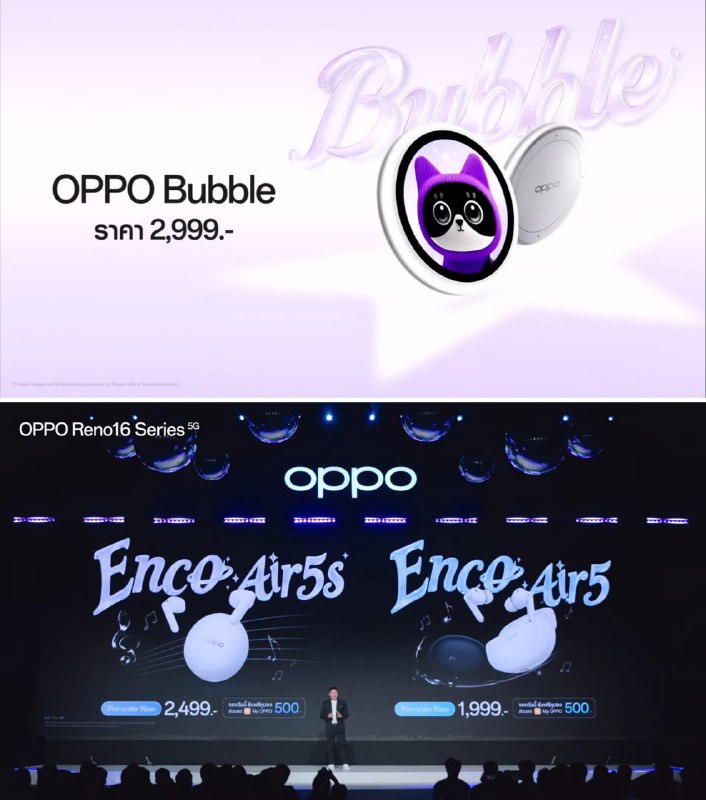
OPPO Expands Audio and Wearable Portfolio with New Bubble Smartwatch and Enco Air Earbuds OPPO continues to strengthen its position in the competitive consumer electronics market with the launch of three new products: the OPPO Bubble smartwatch and the OPPO Enco Air 5s and Enco Air 5 wireless earbuds. With price points ranging from 1999 to 2999 local currency units, these devices offer consumers a range of options across different segments of the audio and wearable markets. OPPO Bubble: The Latest in Smartwatch Innovation The OPPO Bubble represents the company's latest entry into the smartwatch category, priced at 2999.-. Designed to compete with established players in the wearable space, the Bubble combines sophisticated design with advanced health monitoring features and seamless smartphone integration. Key features of the OPPO Bubble include: High-resolution AMOLED display with always-on functionality Comprehensive health monitoring suite including heart rate tracking, sleep analysis, and blood oxygen monitoring IP68 water and dust resistance for durability in various environments Long battery life, supporting up to 14 days on a single charge Multiple sport modes and fitness tracking capabilities Bluetooth connectivity for call and music controls directly from the wrist The Bubble's design emphasizes both aesthetics and functionality, with interchangeable bands and a sleek profile that makes it suitable for both athletic activities and everyday wear. The device runs OPPO's proprietary watch OS, which offers a smooth user experience and compatibility with both Android and iOS smartphones. OPPO Enco Air 5s: Premium Audio Experience Sitting in the mid-range segment at 2499.-, the OPPO Enco Air 5s delivers enhanced audio quality and advanced features for discerning users who prioritize sound performance without breaking the bank. Specifications and features of the OPPO Enco Air 5s include: 12.4mm dynamic drivers for rich, detailed sound <>Active Noise Cancellation (ANC) with up to 42dB of noise reduction Transparency mode for situational awareness Low-latency gaming mode (55ms) for mobile gaming enthusiasts Up to 30 hours of total playback time with charging case IP55 rating for sweat and water resistance Bluetooth 5.3 connectivity for stable wireless connections Multipoint connectivity for simultaneous connection to two devices The Enco Air 5s incorporates OPPO's acoustic expertise, with tuning by Danish audio specialists Dynaudio. The earbuds support LDAC high-resolution audio codec for those who stream music from compatible services. The charging case supports both wired USB-C and wireless charging options, adding convenience to the user experience. OPPO Enco Air 5: Accessible Audio Excellence At the entry-level price point of 1999.-, the OPPO Enco Air 5 offers a compelling package of features that make wireless audio accessible to a broader audience. Despite its more affordable positioning, the device doesn't compromise on essential audio quality and functionality. Key features of the OPPO Enco Air 5 include: 12mm dynamic drivers for balanced sound reproduction Environmental noise cancellation for clearer voice calls Up to 28 hours of total playback time with charging case IP54 rating for resistance to sweat and light rain Bluetooth 5.2 connectivity Touch controls for intuitive operation Fast charging capability with 10 minutes providing up to 3 hours of playback The Enco Air 5 maintains OPPO's commitment to audio quality while focusing on the features that matter most to everyday users. The earbuds offer comfortable fit options with multiple ear tip sizes and are designed for extended listening sessions without discomfort. Comparative Analysis: OPPO's New Product Lineup The three products form a strategic lineup that addresses different consumer needs and budget points. The following table provides a comparison of key specifications across the devices: Feature OPPO Bubble OPPO Enco Air 5s OPPO Enco Air 5 Price Point 2999.- 2499.- 1999.- Primary Category Smartwatch Wireless Earbuds Wireless Earbuds Display AMOLED, 1.75" N/A N/A Audio Drivers N/A 12.4mm Dynamic 12mm Dynamic Noise Cancellation Basic Active (42dB) Environmental Battery Life 14 days 30 hours (with case) 28 hours (with case) Connectivity Bluetooth 5.0 Bluetooth 5.3 Bluetooth 5.2 Water Resistance IP68 IP55 IP54 Market Positioning and Competitive Landscape OPPO's new product lineup demonstrates the company's strategy of offering tiered options across different price points, allowing consumers to choose devices that match their specific needs and budgets. The Bubble smartwatch positions OPPO more competitively against established players like Apple, Samsung, and Huawei in the wearable market. In the wireless earbuds segment, the Enco Air 5s and Enco Air 5 take aim at mid-range and budget offerings from competitors such as Sony, Jabra, and Xiaomi. With the Enco Air 5s featuring active noise cancellation at a competitive price point, OPPO is making advanced audio technology more accessible to mainstream consumers. The pricing strategy reflects OPPO's understanding of diverse market segments: - The Bubble at 2999.- targets users looking for a feature-rich smartwatch without premium brand pricing - The Enco Air 5s at 2499.- appeals to audio enthusiasts who want quality features at a mid-range price - The Enco Air 5 at 1999.- introduces wireless audio to budget-conscious consumers without sacrificing essential functionality User Experience and Ecosystem Integration All three devices benefit from OPPO's focus on seamless integration with its smartphone ecosystem. The Bubble smartwatch works particularly well with OPPO and OnePlus smartphones, offering enhanced functionality when paired with devices from the same ecosystem. However, compatibility with non-OPPO devices ensures broad accessibility. The Enco Air earbuds feature OPPO's LinkBoost technology, which optimizes connectivity between the earbuds and OPPO smartphones for improved stability and reduced latency. The earbuds also integrate with OPPO's HeyMelody app for customization of sound profiles, touch controls, and firmware updates. Conclusion OPPO's latest product expansion demonstrates the company's commitment to innovation across both the wearable and audio categories. With the Bubble smartwatch and the Enco Air 5s and Enco Air 5 earbuds, OPPO offers consumers a range of options that balance quality, features, and value. The strategic pricing of 2999.- for the Bubble, 2499.- for the Enco Air 5s, and 1999.- for the Enco Air 5 positions OPPO competitively in each segment, challenging established brands while maintaining the quality expectations associated with the OPPO name. As the consumer electronics market continues to evolve, OPPO's ability to deliver feature-rich devices at accessible price points will likely strengthen its position in the global market. For consumers looking to upgrade their wearable technology or audio experience, OPPO's new lineup offers compelling options across different price points, ensuring there's a suitable choice for various needs and preferences.

South Korea Moves to Speed Up Massive Semiconductor Expansion Amid Global Tech Race In a strategic move to solidify its position as a global semiconductor powerhouse, South Korea has announced measures to accelerate its ambitious semiconductor expansion plans. The initiative comes at a critical time when global chip shortages continue to disrupt various industries and geopolitical tensions reshape the semiconductor supply chain. Government-Led Initiative South Korean President Yoon Suk-yeol recently unveiled a comprehensive plan to expedite the nation's semiconductor industry growth, emphasizing the sector's vital importance to the country's economy and technological sovereignty. The government aims to cut bureaucratic red tape and provide additional support for semiconductor manufacturing facilities. "Semiconductors are not just products; they are the foundation of our future economy and national security," stated President Yoon during a policy briefing. "We will remove all obstacles to ensure South Korea maintains its competitive edge in this critical industry." Key Policy Measures Streamlined Permitting Process: Reducing approval times for semiconductor facility construction from the current 18 months to under 9 months Tax Incentives: Enhanced tax benefits for companies investing in advanced semiconductor technologies Research Support: Increased funding for semiconductor R&D, particularly in next-generation technologies Workforce Development: Expanded programs to train semiconductor engineers and technicians Industry Giants Expand Footprint South Korea's semiconductor behemoths, Samsung Electronics and SK Hynix, have announced massive investments that align with and benefit from the government's accelerated approach. Samsung Electronics Samsung, the world's largest memory chip maker, is investing approximately KRW 300 trillion (approximately $230 billion) by 2030 to strengthen its semiconductor capabilities. This includes expanding its Pyeongtaek campus and developing advanced packaging technologies. The company is also accelerating its plans for mass production of 2-nanometer chips and expanding its foundry business to compete with TSMC. Samsung recently announced it will begin construction of its new semiconductor complex in Pyeongtaek earlier than originally planned, with production slated to commence in 2025. SK Hynix SK Hynix, the world's second-largest memory chip maker, is investing KRW 120 trillion (approximately $91 billion) by 2030. The company is focusing on expanding its production of high-bandwidth memory (HBM) chips and advanced DRAM technologies. SK Hynix has begun construction of its new M16 semiconductor fab in Icheon, which will be dedicated to producing next-generation memory chips. The company has also announced plans to build a new packaging and testing facility in Cheongju, with operations expected to begin in 2024. Global Context and Strategic Importance The acceleration of South Korea's semiconductor expansion comes amid several global factors that make the move strategically important: Global Chip Shortage: Ongoing semiconductor shortages continue to impact automotive, consumer electronics, and industrial sectors US-China Tech Competition: Geopolitical tensions have prompted countries to seek more resilient semiconductor supply chains AI Boom: The rapid growth of artificial intelligence has created unprecedented demand for advanced semiconductors Technological Advancement: The industry is transitioning to smaller node sizes and new architectures, requiring massive investments South Korea's Global Position South Korea's Global Semiconductor Market Share (2023) Product Category Global Market Share Rank Globally DRAM ~60% 1st NAND Flash ~50% 1st System LSI ~20% 3rd Foundry Services ~17% 2nd Challenges and Future Outlook Despite the ambitious expansion plans, South Korea's semiconductor industry faces several challenges: Talent Shortage: The industry needs approximately 9,000 new semiconductor engineers annually, but universities produce only about 3,000 Resource Constraints: High costs for land, construction, and equipment in South Korea Geopolitical Risks: Potential disruptions to global supply chains and technology sharing Technological Competition: Intense competition from Taiwan (TSMC), the US, and China Industry analysts predict that South Korea's accelerated semiconductor expansion will help maintain its leadership in memory chips while making significant inroads in the foundry and advanced logic chip markets. The government's support is expected to reduce implementation time for new facilities by 30-50% and attract additional private investment. Economic Impact The semiconductor industry is a cornerstone of South Korea's economy, accounting for approximately 20% of total exports. The accelerated expansion is projected to create over 200,000 new jobs and contribute significantly to GDP growth. Projected Economic Impact of South Korea's Semiconductor Expansion Indicator Current Value Projected by 2030 Growth Rate Industry Output KRW 300 trillion KRW 600 trillion 100% Export Value KRW 128 trillion KRW 250 trillion 95% Employment 320,000 520,000 62.5% R&D Investment KRW 25 trillion KRW 50 trillion 100% Conclusion South Korea's decision to accelerate its semiconductor expansion represents a significant strategic move in the global technology landscape. By combining government support with private investment, the country aims to strengthen its position in an increasingly competitive and geopolitically sensitive industry. As the world becomes more digitally dependent, semiconductors will continue to be at the center of technological innovation and economic growth. South Korea's proactive approach to expanding its semiconductor capabilities may well determine its future economic prosperity and technological influence on the global stage. The success of this initiative will depend on effective implementation, addressing talent shortages, maintaining technological competitiveness, and navigating the complex geopolitical environment that increasingly defines the global semiconductor industry.
iOS Visual Revolution: Liquid Glass Gets User Control with New Transparency Features In a significant update to its design language, Apple has introduced enhanced Liquid Glass elements in iOS with unprecedented user customization options. The latest iteration of the operating system brings a much-requested transparency slider, allowing users to adjust the glass effect from fully opaque to completely clear, marking a departure from the previous single, forced default setting. The Evolution of Apple's Glass Design Language Apple has long been associated with sophisticated design aesthetics, and the use of glass-like elements has been a cornerstone of its user interface philosophy. From the early days of iOS with its skeuomorphic elements to the current era of flat design with subtle depth, Apple has continuously refined how visual elements create a sense of depth and hierarchy. The introduction of Liquid Glass represents Apple's latest attempt to bring tactile qualities to the digital realm. Previous iterations featured glass-like elements with fixed transparency levels, which, while aesthetically pleasing, offered no user customization. This new update addresses one of the most frequent user requests regarding visual control over interface elements. The New Transparency Slider: A Game Changer Perhaps the most significant addition in this update is the new transparency slider for Liquid Glass elements. This feature empowers users to adjust the opacity of glass-like UI components according to their personal preferences and environmental conditions. Transparency Level Description Use Case Fully Opaque Maximum visibility with no transparency Bright environments where readability is paramount 75% Opacity Subtle transparency with maintained readability Daily usage in varied lighting conditions 50% Opacity Balanced transparency and legibility Standard user preference for most scenarios 25% Opacity High transparency with maintained contrast Minimalist preference or complex interfaces Completely Clear No transparency effect Maximum interface minimalism This granular control represents a shift in Apple's design approach, moving toward greater personalization while maintaining the core aesthetic principles that define the platform. The slider is intuitively placed within the Accessibility & Display settings, making it easily discoverable for users seeking to customize their experience. Implementation Details The transparency slider affects all Liquid Glass elements throughout the system, including notification banners, control center panels, app library backgrounds, and widget containers. The adjustment is applied system-wide, ensuring a consistent user experience across all supported elements. Apple has implemented the feature with performance considerations in mind. The transparency adjustments are rendered in real-time without noticeable impact on device responsiveness, even on older hardware. This technical achievement underscores Apple's commitment to both aesthetic flexibility and performance excellence. Enhanced Visual Depth: Darkened Edges and Brighter Highlights In addition to the transparency controls, Apple has refined the visual rendering of Liquid Glass elements with enhanced depth cues. The most noticeable change is the addition of darkened edges around glass components, which creates a subtle frame that enhances the perception of depth. Complementing the darkened edges are brighter highlights that interact more dynamically with the interface content. These highlights respond to user interaction and environmental factors, creating a more lifelike representation of how light would interact with a physical glass surface. Visual Enhancement Previous Implementation New Implementation Edge Definition Uniform border with subtle shadow Darkened edge with gradient transition Light Interaction Static highlight placement Dynamic highlights that respond to content Depth Perception Single-layer transparency effect Multi-layered depth with enhanced shadows Refined App Icons: Sharper Edges and Integrated Glass App icons have received particular attention in this update, with Apple introducing sharper edges and more sophisticated integration of Liquid Glass layers. The new icon design maintains brand recognition while adding a contemporary glass-like finish that harmonizes with the updated interface elements. The refined icons feature improved edge definition that reduces the blurriness sometimes associated with glass-like effects. More importantly, the Liquid Glass layer is now more seamlessly integrated with the icon content, creating a unified visual experience rather than a superficial overlay. This attention to detail extends to the icon's interaction states as well. When users engage with app icons through 3D Touch or long press, the glass effect responds more organically, with enhanced highlighting and depth that provides clearer visual feedback. Icon Design Philosophy Apple's approach to the updated icon design reflects a balance between consistency and flexibility. While all icons share the new glass-like aesthetic, individual app icons retain enough of their original character to ensure immediate recognition. This design philosophy allows for system-wide visual cohesion while preserving the unique identity of each application. User Experience Implications The introduction of customizable Liquid Glass elements represents a significant evolution in iOS user experience. By providing users with control over transparency levels, Apple acknowledges diverse usage scenarios and personal preferences that were previously unaddressed. For users with visual impairments, the ability to adjust transparency can dramatically improve readability. Those working in bright environments may prefer higher opacity levels, while others might opt for maximum transparency to reduce visual clutter. This flexibility is particularly valuable in accessibility contexts, where one-size-fits-all solutions often fall short. The enhanced visual depth also contributes to improved usability by creating clearer visual hierarchy. The darkened edges and dynamic highlights help users distinguish between interface elements more effectively, reducing cognitive load and improving navigation efficiency. Industry Context and Design Trends Apple's refinement of its glass-like design elements comes amid broader industry trends toward more customizable and adaptive interfaces. Competing platforms like Android and Windows have long offered similar transparency controls, but Apple's implementation distinguishes itself through its attention to detail and seamless integration with the overall design language. The timing of this update also reflects Apple's response to changing user expectations. As digital interfaces become increasingly sophisticated, users demand greater control over their experience without sacrificing aesthetic quality. This balance between customization and consistency has been a hallmark of Apple's design philosophy, and the new Liquid Glass features represent a maturation of that approach. Conclusion: A Step Toward Greater Design Personalization The introduction of user-controlled Liquid Glass elements marks a significant milestone in iOS design evolution. By combining enhanced visual depth with unprecedented customization options, Apple has created a more flexible and adaptive interface that responds to diverse user needs while maintaining the aesthetic excellence that defines the platform. The new transparency slider, refined visual effects, and enhanced app icons collectively represent Apple's commitment to both innovation and user empowerment. As digital interfaces continue to evolve, these features set a new standard for how glass-like design elements can be implemented with both beauty and functionality. For users, the update offers a more personalized experience that can be tailored to individual preferences and environmental conditions. For designers and developers, it provides a sophisticated toolkit for creating interfaces that balance visual appeal with usability. As Apple continues to refine its design language, these enhancements may prove to be foundational elements in the future of iOS interface design.
POCO Launcher Unveils Updated HyperOS 3 In an exciting development for tech enthusiasts and smartphone users alike, POCO, known for its innovative products, has introduced an update to its popular operating system, HyperOS 3. This update promises to enhance user experience significantly and brings a host of new features. Below, we delve into the specifics of what is included in HyperOS 3 and what users can expect moving forward. Key Features of HyperOS 3 The updated HyperOS 3 focuses on improving usability and functionality, aligning with user feedback and current technological trends. Here’s a breakdown of the core enhancements: User Interface Redesign: The interface has been reimagined for a smoother navigation experience, emphasizing simplicity and aesthetic appeal. Improved Performance: HyperOS 3 has optimized its system performance, leading to faster app launches and reduced loading times. New Customization Options: Users can now tailor their devices more personally, with additional themes and icon packs. Enhanced Security Features: The update introduces advanced security protocols to safeguard user data and privacy. Integrated Community Engagement: POCO is encouraging collaboration and community building via platforms such as Techoffice, allowing users to share experiences and tips. Community Engagement: Join Us! Beyond the technical upgrades, POCO is inviting users to become part of its vibrant community. This movement is designed to foster communication and interaction among supporters and users of HyperOS. The engagement platform aims to share insights, gather feedback, and cultivate a supportive environment for all. For those interested, the official community can be found on the popular social media platform under the handle @Techoffice_officiall. Conclusion The launch of HyperOS 3 marks a significant milestone in POCO’s commitment to revolutionizing mobile interactions. As the company continues to innovate, users are encouraged to explore these new features and participate in the growing community. The advancements in user interface, performance, customization, and security not only enhance the smartphone experience but also pave the way for future technological advancements. Feature Description User Interface Redesign Now more intuitive and visually appealing. Improved Performance Faster app launches and reduced loading times. Customization Options More themes and icon packs available for personalization. Enhanced Security Features Advanced protocols to protect user data. Community Engagement Interactive platform for user feedback and support. As we witness the evolution of mobile operating systems, updates like HyperOS 3 are pivotal in enhancing user experiences and maintaining relevance in an increasingly competitive landscape.

Apple Unveils iOS 27 Beta 2: Enhancements and Insights In an exciting update for developers and iOS enthusiasts, Apple has officially launched the second beta version of its upcoming iOS 27. This release continues the company’s tradition of refining its mobile operating system, aimed at enhancing user experience, performance, and security. iOS 27 beta 2 arrives with a slew of improvements and new features that are poised to enrich the ecosystem, and provide developers with additional tools for application development. Overview of iOS 27 Beta 2 Apple’s beta releases serve a dual purpose: testing under real-world conditions and gathering feedback from early adopters. With iOS 27 beta 2, developers can expect optimizations aimed at stability, performance, and usability. Let’s delve into some of the key features and improvements introduced in this beta release. Key Features of iOS 27 Beta 2 Enhanced User Interface: The update brings minor tweaks to the user interface, designed to create a more intuitive navigation experience. Security Upgrades: Apple has integrated additional security measures to safeguard user data, reflecting its ongoing commitment to privacy. Performance Optimizations: System performance improvements have been implemented, promising faster app launches and smoother multitasking capabilities. New Developer Tools: Additional APIs and tools are available for developers, enabling them to create more powerful applications. Notable Changes and Improvements The release notes accompanying iOS 27 beta 2 indicate several important changes, including: Stability: Numerous bug fixes aim to enhance overall system stability. Battery Life: Improvements in battery management can potentially lead to increased battery life for devices running this beta version. Accessibility Features: Enhancements to VoiceOver and other accessibility features make the platform even more user-friendly for individuals with disabilities. Comparison with Previous Beta Versions To provide a clearer picture of how iOS 27 beta 2 compares to its predecessor, the following table summarizes the key differences between the two beta versions: Feature iOS 27 Beta 1 iOS 27 Beta 2 User Interface Enhancements Basic tweaks Improved navigation with fresh updates Security Features Standard security updates Enhanced security protocols Performance Minor performance improvements Significant stability and performance upgrades Developer Tools Limited new APIs Expanded developer tools and functionalities Conclusion As Apple continues to refine iOS 27, the second beta release demonstrates the company’s dedication to both quality and innovation. Developers who are eager to explore the latest version can download iOS 27 beta 2 through the Apple Developer Program. Regular users are advised to wait for the stable release to ensure a smoother experience. Overall, iOS 27 beta 2 not only enhances existing functionalities but also paves the way for a more robust and secure operating ecosystem as we move closer to the official launch.

Xiaomi YU7 GT Makes History with First Driverless Nürburgring Lap In a groundbreaking achievement that underscores the rapid advancement of autonomous vehicle technology, Xiaomi's YU7 GT has successfully completed a full lap of the legendary Nürburgring circuit without human intervention. This milestone not only demonstrates the capabilities of Xiaomi's autonomous driving system but also marks a significant moment in the company's ambitious entry into the electric vehicle market. Setting New Standards in Autonomous Driving The Nürburgring, often referred to as the "Green Hell," is a 20.8-kilometer (12.9-mile) motorsport complex in Germany that is widely considered one of the most challenging race tracks in the world. Successfully navigating this circuit autonomously represents an extraordinary technical achievement that few companies have accomplished. Xiaomi's accomplishment with the YU7 GT comes amid intense competition in the autonomous driving space, with companies like Tesla, Waymo, and traditional automotive manufacturers all vying for leadership in this transformative technology. Technical Specifications of the YU7 GT The YU7 GT is Xiaomi's high-performance electric vehicle, part of the SU7 lineup that has been making waves in the EV market since its introduction. The vehicle features: Advanced sensor array including LiDAR, radar, and high-resolution cameras Powerful computing platform with neural processing capabilities Over-the-air update system for continuous improvement of autonomous features High-performance electric powertrain with dual-motor all-wheel drive Autonomous Driving Capabilities The autonomous system that enabled the Nürbururgring lap represents a significant leap forward in Xiaomi's driving technology. The system reportedly utilizes: Component Specification Function LiDAR Sensors 360-degree scanning Environmental mapping and obstacle detection Cameras 8 high-resolution units Visual recognition and lane detection Radar Millimeter wave Distance measurement and speed detection Processing Unit Custom AI chip Real-time decision making The Significance of the Nürburgring Achievement Completing a driverless lap at the Nürburgring is more than just a technical demonstration—it represents validation of autonomous driving systems in extremely complex and unpredictable conditions. The circuit features: Over 70 corners with varying radii and elevations Rapid elevation changes of up to 300 meters Changing weather conditions that can affect road surface Complex traffic situations with other vehicles "The Nürburgring is the ultimate proving ground for any autonomous driving system," said Zhang Jizhe, Xiaomi's automotive division chief. "Our success here demonstrates that our technology can handle the most challenging driving scenarios, which gives us confidence in its safety and reliability for everyday use." Industry Context and Competitive Landscape Xiaomi's entry into the automotive market has been closely watched by industry analysts. The company, known primarily for its consumer electronics, has invested heavily in developing its automotive capabilities since announcing its car project in 2021. Key Players in Autonomous Driving Company Autonomous Level Key Differentiator Recent Achievement Tesla L2+/L3 (varies by region) Neural network vision FSD Beta expansion to more markets Waymo L4 Pure autonomous approach Commercial robotaxi operations Xiaomi L3 (demonstrated) Multi-sensor fusion Driverless Nürburgring lap Mercedes-Benz L3 (certified) Regulatory approval L3 system certification in Germany Challenges and Questions Despite this impressive achievement, several questions remain about Xiaomi's autonomous driving technology and its path to commercial deployment: Technical Questions How does the system handle unexpected situations like animals crossing the track or sudden mechanical failures? What is the system's performance in adverse weather conditions like heavy rain, snow, or fog? How does the YU7 GT's autonomous system compare to established competitors in terms of reaction time and decision-making accuracy? Regulatory and Safety Questions The regulatory landscape for autonomous vehicles remains complex and varies significantly by region. While Xiaomi has demonstrated technical capability, the path to regulatory approval and public acceptance presents significant challenges: How will Xiaomi ensure the safety of its autonomous systems in real-world conditions? What liability framework will be established for accidents involving autonomous vehicles? How will Xiaomi address public concerns about autonomous driving safety? Future Implications The successful driverless lap at the Nürburgring has several important implications for the future of mobility: Accelerated Development Timeline This achievement suggests that Xiaomi may be ahead of its previously announced timeline for deploying advanced autonomous features. Industry analysts speculate that Xiaomi could begin offering Level 3 autonomous capabilities as early as 2025, potentially leapfrogging some competitors. Integration with Xiaomi Ecosystem As a company with strengths in consumer electronics and IoT, Xiaomi is uniquely positioned to integrate its autonomous vehicles with its broader ecosystem of smart devices. This could include: Seamless connectivity with Xiaomi smartphones and smart homes Integration with Xiaomi's AI voice assistant Advanced driver monitoring systems using Xiaomi's biometric technology Global Expansion Strategy The Nürburring achievement positions Xiaomi favorably for international expansion, particularly in markets with supportive regulatory environments for autonomous vehicles. China, Europe, and select markets in North America are likely to be initial focus areas for Xiaomi's autonomous driving technology. Conclusion The Xiaomi YU7 GT's successful driverless lap at the Nürburgring represents a significant milestone in the development of autonomous vehicle technology. While questions remain about the system's capabilities in real-world conditions and the path to commercial deployment, this achievement demonstrates Xiaomi's technical prowess and ambition in the automotive sector. As autonomous driving technology continues to evolve, Xiaomi's entry into this space adds a formidable new competitor with deep technological resources and a consumer electronics background that could reshape the industry. The company's ability to translate its Nürburgring success into safe, reliable autonomous driving systems for everyday use will ultimately determine its place in the future of mobility. For now, the automotive world watches with interest as Xiaomi continues to develop its autonomous driving capabilities, with the Nürburgring lap serving as both a technical demonstration and a statement of intent in one of the most competitive technology sectors of our time.